
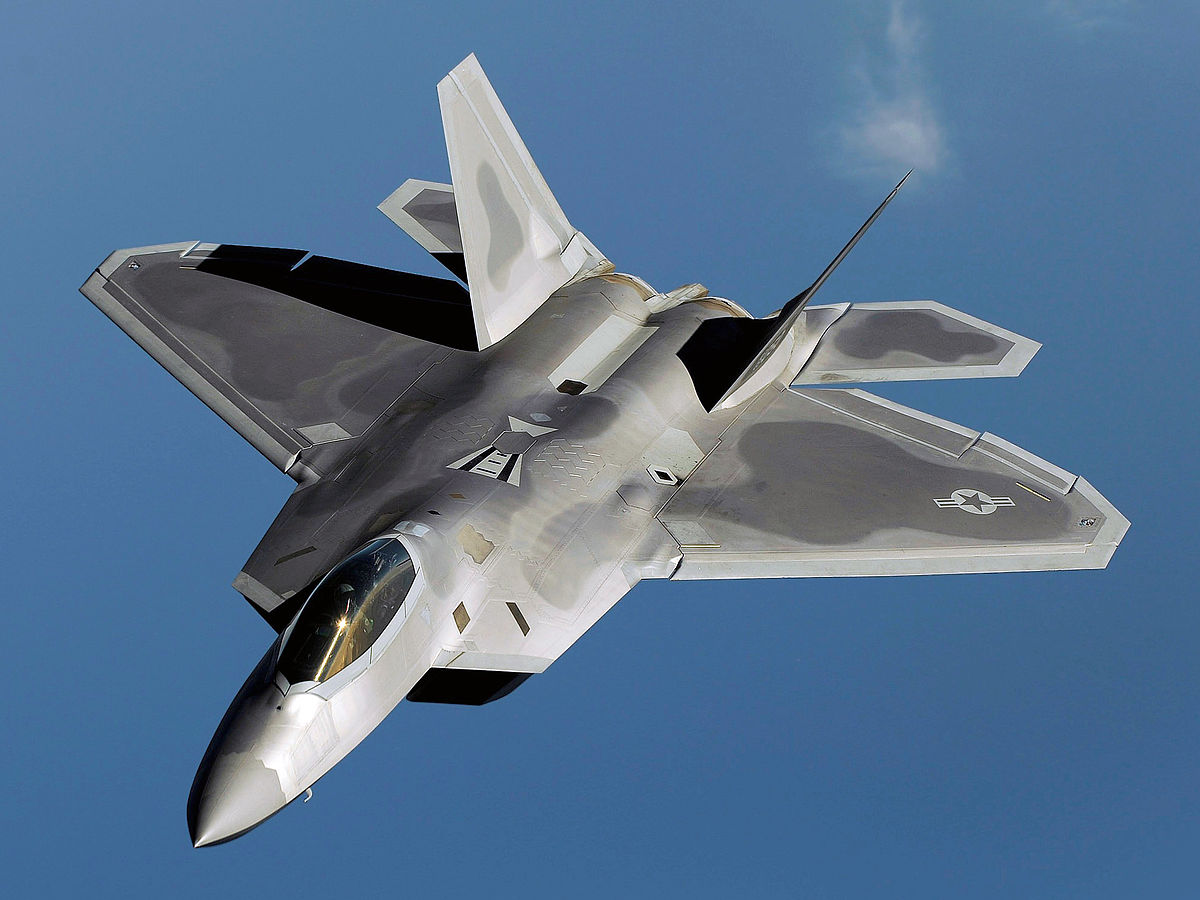
After the Vietnam War the Pentagon paused for a moment to consider the lessons learned. More than any other service branch during the War, the U.S. Air Force was in a constant state of change for 12 years – from 1963 to 1975. Fortunately, there were several Air Force leaders with the foresight to recognize somebody better be taking notes throughout the conflict!
The “note taking” was formalized into a standard reporting format. Within the Pacific Air Force (PACAF) headquarters in Hawaii, one of the major departments was the Deputy Chief of Staff, Plans and Operations, headed by a Brigadier General. Under DCS, Plans/Ops, there was a group known as the Tactical Evaluation Directorate led by a full colonel. The TED had numerous ongoing duties, and several specialized projects. One of the specialized projects had the rather innocuous-sounding title of: “Operations Analysis Division.” The OAD actually had just one real responsibility, and that was: Managing a Top Secret project known as Operation CORONA HARVEST; it was responsible for researching, preparing and writing what became known as “CHECO Reports.” CHECO stood for: Contemporary Historical Evaluation of Combat Operations.”
CHECO Reports totaled more than 250 by time South Vietnam capitulated in April 1975. The reports were solely focused on the various combat activities the U.S. Air Force conducted in Southeast Asia. Some CHECO topics were one-off, such as Operation LUCKY TIGER in Laos. Other topics ended-up with multiple reports written as a series of periodic updates from 18 months to two years apart, with all of them revolving around the central theme. For example, the ROLLING THUNDER bombing campaign in North Vietnam ran from March 1965 to the autumn of 1968. During the three and a half years of operation, ROLLING THUNDER had four CHECO reports – the original one, and three update reports.
About 65% of the CHECO reports were classified Secret. The remaining reports were mostly Top Secret. Several of the Top Secret reports were so sensitive that the missives also carried a classified code word, and was designated SCI (sensitive, compartmented information). The U.S. had several free world nations participating in Vietnam combat operations, too, such as South Korea & Australia. Generally speaking, most classified information was freely shared amongst the partners; but, the Pentagon felt some topics were best left unsaid. To that end, an administrative marking of “NOFORN” was also stamped on the document. NOFORN stood for “NO FOReign Nationals.” Unless you were an American citizen, you were not permitted to see the report; this was regardless of someone’s security clearance.
Understanding the background and context of the CHECO reports helps understand the next aspect. It wasn’t until the late 1990s that some of the CHECO reports had been requested by the public through USAF’s FOIA program managed from the Pentagon. The significance of the late 1990s is FOIA requests for one of the reports was finally being allowed to go through the MDR (mandatory declassification review) process. Previously, CHECO report FOIA requests came back to the person asking for it, stating the contents were still too sensitive to declassify. The vast majority of the reports had certain exemption requirements from being declassified through the routine, automatic downgrading process. By the late 1990s the majority of the CHECO reports had moved out from under the declassification exemption laws and could be submitted on a FOIA to commence the MDR effort. On average, a requested MDR on a CHECO report had a throughput time of two years or more. Although the declassified reports had portions redacted, they were still easy enough to learn from without a lot of information “ending-up-on-the-cutting-room-floor.” Researchers, like me, immediately saw the treasure trove of useful information available from the CHECO reports.
Although Vietnam War historians like myself really appreciated having access to all the CHECO reports, the real beneficiaries were the military aviation community throughout the War and for decades afterward. But, how does this relate to the F-22? Simply put, important lessons on the future of air combat were memorialized in the CHECO reports. The following dialogue paraphrases some of the more salient points as it pertains to the ultimate combat design configuration of the F-22. Keep in mind, the F-22 is labeled as a “5th generation fighter jet.” There are many lessons learned in air warfare from Vietnam that were incorporated into 4th generation fighters, such as: the F-15, F-16 and F-18.
1. The Air Force entered the Vietnam War with the Republic F-105 Thunderchief as its premier tactical fighter-bomber. The fighter aspect of an F-105 was actually not much more than its DOD alphanumeric model identifier, and it was about the same size as other fighter-style aircraft designed in the late 1950s and early 1960s. From there, the similarities ended. The F-105 was not built for air-to-air combat. It was also not built to be caught by another fighter, AAA cannon fire or SAMs. The reason why is: the plane was extremely fast and was meant to perform low-level penetration, nuclear weapons delivery. In Vietnam, however, USAF lost more than 400 F-105s; that’s one-third of the total number built. By 1970, USAF had sent all of the tactical bomber variants home. Total losses would have easily eclipsed more than half the total F-105 fleet if they had continued to fly in SEA combat. The plane’s role in Operation ROLLING THUNDER was regular, tactical bombing with conventional munitions, and it flew sub-sonic into the target area at the typical tactical bombing altitude of 5,000 to 8,000 ft AGL. That altitude was the “sweet spot” for 57mm cannons slaved to an automatic-tracking gun laying radar. Many people have heard how deadly SAMs were in Vietnam; but, the Navy and Air Force both suffered the highest loss percentages from 57mm AAA. Although the F-105 was a rugged plane, it lacked adequate ECM warning gear, and the aircraft design was not done in a way that anticipated the pilot & plane having to fight their way into and back out of the target. One of the plane’s greatest design vulnerabilities was not separating its system redundancies far enough apart to prevent knocking the plane down with one cannon round that could eliminate the primary and back-up flight control equipment. These lessons learned were incorporated in the A-10 and all other fighters and attack aircraft that followed Vietnam. These concepts went into the F-22, too.
2. Another important outcome of the War was recognizing the electronic battle space was an iterative process for both sides. The threat density environment of North Vietnam became the most heavily defended airspace in history. During the Cold War, Electronic Warfare equipment installed aboard tactical aircraft was bulky, highly complex & required constant maintenance by factory engineers on permanent duty at U.S. Air Bases in Thailand; the ECM pods were very expensive, and could not be produced fast enough to protect every aircraft on its own. For the better part of 20 years, especially during Vietnam, General Electric and Sanders & Associates were the premier defense contractors in the field of airborne EW; especially radar jamming transmitters.
For the most part, military aircraft developed and manufactured in the 1950s, 1960s & early 1970s, were tailored to perform a certain role in air combat. The B-52 Stratofortress was one of the few planes designed to be self-contained; including the ability to electronically fight its way to the target and then back home again (although fighting its way out from the target was highly suspect by some experts). The B-52 is a huge plane with enough onboard room to squeeze in newer and better functioning equipment. Fighter jets, however, were so space-limited that it was virtually impossible to add extra systems without compromising the plane’s ability to fight in other aspects of air combat. Tactical fighter-bombers used in Vietnam – like the Republic F-105 – had to have outside support from special mission aircraft to help the “Thuds” live to fight another day.
The 7th Air Force commander at Ton San Nhut Air Base, Saigon, was General William Momyer. Momyer and his operations staff ultimately developed a mutually supporting strike package for ROLLING THUNDER bombing operations. The 7th Air Force tabbed this new bombing methodology as an “Alpha Strike.” The Alpha Strike had three primary objectives:
A. Completely destroy the target(s);
B. Don’t lose any aircrews or planes;
C. Ensure that another Alpha Strike did not have to go back to the same target again.
The Alpha Strike bombing package was developed and first saw use in January 1967 for targets within a 50 mile radius of Hanoi. The F-105 Thunderchief was the principal strike bomber used in the first half of the war. Regular usage of the Alpha Strike continued until the 1968 bombing halt ordered by President Johnson. It went back into use in February 1972 to force North Vietnam back to the bargaining table to complete a peace agreement. The vulnerability of the F-105 was the main reason for the Alpha Strike package. The F-4 Phantom replaced the F-105 as the principal strike bomber by 1972. The remaining F-105s were converted to the two-seat “Wild Weasel” (Iron Hand) AAA defense suppression configuration.
In order to knock-out two major targets, such as a railroad yard and a railroad bridge, 16 F-105s (or F-4s) were assigned to each target, 32 total, to bomb the targets five minutes apart. To prevent the previously seen F-105 losses, it took an additional 54 aircraft of various types, as much as five hours before and after the strike, to deter the excessive fighter-bomber losses! No doubt, an Alpha Strike put many more airmen at risk than just the strike aircraft.
The Alpha Strike Package launched its first aircraft five hours ahead of the attack aircraft. North Vietnam had notoriously bad weather – cloud cover about 85% of the time. The weather was also prone to change quite rapidly. So, two flights of two RF-4Cs were fragged for a weather reconnaissance sortie in the general area of the two targets for that day. If the weather was bad, and the base weather shop had no indications of it clearing before TOT, the Alpha Strike was scrubbed.
Two hours prior to TOT, a flight of four F-4Ds, fragged for “SARCAP,” (Search and Rescue, Combat Air Patrol) were launched with an “on-station time” of one hour pre-TOT, and remained on-station until 30 minutes after completing the 2nd target’s strike. The primary purpose of SARCAP was surveillance of the target and ingress/egress routes for possible American aircraft going down. Often times the fragged attack aircraft were so busy doing their jobs, they may not have seen a plane go down. SARCAPs had no other purpose than to track aircraft target ingress and egress, looking for planes in trouble, or were going down, or had already crashed. SARCAPs notified the ABCCC of a downed plane for purposes of launching a CSAR attempt.
One hour prior to TOT, two F-4Ds were launched for BARCAP. Barrier Combat Air Patrol had two purposes: 1.) Make sure American aircraft did not wander into restricted airspace; 2.) There were numerous support aircraft lingering over Northern Laos, such as, tankers, CSAR choppers, etc. They were at-risk if the North Vietnamese sent MiG-21s to go make trouble for them. BARCAP kept bogies away from the holding area.
Ten minutes prior to TOT #1, eight F-4Ds passed between the target areas and the heaviest concentration of enemy AAA and SAM tracking radar, dumping a heavy cloud of electronic countermeasures chaff to defeat enemy tracking radars.
About 45 minutes prior to TOT, two F-105s or F-4Ds, were launched for IRON HAND missions. IRON HAND was responsible for attacking enemy radar sites. This type of mission was also known as, “SEAD” (Suppression of Enemy Air Defense). Flying this dangerous mission earned the aircrews and planes the unofficial title of “Wild Weasel.” Four more aircraft at staggered intervals would replace the first two Wild Weasels.
At the same time the Wild Weasels entered the operational area, four F-4Ds also arrived to fly MIGCAP (MiG, Combat Air Patrol). Since the F-4s were such a versatile aircraft, they could be configured solely for air-to-air combat. The planes primarily used Sidewinder heat-seeking missiles, and Sparrow radar-directed missiles. All of the F-4s up to, and including the “D” model, were not equipped with a conventional automatic weapon system. Aerial combat in North Vietnam proved the F-4s still needed a close-in, rapid fire cannon. A temporary pod was slung underneath the plane to carry a 20mm Gatling gun. The F-4Es came standard with a M61 Vulcan 20mm Gatling gun built inside the fuselage.
The North Vietnamese had limited resources in the area of fighter jets capable of defeating the F-4. The MiG-19s were used throughout the War, and did not match-up consistently with the F-4s. The Mig-21s did not come along until the 3rd year of the War; they were better than the MiG-19, but still mismatched in many ways against the F-4. Qualified fighter pilots were just as scarce as the jets they flew. Eventually, due to losses, enemy fighters only came up to fight sporadically. North Vietnamese fighters did not actually have to shoot down one of the bomb-laden American planes. They could easily break-up the strike element by flying through their formation, and watch everyone scatter. Similarly with MIGCAP planes, they did not need to shoot down any MiGs; just disrupt their efforts to cause trouble.
Each of the two, 16-plane strike packages also had four F-4s as escort planes to protect the attack aircraft through the target area, and back out again.
The strike packages also had four EB-66Es carrying 21 jamming transmitters per plane to “gum-up” the North Vietnamese air defense radars. After the missions were over, two RF-4Cs flew over the targets for BDA photos.
The foregoing discussion clearly shows the Alpha Strike package was not the air combat mode-of-choice; it evolved as a necessity for getting the job done. Recapping the primary reasons for developing the concept were:
A. Completely destroy the target(s);
B. Don’t lose any aircrews or planes;
C. Ensure that another Alpha Strike did not have to go back to the same target again.
The Alpha Strike consisted of 86 aircraft…32 planes to do the actual bombing and 54 more to accomplish items A, B & C above. There were many other support elements in the air during an Alpha Strike, but not considered part of the strike package, such as: KC-135 tankers, EC-130 ABCCCs, HC-130 CSAR directors, HH-3E CSAR helicopters, and A-1 “Sandy” CSAR escorts. This put a huge number of airmen’s lives at risk. The aforementioned CHECO reports bore-out all of these issues. Coming out of Vietnam, air combat experts realized the U.S. military could not fight another air war in this manner. The Fulda Gap and an air-supported ground war against the Warsaw Pact nations was the overriding thought on everyone’s mind.
Aside from the lessons learned in Item #1 above about designing aircraft to be more rugged and able to withstand battle damage, Item #2 demonstrated that if you wanted to reduce the number of support actors on an airstrike, the strike aircraft themselves had to be more self-sufficient by at least being the most superior, high performance aircraft over the battlefield. Improving aircraft survivability and performance coming out of Vietnam were known issues. The problem was: engineering technology to solve all of the problems did not exist, yet. Some of the challenges would take more than 10 years to develop realistic solutions.
The engineering challenge nearest to solving was aircraft performance. The Grumman F-14 Tomcat, McDonnell-Douglas F-15 Eagle and General Dynamics F-16 Viper were the immediate focus of aerodynamics and performance improvement. For this discussion I will focus on the F-16 because it included the most innovative, cutting edge aeronautical engineering features beyond other 4th generation jet fighters.
The USAF F-16 procurement specification issued to General Dynamics required a supersonic airplane that did not experience airspeed decay during radical combat maneuvering. The most common airspeed decay inherent to all planes was a maximum performance climb to higher altitude. At maximum power in a steep climb, airspeed could not be maintained. To overcome airspeed decay in a steep climb, it boils down to an aeronautical engineering metric known as “thrust-to-weight” ratio. Until the F-15 and F-16 came along, high performance jets and their installed jet engines generated a maximum thrust level that was below the weight of the aircraft. The two-engine F-15 and single engine F-16 both have greater than 1:1 thrust-to-weight ratios. The net result is an aircraft with the ability to accelerate its airspeed, even in a steep climb. If a F-16 pilot wants to shake-off an adversary, all he has to do is make a max power, steep climb and simply “walk away” from the bogie.
The next major design feature was aircraft maneuverability. In order for the F-16 to outmaneuver an enemy aircraft, regardless of who was chasing who, designers determined if the Air Force truly wanted an aircraft that could not be outmaneuvered, then sustained 9G turns were necessary. Until the F-16 came along, no aircraft or pilot could sustain the force of 9Gs. One of the most critical design features of all previous aircraft was making the plane aerodynamically stable. Without getting too technical, conventional thinking prior to the F-16 was: planes needed to be aerodynamically stable to make them easier and safer to fly. Planes were designed with the inherent ability to maintain straight and level flight; even without control inputs from the pilot.
The end result from an aerodynamically stable aircraft was simply that, achieving sustained high G performance was going to yield one of three basic outcomes, if not all three:
1. The pilot will black-out;
2. The plane will depart controlled flight;
3. The plane will experience a structural failure that leads to destruction.
I won’t spend a lot of time discussing the human factors engineering that went into the F-16 cockpit design. The two most obvious features for the pilot is an ejection seat built on a 30 degree recline – somewhat like your Lazy-Boy chair in the living room. This slowed the physiological phenomena of the pilot’s blood leaving the brain too rapidly and causing a black-out from sitting upright. The second factor took into consideration that in a 9G maneuver, a 170 lb pilot is pressed into his seat with a force exceeding 1,500 lbs, making any sort of body movement very limited. To that end, the F-16 uses a sidestick controller instead of the traditional stick in the floor between the pilot’s legs.
In order to avoid structural failure in a 9G turn, the airframe had to be strengthened using new technology metals design and fabrication. The last maneuverability issue is an aerodynamically stable aircraft departing controlled flight at high G loading. If the pilot is protected from blacking-out, and the airframe can withstand the high G forces, then how can you recover an aerodynamically stable aircraft when it departs controlled flight? A pilot’s odds of success are pretty low using conventional, pilot-actuated mechanical flight controls. The resulting F-16 design concept was to make the plane aerodynamically unstable to achieve the maneuverability needed, and manage the attendant high G forces. Design engineers recognized the only way to maintain control over an aerodynamically unstable aircraft was to use a computer system to make and send hundreds of micro-adjustments per second to the flight control surfaces, and completely eliminate the mechanical linkage flight controls. The F-16 became the first aircraft with a 100% fly-by-wire flight control system. Although there were other less significant lessons learned from the Vietnam CHECO reports, these are the major achievements implemented in the 1970s-designed, 4th generation aircraft.
3. Beyond what has been discussed in Items #1 & 2 above, the third major lesson learned was coping with the enemy’s ever changing “Electronic-Order-of-Battle” (EOB). A more colloquial term for this is “Electronic Warfare” (EW). Actions taken to defeat an enemy’s EOB (EW) system (program, suite, process, et al) are known as “Electronic Counter-Measures” (ECM). Further enemy action to reduce or disable the other side’s ECM, is called “Electronic Counter, Counter-Measures” (ECCM). The topic of EW, as it pertains to the Vietnam War, was written about extensively in the CHECO reports. Since the end of the War, there are at least five independently authored books I can think of related to EW in Southeast Asia. In some cases the available reading materials were written for technical experts; but, there are several written for consumption by the average layman. This narrative is not the place to educate the reader about radar engineering. Having been a radar systems engineer for four decades, and an author of other writings about EW, I can strike the right content balance to move the story along.
When I was a kid growing up in the turbulent Cold War years of the 1960s, there were several items we had to have as a rite-of-passage. For example, even though only a small percentage of American teenagers and young adults actually went to the Woodstock Music Festival in 1969, it was no excuse for everyone else to not buy the two record albums released of all the songs. Similarly, a teen was not a teen if you were not a regular reader of MAD Magazine. One of the most prominent cartoon strips featured in every issue was the Cold War parody of “Spy-vs-Spy.” The basic theme of the strip was a white-clad spy, and a black-clad spy who were at constant odds with each other to get-over on the other guy. Each month the two spies alternated back n’ forth with one beating the other using his cloak n’ dagger tradecraft. If the two characters were mere mortals, they would each have “died” several hundred times over the decades. The cartoon was one of my favorites. But, taking the Spy-vs-Spy gag and superimposing it over the EW battle raging in Vietnam between the Communist North, and the Free World countries like the U.S. and Australia, it suddenly was not very funny anymore. It was Spy-vs-Spy with a deadly outcome.
When the U.S. began its large scale ROLLING THUNDER bombing campaign in North Vietnam, it was the first time American aircrews experienced aerial combat where the EOB became an overwhelming factor impacting air combat operations. Some of the most prominent electronic warfare deficiencies the Pentagon had to grapple with, included:
1. Not having an AWACS-sort of capability to provide radar surveillance of North Vietnamese airspace;
2. The Communist’s frontline SAM made by the Soviets, the SA-2 Guideline missile, contained a special proximity fuse warhead to detonate the SAM when it came close to the target. The U.S. had no knowledge of the operating & technical characteristics of the proximity fuse;
3. The American’s passive ECM Radar Homing And Warning (RHAW) gear was not installed on all in-theater aircraft when the War started. Further, the RHAW did not have the capability to detect all of the various radars used in the enemy’s air defense network;
4. None of the Navy’s or Air Force tactical bombers (i.e.; F-105, A-4, A-6, F-4) were equipped with their own radar jamming equipment;
5. Likewise, the tactical bombers did not carry self-contained ECM dispensers for chaff, or later on, for flares;
6. Each type of aircraft going up North had its own weaknesses in terms of radar detectability, airspeed and/or agility to avoid getting shot down.
All of these deficiencies had to be addressed and either eliminated or mitigated as much as possible. Many of these problems led to the Alpha Strike concept as one of the immediate band-aids to apply until more permanent solutions could be sought and introduced to the field. By time the War started winding down, it was obvious by reading the CHECO reports that air combatant commanders began pushing hard for any plane designed to fly in denied or semi-permissive airspace to have standalone capability…no more Alpha Strikes. Ultimately, this was the end design goal for the F-22 Raptor – a plane that could fight and take care of itself.
As previously discussed about the F-16 and other 4th generation fighter/bombers, the Pentagon sought whatever immediate or near-term technology enhancements possible. There were two major areas requiring a quantum leap that would require nearly a decade or more to achieve closure on both of them in terms of a tactical strike fighter (i.e.; the F-22). They were:
1. Design an aircraft that is virtually undetectable by enemy radar;
2. Design and install a fully integrated passive and active EW/ECM aircraft self-defense system.
Item #2 was a tall order coming out of Vietnam in the mid-1970s for many reasons. I’ll cover that discussion after disposing of item #1.
The central nervous system of any anti-aircraft defense system is the array of various radars that are each designed to perform a certain aspect of the AAA Electronic Order of Battle. During the Vietnam War there were five primary radars designed and built by the Soviets and sold to the North Vietnamese. Throughout the 11+ years of active, American air combat operations in Southeast Asia, Soviet Army technical detachments led by a warrant officer were assigned to every one of the North Vietnamese AAA battalions. The Soviets used active duty military personnel as in-country technical representatives instead of the American preference for defense contractor field engineers.
All Soviet-made combat equipment (including planes) was given a phonetic identification name developed by the NATO countries. For example, a AAA fire control radar carried a code that always started with an “F.” Search radars had names using the letter “S.” All of the anti-aircraft radar systems were mounted on trailers for quick transport from one AAA site to another. The primary long range search radar was called “Spoon Rest.” Spoon Rest operated in the VHF frequency range and could reach out more than 200 miles to detect aircraft. Spoon Rest’s primary job was merely aircraft detection in terms of azimuth and the target’s distance. Spoon Rest’s detection data was passed verbally by radio or ground line data links to the AAA battalion’s HQ operations center. The operations controllers determined which AAA site to hand-off the new bogie to.
Located at the AAA sites with weaponry were several other radars. The next radar to begin monitoring enemy aircraft had the NATO name, Flat Face. Even though Flat Face carried a code name for a fire control radar, it was not directly controlling a weapons system. It carried a NATO fire control code name because Flat Face radars were generally co-located at the fire control radar sites, which were in direct control of live weaponry. Flat Face operated in the upper UHF frequency range and was capable of the same results coming from the Spoon Rest search radar. Flat Face radars were used as acquisition radars. They had the added feature of also determining a target’s altitude. One of the most important features of Flat Face was its ability to feed electronic target data through local, shielded ground cables directly over to the target tracking, fire control radars. The advantage here was: the fire control radars could leave their transmitters turned-off and remain undetected. Flat Face’s radar target feed automatically slaved the fire control radar antennas to point directly at the incoming target. When the target was within the lethal envelope of the AAA weapons, such as: SAMs, 57mm cannons and others, the fire control director could flip the transmitter switch on and the antennas were already pointing right at the target. Within four-to-six seconds a target could be locked-on and the weapons released.
For most of the War, North Vietnam used two types of SAM fire control tracking radars: The Fan Song B and Fan Song C. Both were automatic tracking radars that kept the target locked-on while the SAM missile was zooming toward the target. The Fan Songs sent out a radar stream of one-way guidance commands to steer the SAM into the target. Towards the end of America’s stint in direct combat operations in late 1972, the Soviets sold their latest SAM guidance & tracking radar, NATO code named – “Low Blow.” This system also came with a new missile called the “Goa.” The Goa and Low Blow were custom-designed to shoot down low flying aircraft.
The fifth AAA defense radar was known as “Firecan.” Once again, it was an automatic tracking radar, but not for SAMs; it was used as a gun laying, fire control radar. The Firecan was most commonly used to control a battery of multiple, single barrel 57mm cannons, or a Zsu-23, a deadly, truck-mounted, quadruple barreled array of 23mm cannons.
The five AAA defense radars just listed – the Spoon Rest, Flat Face, Fan Song B, Fan Song C, and Firecan were the primary threats throughout the war; the Low Blow came later. With this combination of formidable EW hardware, EW experts at the DIA (Defense Intelligence Agency) lamented that things would be much easier if the Soviet-made EW radars never “saw” American combat aircraft in the first place. I will circle back to passive and active ECM in a moment. But, first, the Pentagon decided to take-on the challenge of making a plane invisible as it flew through denied, enemy airspace. The seeds of stealth technology were firmly planted and embarked upon by the mid-1970s: Let’s design and build an “invisible” airplane. The result would be the Lockheed F-117 Nighthawk.
Radar’s infancy occurred during WW II with great strides made by both British and American engineers. At the time, both allies were only flying propeller driven aircraft in combat. The physical configuration of a plane’s airframe, wings, and other appendages was mostly about combat functionality, first, and then achieving a certain semblance of aerodynamics and flying stability. From the standpoint of whether, or how easily, a plane was detected by a radar system, was not of prime consideration in the 1940s.
After the war, Great Britain, the United States, and the Soviet Union all pursued jet aircraft RDT&E at a vigorous pace. With jet planes breaking the sound barrier at speeds up to 200% faster than the speediest WW II fighter-bombers, such as: the Vought F4U Corsair, Lockheed P-38 Lightning, North American P-51 Mustang and the deHavilland DH.98 Mosquito, a low-drag, aerodynamically stable airframe was critical. In parallel with jet engine & aircraft development, radar engineers were predominantly focused on improving equipment reliability, adapting radar technology to new applications, and researching the characteristics of different operating frequencies, power levels, pulse widths, etc. For the most part, up to and through the Korean War, common thought leaned toward an airborne target’s radar detectability being based on the aircraft’s physical size. Engineers, however, were discovering that increasing or decreasing a plane’s size did not necessarily mean a proportional change in the magnitude of its radar return echo. More study was needed. During this timeframe engineers began to refer to an aircraft’s radar detectability using the unit-of-measure known as, “Radar Cross Section” (RCS).
Extensive RDT&E was conducted on aerial target RCS during the 1950s; it still continues today. Speaking in generalities, if a radar transmitter/receiver is in a fixed position with its antenna pointed at a fixed target (like a parked aircraft), such that the side of the plane and direction of the radar antenna are perpendicular to each other, the transmitter’s radar pulse will bounce (reflect) off the side of the plane with most of the reflected energy echoing back to the radar receiver on a 180 degree return path. A layman’s example would be throwing a tennis ball against a wall with the ball’s flight path perpendicular to the wall. The resulting bounce back tends to come back to the spot where the thrower is standing. The radar’s transmitted power decreases drastically by time it detects the plane and is reflected back. The echo signal, however, is not even going to reflect all of the energy back to the radar receiver that arrived at the plane (target). Some of the remaining return echo’s signal will scatter in other directions and rapidly dissipate.
Continuing the tennis ball example, if you throw the ball against the wall at an oblique angle to the wall, the return bounce will come off of the wall in another oblique angle, not come back to you. Radars and targets have a similar behavior, such that if the transmitter pulse hits the plane at an oblique angle, then the majority of the return signal will obliquely reflect-off of the plane’s side and the radar receiver will be lucky to get even a fraction of the reflection back to it. Of course, if the radar antenna is moving around, and its airborne target is moving, too, then the reflected signal is going to be a constantly changing value. This was an important concept behind calculating a plane’s RCS value.
As radar and aerial target R&D continued in the 1950s and early 1960s, other phenomenon about RCS was manifested. These factors included:
1. A more rounded fuselage tended to reduce the RCS value;
2. Non-blended aircraft appendages, such as under-wing ordnance, bomb bay doors and propellers increased RCS;
3. Jet engine intakes and even the first stage compressor blades reflected more energy than expected -, driving up the RCS value;
4. Engineers also discovered that the type of paint on the plane could increase or decrease the RCS;
By 1962 it was generally apparent among Pentagon air power proponents, particularly the Air Force, that all military aircraft needed to undergo RCS testing during their full scale design & development phase. To that end, the Air Force Systems Command directed one of its R&D labs, the Rome Air Development Center (RADC) at Griffiss AFB, NY to begin developing a procurement specification for issuing a USAF contract to a DOD prime contractor for the design, development, manufacture, and installation of specialized radar equipment to stand-up a dedicated RCS test facility.
In December 1962 RADC issued a contract to General Dynamics, Ft. Worth Division, as the prime contractor for the RCS facility. The project and the completed facility became known as the “Radar Target Scatter Facility.” Ultimately the facility went by its nickname, “RAT SCAT.” It was (and still is) critical to locate the new RAT SCAT site where there was virtually no other random radar signals or problems with RFI (Radio Frequency Interference) that could skew the sensitive RCS test results.
The site chosen for RAT SCAT was located in the middle of the Army’s White Sands Missile Range near Alamogordo, New Mexico. To be specific, the new site would be built in a spot known as Alkali Flats, approximately 20 miles west of USAF’s Holloman AFB. RAT SCAT’s outer perimeter fence was two miles square, or 1,280 acres. Inside the main perimeter was the actual 416 acre site with all of its equipment, buildings and the three-position target range. In order to keep the RFI to a minimum, the Air Force chose Alkali Flats for its location in a depression amid White Sands 70′ tall sand dunes it was famous for. Construction crews had to cut the new, 20-mile long road to the site through the sand dunes. Building the new road to the site was almost as difficult as it was to design and build RAT SCAT’s sensitive radar equipment. Construction crews had to remove a half million cubic yards of sand to cut the road through the dunes. By December 1964, RAT SCAT was declared operational, and General Dynamics engineers were contracted to run the site & do the RCS testing. RAT SCAT is still the Government’s main RCS test facility after 51 years of operation.
After RAT SCAT opened for business, much of their initial work involved RDT&E for the more generalized characteristics of Radar Cross Section analysis. Eventually, all military aircraft in future years would have a date with the RAT SCAT team for RCS testing. In 1965, however, neither the U.S. Navy, nor the Air Force had any fighter-bombers undergoing their preliminary design and development. Aircraft in active use in Southeast Asia (or soon would be), such as the A-6 Intruder, A-4 Skyhawk, A-5 Vigilante, F-4 Phantom, F-111 Aardvark, F-8 Crusader, A-3 Skywarrior, and the EB-66 Destroyer, had already completed their production run, were still in production, or were well past their CDR (Critical Design Review) and their engineering configuration was locked-down. The only fighter-bomber used in Vietnam that first flew after RAT SCAT opened was the LTV A-7 Corsair II. The A-7 though, was not a completely-from-scratch aircraft whose design may have benefited from RCS testing. The A-7’s profile was deliberately designed using the Vought F-8 Crusader’s silhouette. There would not be a lot of value testing the RCS of the A-7; the F-8 dictated what the A-7 would become.
The first new weapons platform to have the full benefit of RAT SCAT testing was the Grumman F-14 Tomcat; its maiden flight was in 1970. Then the Fairchild A-10 Thunderbolt II, the McDonnell-Douglas F-15 Eagle, and finally, the General Dynamics F-16 Fighting Falcon; they all derived benefit from RCS studies conducted at RAT SCAT.
As referenced earlier, two of the most complex issues about EW coming out of Vietnam was making an aircraft more difficult to detect on radar, and ECM equipment to defeat the enemy EOB. Considerable data had been compiled, including RAT SCAT testing, on the cause of an aircraft’s large RCS, and what could be done about it. When ECM, EW, RCS, etc., began to appear in periodicals such as Aviation Week & Space Technology, the media quickly dubbed this genre as “stealth technology.” For the military & engineering EW community, stealth’s more formal label was “Low Observables Technology,” or simply “LO,” for short. Although much of the discussion thus far has focused on airborne target detection via radar, LO technology also covered other aspects of EW based on non-radar means. Two examples include an aircraft’s infrared (IR) heat signature and RF emissions emanating from a target aircraft, such as the plane’s radios, radar, or navigation system.
In 1976 Lockheed was issued a DARPA contract with the project code name “HAVE BLUE,” to design, develop and build two demonstrator attack aircraft using LO technology to the greatest extent possible. The HAVE BLUE demonstrators were successful in proving aircraft LO technology was doable. In November 1978 the Air Force issued a production contract to Lockheed for the F-117, using the project name “SENIOR TREND.”
When the HAVE BLUE aircraft were being developed, Lockheed design engineers became aware of a Russian mathematician, Pyotr Ufimtsev, who wrote a scientific report in 1964 regarding the theory of RF energy’s behavior when it is transmitted at objects with varying geometric shapes. The Russian discovered that a radar target with a 90 degree right angle edge (i.e.; the wing, a fuselage side panel, the cockpit windscreen, jet engine intakes, et al) visible to the illuminating radar will return a stronger radar echo than if reflected off the side of a large aircraft. As it often happens with mathematical or scientific theory, it looks good on paper, but the practical ability to apply the theory in the real world has not quite caught up, yet. This was the case with Ufimtsev’s research; computer technology in 1964 was not advanced enough to apply Ufimtsev’s theory to the practical application of aircraft design. By 1975, however, computer science had advanced far enough that Lockheed could apply the Russian’s theory into the real world design of the F-117. Nearly all of the LO technology incorporated into the F-117 would find its way into the F-22 Raptor’s design.
Another word needs to be said about computer technology available in the mid-1960s vs. the late 1970s. Not only did the F-117’s design benefit from more advanced computer technology, but so did the plane’s aerodynamics. By avoiding right angle edges on the aircraft’s exterior, it made the F-117 aerodynamically unstable. As discussed earlier about the F-16’s aerodynamic instability, necessitating computer, fly-by-wire flight controls, if Ufimtsev had attempted to design a plane using his theory back in 1964, he would have been unsuccessful without fly-by-wire computer technology to keep the plane in the air. It would be another 11 years before computers had advanced far enough to keep an aerodynamically unstable aircraft airborne.
During the Top Secret HAVE BLUE demonstrator project, Lockheed and the Air Force both acknowledged the aircraft design had to be focused on maximum inclusion of LO technology in terms of development costs. In plain English, this meant the rest of the plane’s equipment and systems needed to be “off-the-shelf” from another DOD production aircraft to avoid the unnecessary cost of trying to make the F-117 a brand new aircraft from the wheels, up. Off-the-shelf examples used on the F-117 included: The F-16’s fly-by-wire flight control system, the A-10’s landing gear, the GE F404 jet engines from the F/A-18, and the C-130’s environmental control system.
Without a doubt, the most important contribution to the F-117’s miniscule RCS was the fuselage’s multifaceted surface. Based on Ufimtsev’s theory, Lockheed engineers designed the plane so that anyplace where one surface connected to another, it was not at a right angle. The final fuselage design appeared like an assortment of different-sized triangles. In an oversimplification, if a radar signal pinged the F-117 with its lack of right angle-joined surfaces, the reflected echo, as noted earlier with the tennis ball example, would deflect-off in a direction away from the transmitting radar. In addition to the radar deflection ability of the multifaceted skin, the RCS level was also reduced by using an internal bomb bay to avoid radar reflections from externally hung ordnance. The engine intakes and exhaust were buried in the two wing roots to avoid the typically strong radar echoes when they are externally detectable by radar. It also helped that the engine compressor blades (usually a strong radar return) were recessed enough to be undetectable. The final LO feature for RCS reduction was using a custom-designed black paint that absorbed radar emissions. The end result for the F-117’s minimized RCS value was an incredible 99% of all radar signals pinging the plane did not result in a detectable return signal back to the transmitting unit!
Rounding out the F-117’s LO technology…During the Cold War the Soviets developed two types of SAMs using Infrared detection and tracking of a target aircraft’s heat signature. One of SAMs was the SA-7 Grail (USSR called it “Strela”). The SA-7, known in today’s vernacular as a “MANPAD” (MAN Portable Air Defense), is an infrared, handheld, SAM introduced into the Vietnam War in 1972. As the North Vietnamese Army (NVA) pushed south across the DeMilitarized Zone (DMZ) into South Vietnam’s Quang Tri Province, they brought the SA-7 MANPAD with them. The SA-7 was ideal for shooting down low flying helicopters. During the NVA’s 1972 Easter Offensive, they were quite successful in shooting down South Vietnamese UH-1 “Huey” helicopters using the SA-7 to “home-in” on the IR heat signature of the Huey’s turbojet engine exhaust. The SA-9 Gaskin was also an IR homing missile transported on a trailer. The SA-9 was not used in Vietnam; but, it was quite conspicuous as an active component of Eastern Europe’s EOB.
The F-117’s IR countermeasures included burying the two engine exhausts in the wing root, and installing a vertical separator to diffuse the hot exhaust by breaking-up each exhaust duct into two parts before it cleared the aft section of the fuselage. In furtherance of a reduced IR heat signature, the engines were not fitted with afterburners; the plane was purely sub-sonic.
Since the F-117 was built to essentially penetrate an enemy’s denied airspace undetected by air defense radars, then it did not make sense for the aircraft to actively operate onboard R.F. transmitters, such as: radios, radar, IFF transponders, etc, during target ingress, egress, and weapons targeting & release. Nearly all F-117 mission sorties were flown blacked-out, at night, to avoid visual detection as an added stealth feature to the plane’s almost non-existent radar & IR signature.
In the F-117’s -1 flight manual, TO 1F-117A-1, Section IV, regarding operation of the aircraft’s Auxiliary Equipment, it says: “The integrated avionics configuration of the F-117A has been carefully selected to maximize the effectiveness of the aircraft without compromising the advantages gained by its special capabilities (i.e.; Low Observables Technology).” The same section of the -1 manual went on to say: “Passive operation in the infrared portion of the spectrum has been selected as the most viable sensing method. It yields the highest resolution possible with aperture requirements that can be accommodated within the special design requirements.”
When you decipher the foregoing flight manual verbiage, it’s telling us the Air Force wanted to avoid the use of any avionics that transmitted a R.F. signal. In a nutshell, the aircraft designers wanted to avoid generating enemy-detectable ELINT. On most military aircraft the greatest source of ELINT is radar equipment. The F-117 didn’t have any radar equipment for search, tracking, attack or terrain following. The only thing it carried was a typical radar altimeter which was low power, only useful at low altitudes, and was turned-off before entering hostile airspace. Navigation aids, such as TACAN and ILS (instrument landing system), the radios and the IFF transponder were also turned-off for the same reason. The primary mode of navigation was passive GPS, and ordnance delivery was done via IRADS (infrared acquisition & designation system). Lastly, the F-117 carried a passive RHAW (radar homing and warning) receiver; but, did not carry jamming equipment. The F-117’s LO technology and operating procedures became the future baseline of the F-22 Raptor.
Moving on to the second critical technology development coming out of Vietnam…active (as opposed to passive) EW equipment…
Referring back to the Alpha Strike bombing package used in Vietnam by the 7th Air Force, you will recall the use of jamming support aircraft; either accompanying the strike force, or as standoff jammers. When the ROLLING THUNDER bombing campaign started in North Vietnam in March 1965, the Air Force soon learned of the need to conduct ELINT collection and analysis of the enemy’s EOB. To that end, they deployed the Douglas EB-66C EW platform to Thailand. The EB-66C carried a crew of seven airmen: The pilot, navigator, chief EW officer, and four EWO crewmen. The pilot, navigator and chief EWO were seated up in the cockpit. The four additional EWOs had crew stations in the fuselage, occupying the space of the former bomb bay. The EB-66C’s primary mission was ELINT collection and analysis. The plane also carried seven jamming transmitters, but, they were not steerable. Standard ECM procedures of-the-day dictated that radar jamming was most effective if the jammer’s transmitting antenna was steered to point directly at the radar unit you were trying to jam. This meant the EB-66C was of limited value in a jamming support role.
USAF temporarily deployed some EB-66Bs standing NATO alert in Cold War Europe. The EB-66Bs were set-up in a special NATO configuration known as BROWN CRADLE, for use against Russian and the Eastern Bloc countries. The EB-66Bs did a passable job in Vietnam as an interim strike package jamming support platform; but, they were still lacking. Ultimately, the Air Force pulled two squadron’s worth of plain B-66s in mothballs at Davis-Monthan AFB, AZ., and fast-tracked the planes through a rushed modification program to make them EB-66Es with steerable antennas and the right mix of jamming transmitters for Southeast Asia. The plane was crewed by just a pilot, navigator and EWO. The plane carried 21 different jamming transmitters! In addition to jamming support planes, the strike package also required four other aircraft (usually F-4 Phantoms) to carry ALE-2, 4, 5 or 38 high capacity chaff dispensers. Third generation fighter-bombers were not designed with their own built-in chaff (or flare dispensers).
With all of the cobbled-together resources to complete an Alpha Strike without losing airmen, tactical air power experts searched for a means to reduce the risk of exposing so many fliers. In 1968 The Air Force awarded a contract under the classified project name, “COMPASS ROBIN,” to General Electric for the design and manufacture of two types of 2-channel noise jammers – the ALQ-71 and ALQ-72. The ALQ-71 covered 1-to-8 GHz, and the ALQ-72 covered the frequencies from 9-to-20 GHz. Third generation fighter-bombers were already space limited inside their airframes; so, GE designed external jamming pods for uploading on an aircraft’s under-wing hard point. Each pod weighed about 400 lbs.
I noted earlier that jamming technology was very much cutting edge stuff. It was difficult to produce, had a really long lead time, was very expensive, and it required constant repair by GE field engineers. Being constrained with these various issues, it left Air Force squadrons with an inadequate number of pods to put on every aircraft. It became accepted practice to put jammer pods on the lead fighter-bomber only.
Toward the end of the War, a newer jamming pod was made by then defense contractor AIL, a former division of the Eaton Corporation. AIL’s product, the ALQ-99, integrated the ALQ-71 & 72 into a single platform weighing 950 lbs and covered 1GHz to 20GHz. The ALQ-99 is also an under wing pod mounted on a hard point. One of the most important features of the ALQ-99 was the electronic interface between the plane’s RHAW equipment and the jamming pod. Based on the ELINT sensing of the RHAW, the ALQ-99 jamming system could either recommend or automatically select the most appropriate jamming response to defeat the radar system trying to track the plane. The auto-jamming feature was really important aboard single-seat fighter-bombers where the pilot was already task saturated with flying and fighting the aircraft. It is important to recognize, however, that EW technology in the 1970s & ‘80s was still not a complete “hands-off” process aboard an aircraft if the intent was maximum ECM effectiveness. Simply said, computer software & hardware technology was limited in terms of how much pre-programmed auto-signals analysis could be done effectively in a real-time ECM action/reaction scenario to consistently make the best jamming response.
Recognizing the technology limitations described above, the Navy responded by fielding a new genre of aircraft known as “Electronic Attack.” The EA-6B Prowler was the end result. The Prowler combined the roles of defensive jamming and offensive SEAD (the Wild Weasel role). In order to achieve maximum jamming effectiveness, the EA-6B carried multiple ALQ-99 pods and a dedicated team of three ECMOs (Electronic Countermeasures Officers). The ECMO supervisor sat next to the pilot in the right front cockpit, with the other two sitting side-by-side in the rear cockpit. The primary function of the rear cockpit ECMOs was managing the ALQ-99 system for the traditional defensive ECM role of ELINT analysis and the best jamming response.
The ALQ-99 is still the mainstay of the American military’s airborne defensive ECM. After 40 years the ALQ-99 jamming pod has been upgraded many times. The Navy’s newest electronic attack platform, the EA-18G Growler, carries the latest ALQ-99 version, the ALQ-99E.
When Northrop-Grumman and Lockheed-Boeing began engineering development on the B-2 Spirit and F-22 Raptor, respectively, the Air Force recognized the Alpha Strike bombing package used in Vietnam was a matter of necessity, not just a preference. To minimize the extensive use of support players, The B-2 and F-22 had to be designed for self-sufficiency. This led to both aircraft being developed with the ability to electronically defend itself. Taking this one step further, the electronic self-defense system envisioned for each aircraft had to be entirely contained within the plane’s fuselage to avoid the compromise of any stealth features.
For either a 3rd or 4th generation fighter, it would have been physically impossible to find the internal space to cram over 900 lbs of EW jamming equipment. When the Pentagon began researching the features needed in a 5th generation fighter, they were not looking to field an aircraft any larger than a 4th generation fighter. The F-22 is within +/- one foot in both fuselage length and wingspan of an F-15. The telling difference, however, is the F-15’s maximum weight is equivalent to the F-22’s dry weight. The F-22’s jet engines have 50% greater thrust. To a great extent, 4th generation fighters carried avionics designed and manufactured for certain finite capabilities and activities. In other words, if the designers needed the EW jamming equipment to perform a task, it had to be physically built that way. The more capabilities needed, the greater amount of equipment required. This is why the ALQ-99 multi-channel jammer weighed 950 lbs. Prior to the F-22’s development, the EW community knew what was needed to protect an aircraft in hostile airspace. The problem to be overcome was the hardware bulk for multispectral defensive jamming and limited computer technology.
In the 1990s the rapid rise in software and computer hardware technology began showing promise in ECM systems development. These improvements meant that software code could quickly change the jamming response; which, in turn, meant less single-purpose equipment in the jamming suite. Electronic systems development was using more capable integrated circuits, reducing the size of equipment. Between the vast improvements in software, which led to more multi-use equipment, and less dedicated hardware, plus, the overall trend of electronics miniaturization, it became doable for the F-22’s ECM gear to be carried completely inside the airframe.
In the final analysis, the Air Force finally had a fighter jet that could perform air-to-air combat and ground attack equally well. Its low observables made it undectable, and its ECM suite enabled the plane to electronically protect itself from airborne threats, and enemy ground-based threats. The F-22 Raptor is an aircraft that had been 50 years in the making.
Steve Miller, Copyright © 2012
 The REPORT on NATIONAL SECURITY KINETICS™