
Most countries have numerous laws nowadays that go far beyond the basic morality of the Ten Commandments. Many of these additional laws start first in a society where certain acts or behavior are seen as being in “poor taste,” or the now common phrase, “unethical.” Of course, there are many segments of the law directly related to modern technology that even innovators like Benjamin Franklin and Thomas Jefferson could not possibly fathom how far the World, in general, and the United States, in particular, would advance on all fronts at the American Centennial, let alone at her Bicentennial. Cyber Crime, for instance, is something that even a science fiction futurist like Jules Verne would not have seen coming.
A country, such as the United States, is seen as one of the more sophisticated, highly evolved societies on the planet. We are fortunate to have had a group of “Founding Fathers,” such as, John Adams and Thomas Jefferson. These men were cultured, very intelligent, pillars of their community, well educated, and had a good income. In my opinion, both the Declaration of Independence and the U.S. Constitution are documents I respect, and would have expected nothing less from a group of such highly regarded men. The Framers-of-the-Constitution had the foresight to realize that man and society were on a never ending continuum of life. What was well known and common practice in 1780’s America, was more evolved than 100 years previous in 1680; and 100 years into the future in 1880 would be even further evolved than the colonial era. This concept of societal evolution led the Framers to build some methods of change into the Constitution; or, as I like to call it, the “what if” factor. The Constitution is clearly a living document.
An important event occurred before the Constitution was written. It demonstrated that even a group of distinguished men do not always get something right on the first try. I am speaking of the “Articles of Confederation,” the pre-cursor document to the U.S. Constitution. An old college history professor I had, called the Articles of Confederation the “have-your-cake-and-it-too” version of the Constitution. He was referring to the heavy emphasis on state’s rights and a weak central government. In other words, the states saw the fundamental benefits of “safety-in-numbers” by banding together. But, at the same time, they wanted each state to be free to do whatever their citizens wanted without the central government or other states crying “foul!” Within a few years the leaders of the various states could see the Articles of Confederation were doomed to failure. So, back to the table they all went and wrote the Constitution.
The Constitutional authors created a document with rules that would remain in-place indefinitely, unless the citizenship saw a need for change. Congress was charged with the responsibility to manage the process of Constitutional change; that is, an amendment. The authors also realized from the failed Articles of Confederation that you can get some of the people to agree all of the time; and you can get all of the people to agree some of the time…but, you won’t get everyone to agree all of the time. If a particular section of the Constitution really became a thorn in everyone’s side, then an amendment could be drawn up. The authors, however, did not want the amendment process to be a simple thing to do; otherwise, the Constitution would undergo constant revisions.
The members of the Constitutional Convention understood that once they completed their work, and the Constitution was ratified by the states, it would become the primary legal reference for all future Federal, State and Local laws. If any question arose about future laws & regulations at any level in terms of Constitutionality, the matter could be brought to a State Supreme Court, or ultimately to the U.S. Supreme Court. If a case was sent to the U.S. Supreme Court, the Justices could read the filed briefs by opposing counsel and determine the case does not rise to the level of importance for the whole country, ergo, they will not accept the case for placement on the Court’s docket. This means that whatever legal issue is in question, and however it is currently being applied, stays as is. If anyone wants to pursue further action, the only choice is to have the cognizant legislative body write new or revised legislation to change the status quo. The Court could also decide a case should have been filed in a different court first, meaning, at that point the Supreme Court did not have jurisdiction. Keep in mind, however, any case where the U.S. Government is one of the opposing parties, and the case slowly snakes its way through the lower Federal & Appeals Courts, and it finally arrives at the Supreme Court, the justices do not have the option of declining to hear the case like they can for cases involving private parties.
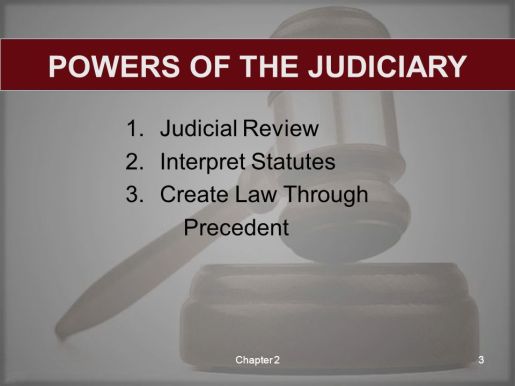
If the U.S. Supreme Court decides to hear a case, they will ultimately render a decision for or against the petitioning party in terms of whether the issue at hand meets the test of Constitutionality, or not. Keep in mind that most Supreme Court decisions are rarely black n’ white with all nine Justices in agreement. The Supreme Court does not write laws; but, their decisions will either affirm the Constitutional legality of a law(s), or determine a legal issue is unconstitutional, and therefore, illegal. From a lawyer’s standpoint, they are looking to the Supreme Court to make a decision that sets a precedence of legal interpretation. This is the essence of what is referred to as “case law.” Any law that is not very specific is subject to interpretation. If s/he wants a sitting judge to decide in her/his favor, then it’s important for the attorney to cite case law decided in other court rooms so the judge for the case-at-hand has something to refer to (i.e.; precedence) as a basis for the decision handed down.
At the end of the day, no matter what the Supreme Court decides in a case, if the citizenry does not like the decision, then the legislature-of-jurisdiction can write new laws that conform to the Supreme Court decision, revise laws to make them conform, or do nothing and allow the decision to be applied to any case coming through the court system. The Supreme Court is a kin to an umpire crew at a baseball game. The umpires did not write the league’s rules; but, their interpretation and decisions about the rules can and may determine which team wins the game.
 The REPORT on NATIONAL SECURITY KINETICS™