National Security

Academically speaking, what is “Security” in This Day and Age?

national-security-graphic_oct2016

The first factor to consider in discussing “Security,” or as it’s more commonly known, “National Security,” is some basic definitions applicable to any country.  These “basics” are not all inclusive, but, they represent the most common National Security factors that are intrinsic to any country’s sovereignty.

  1. Citizen protection, health & well being;
  2. Protecting a country’s strategic infrastructure;
  3. Physical protection of a country’s sovereign territory;
  4. Ensure the security of a country’s natural resources;
  5. Ensuring the political stability of the country’s governmental institutions (i.e.; executive branch, legislature, and judiciary);
  6. Maintain a country’s free access to adjacent international waters and airspace.

Every country has the right to at least the preceding National Security measures without encroachment by any other state actor, non-state actor, or by externally encouraged insurrection.

Most third world countries are incapable of looking beyond these six basic National Security factors.  The truth be told, many third world nations are challenged to the hilt just trying to keep their basic factors from encroachment.  In a general sense, third world countries are so self-absorbed just trying to get the six basics right, that there’s little means, opportunity or time to concern themselves with a crisis brewing in a far off land, and whether that other country’s strife could somehow effect their own country.  An example of this might be a country like Laos, and the ISIS conflict raging in Syria and Iraq.  It is unlikely the ISIS conflict has any direct or even indirect affect on Laotian National Security.  And if the ISIS conflict did have an impact on Laos, what could Laos do about it? Nothing.

But, could the same be said for ISIS’ impact on Great Britain?  No, it could not.  The larger the economy, the greater the infrastructure, the increased sophistication of a country’s society or industry, a higher degree of advanced education systems (i.e.; colleges, trade schools, etc), the higher per capita worker earnings, and Gross Domestic Product means a country like Great Britain has more tactical and strategic interest of problems brewing in other countries.  Great Britain may have a great need for Middle-eastern oil, or they have significant business interests in foreign countries, etc.  In a nutshell, a world economic and military power like Great Britain would not be able to maintain the security and prosperity it has attained by only concerning itself with the “basic six.”

The U.S. Congress enacted legislation over six years ago, requiring the President to publish every five years, a National Security Strategy.  I have pasted a hyperlink below, so you can review the 2015 NSS yourself.  Two definitions pasted below are the U.S. Government’s official position:

Security: 1. Measures taken by a military unit, activity, or installation to protect itself against all acts designed to, or which may, impair its effectiveness.  2. A condition that results from the establishment and maintenance of protective measures that ensure a state of inviolability from hostile acts or influences. 3. With respect to classified matter, the condition that prevents unauthorized persons from having access to official information that is safeguarded in the interests of national security.

National Security: A collective term encompassing both national defense and foreign relations of the United States with the purpose of gaining: a. A military or defense advantage over any foreign nation or group of nations; b. A favorable foreign relations position; or c. A defense posture capable of successfully resisting hostile or destructive action from within or without, overt or covert.

The 2015 NSS did not change the 2010 U.S. National Enduring Interests that form the backbone of the current NSS:

  1. The security of the United States, its citizens, and U.S. allies and partners;
  2. A strong, innovative, and growing U.S. economy in an open international economic system that promotes opportunity and prosperity;
  3. Respect for universal values at home and around the world, and;
  4. A rules-based international order advanced by U.S. leadership that promotes peace, security, and opportunity through stronger cooperation to meet global challenges.

The 2015 NSS listed the following top strategic risks to U.S. interests:

  1. Catastrophic attack on the U.S. homeland or critical infrastructure;
  2. Threats or attacks against U.S. citizens abroad and our allies;
  3. Global economic crisis or widespread economic slowdown;
  4. Proliferation and/or use of weapons of mass destruction;
  5. Severe global infectious disease outbreaks;
  6. Climate change;
  7. Major energy market disruptions, and;
  8. Significant security consequences associated with weak or failing states (including mass atrocities, regional spillover, and transnational organized crime).

The United States learned 115 years ago under the leadership of President Theodore Roosevelt, that America no longer had the ability to remain isolated; the relationship to other countries, was now of strategic interest to American prosperity.  This is why the U.S. Armed Forces are deployed globally to ensure a number of issues do not affect the United States.  The 9/11 terrorist attacks demonstrated what can and will happen on U.S. soil, if the U.S. fails to project their security interests worldwide.  The U.S. can no longer remain insulated and expect the problems overseas to remain there.  Problems & crises elsewhere will come to our shores if our National Security interests do not go beyond the basic six.

http://www.dtic.mil/doctrine/doc…

     Steve Miller, Copyright (c) 2016
 

Standard
Foreign Policy Research & Analysis, National Security, Terrorism Information

What actions have been taken so far as a result of the new American anti-terrorism law enacted in December 2015?

The primary thrust of this new law is to mitigate the risk of someone either living in the U.S., or travels there frequently, to become radicalized with terrorist ideals and training while outside the U.S., then comes home to launch a terrorist attack. This law reflects the San Bernardino, CA attack last year, whereby, an Islamic husband and wife (a U.S. citizen and a Foreign National spouse who entered the U.S. legally) traveled outside the U.S., received radicalization training, then returned home and committed a terrorist act.

On January 21st, the first set of revised immigration rules stemming from the new law, were activated. The new rules are as follows:

• Visa Waiver Program. U.S. immigration rules already in effect, provide a special arrangement – called the Visa Waiver Program – which authorizes passport holders from any of the following countries to enter the U.S. for up to 90 days without an entry visa.

VISA WAIVER PROGRAM COUNTRIES

• Andorra

• Australia

• Austria

• Belgium

• Brunei

• Chile

• Czech Republic

• Denmark

• Estonia

• Finland

• France

• Germany

• Greece

• Hungary

• Iceland

• Ireland

• Italy

• Japan

• Latvia

• Liechtenstein

• Lithuania

• Luxembourg

• Monaco

• Netherlands

• New Zealand

• Norway

• Portugal

• Republic of Malta

• San Marino

• Singapore

• Slovakia

• Slovenia

• South Korea

• Spain

• Sweden

• Switzerland

• Taiwan

• United Kingdom

The new immigration rules under the Act specify that travelers in the following categories are no longer eligible to travel or be admitted to the United States under the Visa Waiver Program (VWP):

– Nationals of VWP countries who have traveled to or been present in Iran, Iraq, Sudan, or Syria on or after March 1, 2011 (with limited exceptions for travel for diplomatic or military purposes in the service of a VWP country).

– Nationals of VWP countries who are also nationals of Iran, Iraq, Sudan, or Syria.

These individuals will still be able to apply for a visa using the regular immigration process at U.S. embassies or consulates. Prior to January 21st, citizens of VWP-eligible countries submitted a request for VWP recognition; this was documented in the Electronic System for Travel Authorizations (ESTAs) to make entries into, and exits from the U.S. ESTA also holds previous traveler information, indicating if they have dual citizenship in Iran, Iraq, Syria or Sudan. If an ESTA approved traveler hits either trip flare – entry to one of the four countries in the past five years, or they are dual citizens of a VWP country AND one of the four countries listed above – those travelers have had their ESTA authorizations revoked. Until they see a U.S. Consular Officer to apply for a visa waiver, they cannot enter the United States. Visa waivers (since they are no longer eligible for an ESTA authorization) are issued on a case-by-case basis…there’s no ready-made rule(s) on what will or will not get someone an approved visa waiver to get back into the U.S.

The Secretary of Homeland Security indicated some of the visa waiver possibilities, such as:

– Travelers to Iran, Iraq, Sudan or Syria on behalf of international organizations, regional organizations, and sub-national governments on official duty;

– Travelers to Iran, Iraq, Sudan or Syria on behalf of a humanitarian NGO on official duty;

– Travelers to Iran, Iraq, Sudan or Syria as a journalist for reporting purposes;

– Travelers to Iran for legitimate business-related purposes following the conclusion of the Joint Comprehensive Plan of Action (July 14, 2015); and

– Travelers to Iraq for legitimate business-related purposes.

Current U.S. passport holders and Foreign Nationals with resident Green Cards already have travel data on-file with Homeland Security in regard to their travel to one of the four, flagged countries, and any dual citizenship thereto. The new rules, so far, do not revoke someone’s Green Card for travel to, or dual citizenship from, the four flagged countries.

Steve Miller, Copyright (c) 2016

Standard
Foreign Policy Research & Analysis

Did Iran Technically Violate the Recent November 2015 Nuclear Accord by Testing Missiles?

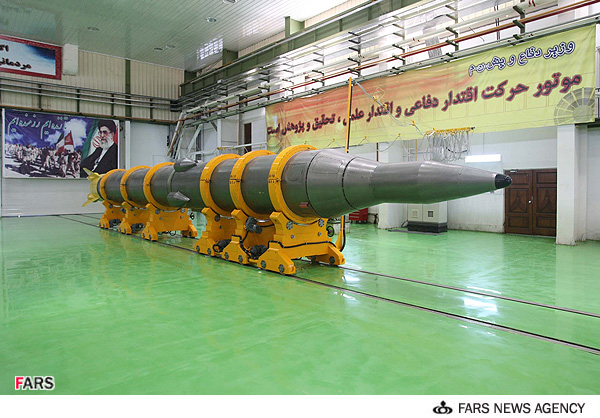
sajil-missile-iran

First, let me say this, I lived and worked in Iran as a young man from 1976 to 1979.  My 23 co-workers and I did not leave the country until after the Shah had been gone about one month.  I had many close friends in Iran, and I was very saddened over the next 10 years or so when I’d receive word when different ones of them were killed during or soon after the Revolution, or in the Iran-Iraq War.  I enjoyed the people, the country and the culture, and have always wanted to go back.

     I encourage you to read my recent articles here concerning Iran.  One is quite long because it contains a strategic report I wrote about Iran in 1977 as part of my job while I was there.  Also, take a look at my Dec 28th article on Quora.com about the sanctions against Iran.  I updated the full picture, and also touched on the ballistic missile launch in the news.  I noted previously that the general public keeps focusing mostly on American sanctions against Iran; little is said about the numerous UN Security Council resolutions which imposed sanctions on Iran, too.  I watched the tape of a Dec 15th UN Security Council meeting where the ballistic missile launch was discussed as being a direct violation of one of the UN resolutions.  Read my Dec 28th article on Quora.com for more information.

     As of this writing, the general public is aware of six launch vehicles (rockets/missiles)  the Iranian’s have engineering documentation for.  Five of the six ballistic missiles are capable of being manufactured by Iran for operational use in nuclear weapons delivery. To date, four of the five operational models are medium range ballistic missiles (MRBM), and one is short range.  All of the countries with operational nuclear weapons also have the ability to produce, and put satellites into orbit.

     Part of the puzzle in tracking a country’s ability to deliver a nuclear weapon is that many missiles often serve in multiple roles of launching satellites, nuclear warheads, conventional high explosives, and biological/chemical weapons.  Although the Iranian missiles listed below are incapable of striking the Continental United States, a range of 1,500 miles would allow Iran to attack locations as far away as: Budapest, Hungary; Minsk, Belarus; Moscow, Russia; all of India (except its eastern & southernmost provinces), Afghanistan, and Pakistan; lastly, anywhere in the Middle East & the Red Sea, including Israel and Saudi Arabia.  This is why Iranian nuclear weapons capability is unacceptable by most United Nations members.  Exacerbating the overall situation, Iran and North Korea have been partnered on nuclear weapons and launch vehicle development for quite some time.

              Iranian Missiles Capable of Launching and Delivering a Nuclear Warhead
  Model Name          Type         Range  Warhead (lbs)     Comments
        Fajr-3        MRBM     1,500 miles           1,760 In sevice (2006)
     Shahab-2         SRBM     1,200 miles          2,640 In sevice (1998)
     Shahab-3        MRBM     1,260 miles          2,178 In sevice (2003)
     Shahab-4        MRBM     1,200 miles          1,760  Design on hold
         Sejil-1        MRBM     1,150 miles     Unavailable  In sevice (2014)
        Sejil-2        MRBM     1,200 miles     Unavailable  In sevice (2014)
Standard