Do you remember your favorite book from childhood?
The Hardy Boys series of mysteries

Do you remember your favorite book from childhood?
The Hardy Boys series of mysteries

Most people are aware of the American phrase,“Land of the Free.” Many Americans translate this freedom into “doing-their-own-thing,” meaning: “I am free to know as little as possible about anything happening at home or abroad.”
An amusing example of this philosophy can be found numerous times on You Tube. One of America’s best known comedians, Jay Leno, hosted a late night talk show for two decades. Leno frequently recorded a shtick during the day for use on the show later that night. He called it “Jay Walking.” Leno would go outside with a microphone and cameraman, and talk to passersby on the streets of Hollywood. One of his favorite questions was showing someone a picture of President Bush, and asking, “Who is this?” A high percentage of people had no clue who Bush was!
Here are some examples of legitimate questions asked by major polling organizations, such as, Gallup, the New York Times, and others. The question results are pretty scary!
1. 28% of those surveyed thought the United States and the Soviet Union fought each other in World War II; 44% did not know they were allies.
2. Three previous nuclear weapons treaties had already been completed by time the fourth nuclear treaty, SALT II, was inked. Right after SALT II was signed, American adults were polled about the two participants; 77% of the respondents did not know the treaty was between the Soviets and Americans.
3. Only 10 years after the Vietnam War was over – a war that claimed 58,000 American lives – less than 60% of American adults knew the U.S. fought on the side of South Vietnam.
These are just a few examples that demonstrate the frustrating apathy that is ever-present in American society. I am proud to be an American; but, it does not make the foregoing any easier to rationalize.
Even though globalization is spreading like wildfire, a large segment of the American population still lives their life in isolation, much like they did 100 years ago. The biggest difference back then versus now is: In 1920 a hard-scrabble life was common among Americans, but they still strongly believed in a participative democracy where the individual was subordinated to the whole.
Ciao,
Steve Miller, IAPWE – Certified & Member
Managing Editor
The Report on National Security Kinetics™
Seattle, WA. USA
vietvetsteve@millermgmtsys.com
The Zubaydah case has significant National Security implications, and the Court ruled in favor of the United States. For most people, court cases can be pretty boring, and even more so at the Supreme Court level; unless, of course, you are fascinated by legal proceedings like me.
In the Zubaydah case, a common court procedure, “discovery,” became a critical issue that could have had a major effect on national security. In criminal cases, it sometimes becomes important for the prosecution or defense to prove or disprove the physical presence of a person involved in the case in order to establish a defendant’s guilt or innocence. However, a person’s physical presence at a certain location, or their whereabouts, is not always material to the case; this includes the location of someone when evidentiary information was obtained from them. For example, if a murderer confesses to a murder while in the back of the patrol car heading to jail, the fact that it occurred in the car makes no difference to its admissibility than if the defendant confessed to it in a police station interrogation room. In Zubaydah’s case, one of the attorneys-of-record decided to file a motion for discovery to determine Zubaydah’s physical presence at a certain location where his testimony/confession had been disclosed. This discovery motion is what stirred up national security concerns.
Zubaydah is currently a detainee at the Guantanamo Bay Detention Facility. Zubaydah was a senior Al Qaeda lieutenant who was sought in connection with the World Trade Center Attack in September 2001. He was ultimately caught in 2002 and remanded to U.S. custody. During Zubaydah‘s detention in 2010, he filed a lawsuit against the USG, alleging that in 2002-2003 he was held by the CIA at a “black site” in Poland. His lawsuit complained that he was unlawfully detained at the black site, citing the Supreme Court decision that enhanced interrogation techniques were illegal, as well as, unlawful detention, which prejudiced his criminal arrest warrant for conspiracy in the 9-11 attacks, and therefore any information which may have been obtained from Zubaydah was inadmissible; ergo his case ought to be dismissed.
Zubaydah had/has multiple criminal charges pending, with some relying on the confession/testimony he alleged came from his black site detention. Although Zubaydah’s black site claim might get the charges dropped that relied on information obtained at the black site, it would not affect other pending charges that did not rely on that information. Sometimes a key factor in a criminal case is proving/disproving the defendant was/was not physically present at the location(s) where events of the case may have occurred. In the case of Zubaydah, the information he revealed at the alleged Polish black site had been confirmed by the USG as valid, but that was not as important as the alleged location where information was obtained.
When the district court considered the defense’s discovery motion, which requested the CIA disclose the location where the defendant’s confession/testimony was obtained, the prosecutors declined to confirm/deny anything about a Polish black site, citing that CIA methods & trade craft are classified information that may harm U.S. national security if revealed. Prosecutors stated that it was common practice by the USG that when the public requested information, or asked for corroboration of certain information already in the public domain, which may or may not have classified national security implications, the USG may choose to reply that they cannot confirm or deny what was being asked for. Prosecutors further stated that there was no statute or case law that compelled the USG to declassify and disclose classified national security information based on a formal or informal request, regardless if the requestor alleges the information is already public knowledge. The prosecution moved to dismiss the discovery motion. The District Court judge concurred with the CIA, dismissing Zubaydah’s discovery motion, as well as dismissing the defense’s lawsuit against the CIA. None of these proceedings had any immediate affect one way or the other on pending criminal charges against Zubaydah, and other defendants, that stemmed from the alleged Zubaydah black site interrogation.
Zubaydah’s attorneys appealed the lower court decision to dismiss the discovery motion, and the lawsuit, to the 9th Circuit Court of Appeals. Zubaydah’s attorney’s submitted that once classified information is found in the public domain, which was alleged to be the case about the black site’s existence, it was no longer sensitive, national security-classified information. In layman’s terms, it was like “the-cat-was-already-out-of-the-bag,” so what’s the big deal? The Appeals Court agreed with the defendant, and reversed the District Court’s ruling, agreeing that once the information was in the public domain, it was moot to retain a national security classification. Reversing the lower court’s dismissal of the discovery motion, and lawsuit, meant the USG could be compelled to acknowledge the black site’s existence in Court, and any details about it. The case was remanded back to the District Court, where Zubaydah’s attorneys would compel the CIA to reveal the black site’s existence, and therefore move to dismiss criminal case(s) based on the Supreme Court’s prior ruling that black site detention locations and enhanced interrogation techniques were unconstitutional.
Before the District Court judge could rule on reversing the dismissal of the discovery motion, and lawsuit, based on Appeals Court guidance, CIA lawyers sought an injunction from the Supreme Court until they could rule on the merits of the motion-to-dismiss. The injunction was granted, allowing time for the case to be heard by The Supreme Court. After the prosecution and defense argued their cases in front of the Court, the Court issued a ruling in favor of the CIA. The Court opinion noted that it has been standard USG practice that if any sort of classified information has been disclosed to the public, the USG is not required to confirm or deny anything about the alleged classified information, since it was classified by the USG in the first place.
Basically, just because alleged classified information has been leaked to the public, the U.S. Government is not required to comment or corroborate the leaked information. This would be a kin to releasing photos to the public of a man standing on the sidewalk near a bank that was being robbed, with the photo clearly showing he was looking right at the robbers as they exited the bank to leave in their getaway car. Speculation was rampant on social media that the man in the photo was a well-known baseball player, but the picture was grainy, and no one was 100% positive it was him. If a discovery motion was filed by the prosecution to compel the baseball player to admit it was him in the picture, and thereby subpoena him to testify against the robbers, but the player is not being charged or investigated for wrongdoing, there’s no statute or case law that says he is required to confirm his identity.
The concept here that applies to national security information is that if it is leaked to the public, the USG cannot be compelled to publicly acknowledge the veracity of the information, nor whether it carries a national security classification, if any. Had the Supreme Court allowed that any alleged USG privileged information that was compromised to the public, could compel the USG to confirm or deny it, if so requested, could cause unintended harm to others. This would mean that such information as might appear on Wikileaks, for example, anyone could submit a formal request to USG compelling them to disclose the veracity of the information.
In the Zubaydah case, the defense attorneys were quite shrewd. By filing a discovery motion seeking to compel the USG to confirm or deny the site, whatever the outcome, the cases stemming from the information obtained at the black site would end up being dismissed. If the CIA confirmed the black site’s existence and the information obtained there, those cases would be dismissed, BUT more importantly, it would have damaged the Polish government in the court of public opinion for allowing the black site operation, as well as, destroy any trust between the two governments. Alternatively, if the CIA denied the black site’s existence, they would be committing perjury, which has no statute of limitations. Poland’s reputation would remain intact, and Zubaydah would likely have been convicted of the crimes stemming from the black site-obtained information. The third option, which was allowed by the Supreme Court, gave the CIA the ability to use the standard reply in these situations – that the information could not be confirmed or denied. This kept Poland’s reputation intact, and did not require the USG to corroborate classified information in the public domain. Unfortunately, the third option meant the District Court’s dismissal of the defense’s discovery motion might create doubt as to the validity of the information if it were utilized in a jury trial. The defense would show the jury that the prosecution could not testify as to where or how the incriminating information was obtained, thereby casting suspicion on the veracity of it. The jury would learn the USG was hiding something, and be unlikely to convict someone using evidence that may have been obtained illegally. So, rather than chase down that rabbit hole, the prosecution had no choice but to concur with the judge’s ruling to dismiss the case(s) using the black site information. Zubaydah still had many other charges pending based on other evidence, but the defense attorney’s very shrewdly got rid of a sizable chunk of the court cases against Zubaydah. Other defendants implicated in Zubaydah’s black site testimony also had some charges dropped.
The moral to this story is that a democratic form of government has a lot more plusses than minuses. In order to have the benefit of all of the favorable aspects of living in the United States, there are going to be times that you have no choice but to accept the bad. No one really doubted Zubaydah’s guilt; he would be convicted on other charges stemming from different information sources. But to get a conviction (a good outcome of democracy) on Zubaydah’s black site confession, it would have required representatives of the U.S. Government to lie under oath (a bad choice), which is not how a democracy works. Zubaydah and his attorneys relied on the fact America’s democratic-based legal system would get him off-the-hook.
Ciao,
Steve Miller, IAPWE – Certified & Member
Managing Editor
The Report on National Security Kinetics™
Seattle, WA. USA
vietvetsteve@millermgmtsys.com
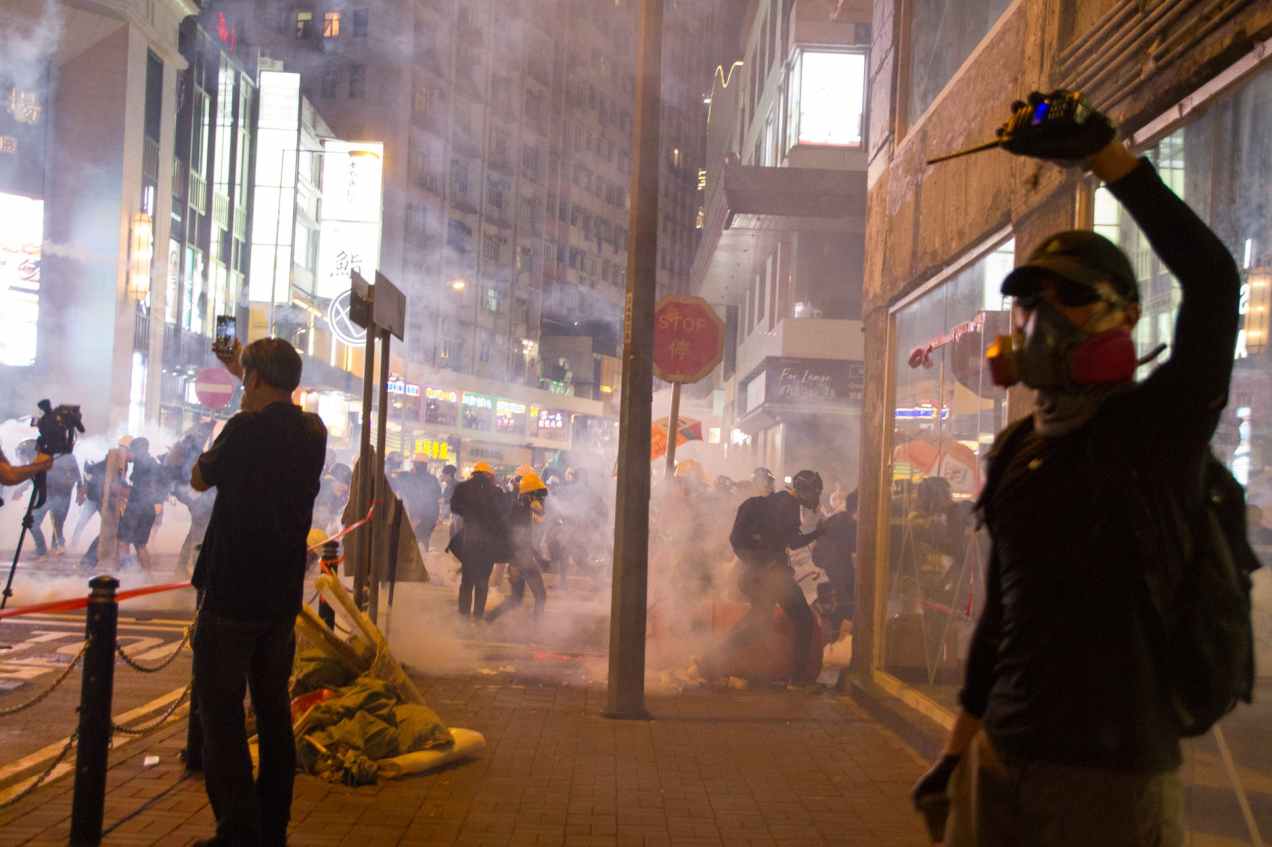
It has been a wild ride in America since March 2020 when the COVID-19 pandemic hit. No one I’ve spoken to can recall a time when there was so much unrest in society. Even all the unrest in the 1960s related to civil rights, the Cold War, and the Vietnam War, pale in comparison to 2020. In 2020-2021, we’ve had police brutality, rioting, extensive destruction of government & personal property, multiple crime waves, subversion, racism, inner-city murders on an unprecedented scale, assault & battery in broad daylight, and hate crimes of every type. In fact, who would have thought that one of the most security-conscious environments, passenger airliners, would see so many on-board fights & unruly passengers? It was a chaotic year that surprised and disturbed most of us. I saw things that I never dreamed I would see in my lifetime.
Back in 1970 I was a junior in high school. I had always been interested in the behind-the-scenes stuff that it took to make movies & T.V. shows. So, I took an elective that year in school called “Technical Theater.” We learned all about building sets, lighting, filming, script supervision, etc. The Technical Theater class served as the production crew for any school plays or concerts.
One day we were gathered in the school’s theater waiting for a beginner’s acting class to finish before we could start some set construction. The beginners were doing improvised, satirical skits, so we casually watched the last two.
In the first skit the teens all lined-up facing the audience. When the teacher called, “action,” the students all started acting like little kids who were standing in a line. They fidgeted, whispered to each other, and jabbed elbows into their neighbor. Typical little kids with ants-in-their-pants. One kid took a step forward and said, “the first grade class of Mary Louise Phillips Elementary School will now say the Pledge of Allegiance to the Flag.” The kid got back in line and told the others, “right hand over your heart, ready…begin…”
As they started to say the pledge, some elbowing got out of hand and two boys shoved each other. Finally, one of them was knocked to the ground, and the other kid kicked him. At this point the Pledge stopped, and all of the kids in the line ran up to the kid on the ground. Rather than helping him up, they jumped-in with the bully who started it, and pretended to give this kid a class “A” beat-down! When they were done, they got back in line. The kid on the ground was now “dead.” After the kids were lined-up again, they cleared their throats and said “…with liberty and justice for all.”
It was supposed to be satirical and we all chuckled mildly. At the time I thought, “well, that was pretty far-fetched…ha!…like that would ever happen in real life.”
The second skit had the students laying on the stage as if they were relaxing under some trees in the park. One kid declared, “it’s a nice day.” Another said rather laconically, “yep, it’s a nice day.” A third kid apparently thought the second kid was being mockingly sarcastic, so he ran over to the second one and loudly yelled in his face, IT’S A NICE DAY!!!” The rest of the kids started chanting, “it’s a nice day…it’s a nice day…it’s a nice day,” as they closed-in on the second kid. The second kid tried to leave, but the group shoved him to the ground and beat the living daylights out of him! Once the second kid acted like he was knocked-out, the others laid down to relax on the grass again. The very first kid who made the nice day comment piped-up and said, “you know, it REALLY is a nice day.”
Hmmm…So, what is the tale of the two skits? In a Vietnam Era, American high school, I saw two skits with ridiculously weird outcomes. There’s no way that either scenario could occur in real life, right? A group of ordinary people could never be so unbalanced that they would assault another person for no apparent reason. I held this belief over the past 50 years; there was NO tale to tell about the two skits…they were just part of a scriptwriter’s imagination.
Then 2020 came around and changed how I felt about the Tale of the Two Skits. The screwy circumstances in the skits were no longer implausible. We are in an era of contempt by many toward our national symbols…The Pledge of Allegiance, The National Anthem, and the U.S. Flag. And the contempt for these symbols has now transcended the average citizen to public institutions and elected officials. What used to be symbols of unity, are now lightning rods of divisiveness.
What about the kids in the first skit symbolizing what is normally a benign gathering…saying the Pledge of Allegiance? Kids and adults will both act out sometimes, and the level of behavior used to be more commensurate to the situation. We were taught that if you need to argue, do it behind closed doors, or take it outside if it is really heated. Nowadays people seem determined that whatever might occur between two people is not taken off-line; it is going down right where they stand in the grocery line, in the bleachers at a ball game, or a local park while kids play on the nearby jungle gym. What used to be two people discussing differing viewpoints, is now an open disagreement. An open disagreement is now a serious argument. A serious argument is now a shoving match. A shoving match is now physical assault. Physical assault is now battery with the intent to do serious physical harm. The intent to do serious physical harm has now escalated into the use of weapons for defensive self-protection. And finally, defensively brandishing a weapon to break-free from a fight is now using a weapon to permanently stop an altercation with someone, by killing them.
In the second skit, the teenager who took exception to what the second kid said, did so by simply reacting and immediately passing judgment. No wisdom or discernment was applied…just react and judge. American society is experiencing an unprecedented wave of public reaction & judgment. Wisdom, discernment and cooler heads prevailing, seems lacking in 2020 America.
In today’s world, the Tale of Two Skits from 50 years ago would still be considered satirical. But, do the two scenarios, or something similar, still seem like an absurd piece of fiction in 2021? The underlying human behavior (not actual school kids or teens in a park) and the outcomes seem quite plausible to me. If the American Dream could be compared to a sunny day, I would say the sun is still there…it just does not rise as high as it used to.
I feel certain that someday American society will exceed the fiction of The Tale of Two Skits…sigh…
Ciao,
Steve Miller, IAPWE – Certified & Member
Managing Editor
The Report on National Security Kinetics™
Seattle, WA. USA
vietvetsteve@millermgmtsys.com

Steve Miller, © Copyright 2016
QUESTION: “How many doctors in California perform house calls? I am considering launching an app that would allow patients to ‘order’ a doctor to their house, and want to know how many doctors in California already perform house calls.”
Greetings! Thanks for the opportunity to answer your question about the number of California doctors performing house calls. My research on the resurgent practice of physician house calls in the United States, in general, and California, in specific, reveals a fair amount of recent media coverage by such august institutions as the Wall Street Journal, New York Times, and U.S. News and World Report. Focusing on California, statistical data reveals an extremely shallow, statewide market penetration of 1,002 doctors making house calls out of 132,370 state-licensed physicians (per the 2015 report by the Medical Board of California). The comprehensive details listed below will give you a better picture of the all but abandoned service of home-based physician care and its comeback in the American healthcare industry.
BACKGROUND
For anyone interested in launching a business in the physician house calls market, it is an encouraging sign to see recent media coverage by some of the major outlets listed above. Aside from the fact their editors decided to run an introductory article on reinventing physician house calls, you will not learn much more than that. But, making a cursory overview of a topic is “journalism 101” for most media institutions with a large readership. It is almost like they are saying: “There…we ran something…next topic!” So, their skimpy reporting was not really a surprise. The next aspect uncovered during the research was somewhat surprising; but, it said a lot about the current marketplace for homed-based physician care.
Not expecting to find much from the likes of the Wall Street Journal, the research shifted to what was expected to be some fertile ground for information about the practice of physician house calls. An extensive search was conducted via some of the most highly regard U.S. institutions in the healthcare industry, to include: The U.S. Government’s National Center for Health Statistics (NCHS), American Medical Association (AMA), Medical Board of California (MBC), California Medical Association (CMA), Federation of State Medical Boards (FSMB), American Academy of Family Physicians (AAFP), Direct Primary Care Journal (DPCJ), and last, but not least, the American Academy of Home Care Medicine (AAHCM). Except for an above average article published in 2011 by the AAFP, entitled “House Calls,” and some useful content from AAHCM, the other organizations either had very little reference information or statistics about the physician house calls industry, or they had some fractional sub-topic coverage about one aspect of the industry, such as, volume 294 of the Journal of the American Medical Association from 2005, that featured an article entitled, “Trends in house calls to Medicare beneficiaries,” stemming from modifications in Medicare regulations that bumped a doctor’s fee reimbursements by 50% for home-based geriatric physician services. Attempting to locate a full-bodied treatment of the industry is quite elusive. There is no doubt the marketplace is gathering steam for expansion of the physician house calls business model; the timing is good for getting in on the ground-floor of this opportunity. If a doctor were to pursue this business model, however, he/she will need two things: 1.) Patience, and; 2.) Patients!
RESEARCH DETAILS
Looking at the data collected by the above healthcare institutions as recent as 2015, none have begun collecting or publishing statistical details on a regular basis about physician house calls. For example, the CMA, who is the flagship organization for medical professionals in California, lists their current focus issues as: Ensuring access to quality medical care; Strengthening public health; Promoting health education and advancing careers in health; Protecting the physician-patient relationship; Working to protect patients; Preserving economic stability, and Advancing new technologies. The resurgent physician house calls practice is not even on the CMA’s radar screen, yet. Similarly, both the FSMB and MBC conduct comprehensive, annual physician surveys, and they are yet to include any questions about physicians practicing home-based medical care. Not even the NCHS is reporting on home-based physician’s care.
Historians say that successfully moving forward in life, as a person, business or country, is never easy; but, it can be easier, if you pay attention to where you have been. The business of physician house calls can benefit from that wisdom. The 2011 AAFP article, House Calls, noted, “House calls were standard practice for physicians in 1930, when approximately 40% of patient encounters occurred in the patient’s home. By 1950, this had fallen to around 10%, and by 1980, only about 1% of patient encounters were house calls.” A 2008 AAFP nationwide survey reported that “the average family physician conducted fewer than one house call per week.” Statistically speaking, caring for patients in their homes has some wide-open possibilities.
There are a number of factors driving the resurgence of physician house calls. The AAHCM lists nationwide Medicare Part B-paid house calls from 1995 through 2014 – that’s 20 years of data – with a 76% increase over that timeframe. Prior to the improved Medicare payment model, home-based geriatric care was mostly for skilled nursing, hospice care, and other non-physician services. The CMA noted that physicians recognized the difficulties non-ambulatory geriatric patients had with making frequent healthcare provider office visits; however, Medicare Part B payments for house calls did not adequately compensate a physician for his/her services. But, the improved Medicare payment model does not tell the whole story when it comes to geriatric medicine. In 1995, even the oldest baby boomers were still in their early 50s, and a major component of the American workforce. Fast forward that by 20 years, according to the NCHS, we find that approximately 70% of the baby boomer generation is now retired. Baby boomers in their retirement years are another key contributor to the 76% increase in Medicare-paid physician house calls.
The enhanced financial upside in geriatric medicine for physician house calls is merely one component of the industry’s bounce back. There are a number of medically valid reasons for physician house calls. The AAFP House Calls article points out that even though there are legitimate reasons for a given patient to receive a physician house call, “The choice of location of care is [still] heavily dependent on the physician’s opinion.” More will be said on the medical benefits of house calls versus a physician’s preference in practicing medicine. The AAHCM says: “Lack of primary care access is one root cause in the genesis of higher health care costs… Instead of receiving appropriate primary medical care as chronic conditions destabilize or new problems develop, these persons get care in expensive ER’s and inpatient units. And who are these people? Everyone — upper and middle class Medicare recipients as well as the poor.” The Call Doctor Medical Group in California studied the cost difference between treating pneumonia in the home rather than the hospital [ER], using 2001 Medicare data. Average cost for hospital treatment was $5,159 while treatment at home cost $1,000. In 2016 dollars, this would be $6,954.26 and $1,345.38, respectively.
The AAHCM posted a Public Policy Statement on its website, vis-à-vis, their formal position on home-based medical care. The essence of the AAHCM statement is: The American healthcare industry needs a major, multi-institutional paradigm shift to make home-based medical care a workable business model for everyone. These institutions include: Federal, state and local government; insurance carriers and claims processing houses; hospitals & outpatient surgery centers; medical schools (i.e.; Johns Hopkins University, et al); pharmaceutical companies; doctors and group medical practices. Doctors and group medical practices were deliberately listed last to emphasize the point that the onus is on the other five industry groups to be the main forces-of-change in home-based medical care. Doctors alone, cannot be the catalyst for change.
ISSUES FOR THE PHYSICIAN
AAFP’s House Calls, said: “House calls can provide a unique perspective on a patient’s life that is not available in an office visit or during hospitalization. A house call can foster the physician-patient relationship, and enhance the physician’s understanding of the patient’s environment and support systems.” Circling back to the comment about physicians strongly influencing the choice of location for practicing medicine, many of them, metaphorically speaking, subscribe to the time-honored philosophy of, “you can lead a horse to water, but, you cannot make them drink.” The vast majority of physicians tend to be pragmatic in their work, especially those in private practice, or a small professional group. The molding of a physician’s philosophy on practicing medicine is a slow, methodical process; it starts before they enter college. The FSMB’s Journal of Medical Regulation in 2015 stated, “Across the period of time representing the continuum of medical education, from baccalaureate to graduate medical education, it typically takes more than nine years after entering college to successfully become a licensed physician in the United States.” During their decade of schooling, the educational institutions they attend are largely responsible for the medical practice philosophy absorbed by students-turned-physicians. The philosophical molding cannot be overstated. Research uncovered several instances of medical school deans stating on-the-record their professional lack of regard for home-based medical care. To create an industry paradigm shift that supports physician house calls, it needs to start during primary medical training at the universities. But, if a school’s dean does not subscribe to the house calls business model, how likely is it that his/her school is going to adopt it as part of the curriculum?
In a June 2014 article from DPCJ, entitled, “Trend: The house call makes a comeback,” it featured Dr. Michael Farzam, who converted exclusively to physician house calls in 2001. The primary focus of the article is to demonstrate to the reader some of the fundamental methods a physician needs to adopt in order to make physician house calls a workable business model. One of the primary advantages Farzam has is: He is his own boss. Whether a particular facet of his physician house calls practice works or not, is entirely on him. A key factor in his success is he embraced the electronic age early in his practice. The DPCJ article states, in part, “…he speaks with patients on the phone before making the trek in LA traffic to their home.” Taking advantage of technology puts Farzam ahead of the power curve for adopting a cell phone-based mobile application to quickly connect patients and physicians on a near real-time basis.
But, what about physicians who currently do not make physician house calls; can anyone simply make the leap? In June 2015, the AAFP published some key information that is essential to anyone interested in moving into the physician house calls industry; this includes the technology providers of the mobile application, and the physicians. For the most part, physicians are not positioned to simply make the switch to doing house calls as their new business model, regardless of utilizing a mobile phone application. The AAFP information indicates that 83% of American physicians are not the sole owner of their medical practice. Of the 83%, ¾ of those physicians have no ownership stake at all. The crux of the situation is: Even if a physician wants to convert to the house calls business model, regardless of using a mobile phone application for booking business or not, he/she is not the sole decision maker, if at all. So, any business plan to capitalize on the physician house calls resurgence has to include how to sway multi-owner medical practices, or those with a CEO or managing partner who makes the heavy business decisions.
CALCULATING CALIFORNIA’S CURRENT PHYSICIAN HOUSE CALLS POPULATION
It would be nice if one or more of the previously noted institutions had already undertaken to determine California’s market penetration for physician house calls; unfortunately, they have not. The net result is: It requires pulling together statistics from multiple sources, and making some assumptions. A testament to how small the market penetration is, is looking at AAHCM’s provider directory. Considering that AAHCM is the main standard bearer for the physician house calls industry, it would make sense to check their database of member/providers. Even if we make the assumption that the vast majority of the American population in any profession is not keen on voluntarily joining anything, then transfer that caveat to temper membership expectations of the AAHCM, and that California has the highest population of licensed physicians in the country (which is 55% greater than 2nd place New York, and nearly double the physician headcount of 3rd place Texas), anyone would be shocked to find AAHCM lists only 22 member/providers in California! By anyone’s measure, there’s a lot of opportunity for business in California.
When evaluating the physician specialties most likely to make physician house calls, it would be general/family practitioners, and internal medicine specialists; these were used in the following calculations. The MBC’s 2014-2015 annual report says there are 10,115 licensed physicians in the state practicing general/family medicine. The report lists 28,415 physicians practicing internal medicine. Again, this is out of a total California-licensed physician population of 132,370.
AAFP’s June 2015 published data indicates that nearly 84% of the physicians surveyed, work in an office or standalone clinic. The bulk of the remaining 16% work in hospitals, urgent care facilities, and residential institutions. The balance of the population, 2.6%, do not see their patients in any of these settings. If you combine together the general/family practitioners and internal medicine specialists, you derive the results below:
2.6% x (10,115 + 28,415) = ~ 1,002 licensed physicians practicing medicine outside of any sort of “brick n’ mortar” healthcare location. This is the broadest population possible of physicians practicing medicine in a home-based setting in California.
Let’s compare some findings from the new start-up physician house calls company in Southern California, “Heal, Inc,” whose practice is currently centered in Los Angeles County and Orange County. Heal uses the mobile application for connecting patients to their cadre of physicians. MBC data indicates that 29% of California physicians practice general/family or internal medicine. MBC states there are 38,974 physicians of all specialties practicing in the two counties. If we apply the 29% state population of GPs and internists to the two-county total physician population of 38,974, it equals 11,344 GP/internists in L.A. and Orange County. Referring back to AAFP’s 2.6% of physicians not practicing in a traditional healthcare setting, the following calculation results:
11,344 x 2.6% = 295 GP/internists not practicing in any traditional setting. Compare the headcount of 295 in L.A. and Orange County to Heal’s current practice cadre of 18 physicians, and we find a lot of room for growth in adopting the cell phone mobile physician house calls model. Even if Heal’s cadre were quadrupled to account for unknown mobile application physician/competitors, it would still be less than a 25% market penetration. There’s plenty of room for growth in just a portion of this large metropolitan area!
CONCLUDING COMMENTS
The U.S. marketplace, in general, and California, in specific, has a huge potential for expansion of the physician house calls industry. Likewise, there is even greater opportunity for incorporating a cell phone-based mobile application for connecting patients with healthcare providers specializing in home-based care. Quick action, however, is paramount in developing a viable business plan for both physician house calls practice adoption, and for the mobile application to connect market participants (i.e.; patients and physicians). Heal, Inc., for example, is expanding to 15 new markets in the next year.
Steve Miller, © Copyright 2016
 The REPORT on NATIONAL SECURITY KINETICS™