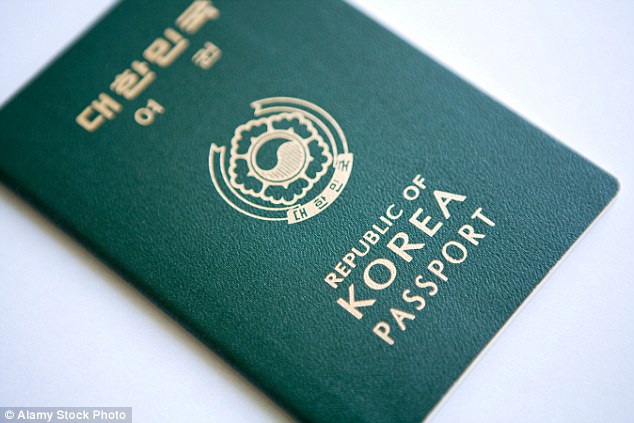
Military service in South Korea, and North Korea for that matter, is compulsory and is viewed as a very sensitive subject in both countries. I won’t go into a lot of detail, but basically, the two countries after 60+ years still see themselves as enemy combatants with an ongoing state-of-war in existence. The question about conscription if you have a Korean passport is not really the indicator you want to look for. The most important factor is if you are a South Korean citizen by means other than naturalization. For example, you were born in Japan to South Korean citizens.
When it comes to your citizenship in one country versus another one, it’s not a simple topic to discuss; but, if you want to avoid a two year detour in the South Korean Armed Forces, you need your head screwed on straight and eyes forward! Some countries do not care if you hold dual citizenship in theirs and another country. In the U.S., however, it is against the law to hold dual citizenship. If you are a natural born U.S. citizen, but may hold another citizenship because of your parents country of birth, but by your 18th birthday you need declare to the U.S. Gov’t which way you intend to go. This narrow view taken by the U.S. is why it’s a violation of Federal Law to enter military service in another country’s armed forces.
If you are a male with dual citizenship in South Korea and a 2nd country, and your South Korean citizen parents never registered you in South Korea’s Gov’t Family Registry, you don’t have any military service obligation. If, however, you were included on your South Korean parents Gov’t Family Registry, you can be conscripted if you are unaware of South Korean law. If you hold South Korean citizenship and Japanese citizenship (as an example) and do not want to be drafted into the ROK military, you must formally renounce your South Korean citizenship before March 31st of the year you turn 18. The South Korean Gov’t will only allow your renunciation if you can show proof that one of three conditions exist:
1. You have been a continuous resident of another country for at least 10 years straight, and your parents are not living in South Korea. This wording is meant to nullify any attempt by mom & dad staying in South Korea and shipping the kid(s) abroad to attend school & live with their Aunt and Uncle (for example).
2. This is the most common and easiest renunciation rule to follow: You are a full-time resident of another country with parents who are citizens of that country.
3. This final citizenship renunciation rule may seem confusing. You must be a full-time resident in another country with your parents since the age of 17 or younger. South Korea uses this rule to negate any effort to leave the country after achieving the age of majority for the purpose of “draft dodging.” The age of 17 is important because you are still considered a minor in both South Korea and most western countries, including the United States. In either country a minor cannot enter into any binding agreement or make any other legally binding arrangement. This would include obtaining a passport from either country without both parent’s signature, and so on.
If you meet one of the rules above, your renunciation is not binding until you file the required forms with the South Korean Embassy in Washington D.C. 20008, or whichever country you are living in. The bottom-line is this: If your parents registered you in South Korea’s Gov’t Family Registry when you were a child, and you did not complete the citizenship renunciation process before your 18th birthday, South Korea considers you to be a citizen who is subject to compulsory military conscription.
As a final note, please take the time, IN ADVANCE, to speak directly with one of the South Korean Consular Officers at the Embassy about this situation. I’ve lived in many foreign countries and all of them carefully follow the international laws of diplomacy and sovereignty. By this I mean, talk 1-on-1 over the phone to a Consular Officer to get your questions answered, and don’t decide there’s a Consulate nearby, or the embassy, and someone comes up with the brilliant idea to just drive over there to speak someone in-person. If you do that, you are now standing on South Korean “soil” and if you somehow got bad information about citizenship rules previously, you might find yourself legally detained because you are violating South Korea’s military conscription law. Call first…
Steve Miller, Copyright (c) 2013

 Recently, someone asked me what I think about when the Vietnam War Memorial in Washington, D.C. comes to mind. Over the years my thoughts have coalesced into one recurring image and my feelings that go with it. I am sharing this with you on Veteran’s Day, as a Vietnam 4th Generation Veteran. I hope my thoughts will strike a cord with you. God Bless All of Us, and God Bless America.
 The REPORT on NATIONAL SECURITY KINETICS™