
Military Operations, History & Cyber Warfare, National Security, Weapon Systems

RNSK Vol 2, Edition 7

What Was it Like as an Army Helicopter Door Gunner in Vietnam?

Published July 20, 2022

In terms of all forms of air combat across all services in the Vietnam War, the most dangerous job was Army air crewman on a Bell UH-1 “Huey” helicopter flying the new, highly successful air assault missions.
The Korean War (1950-53) revealed some important facts about helicopters: 1.) They were essential to ground combat and needed some serious RDT&E money to take advantage of the potential, and; 2.) Airborne assaults using paratroopers were an essential asset, but limited in terms of putting a platoon or company-sized element on-target without scattering soldiers over a wide area. The right kind of helicopter could revolutionize airborne combat assaults. The Huey helicopter was the game-changing assault platform the Army needed. Now a target could be Air Assaulted with precision, and limited only by the number of Hueys available.
The UH-1 was the first Army helicopter to use a jet engine connected to a transmission that powered the main and tail rotors. It was faster, had more range and climbed faster, too. With hydraulic-assisted controls, pilots said it was like flying a luxury car! They carried a 4-man crew and were designed to carry a 9-man infantry squad. In Vietnam, however, the oppressive heat and humidity robbed all helicopters of a lot of lifting capacity, and limited them to 6 soldiers instead of 9.
The Huey was flown primarily in the basic transport (“slick”) configuration and some as modified gunships. Being a door gunner on a slick and a gunship were very different jobs. Each aircraft had a crew chief with a maintenance mechanic MOS. The crew chief was quasi-owner of the bird, and was charged with keeping it flying, as well as flying on her. Door gunners were not from an aviation MOS; just someone willing to fly, live dangerously, and learned to be a good shot firing from a moving platform. They helped the crew chief work on the chopper, too.
A Huey gunship was adapted to carry (most of the time) forward firing 7.62mm miniguns and 7-tube, 2.75″ folding-fin aerial rockets. Crew chiefs and gunners on Huey gunships were primarily aboard as weapons mechanics and spotters. The Huey gunships were already weight-limited and unable to carry anything other than the four crewmen, the weapons and extra ammo. If the bird ever touched down during combat, it was because it was forced to.
The “slick” version was the most plentiful variant where the flying crew chief and door gunner had M60, 7.62mm machine guns for use as directed by the aircraft commander. A good door gunner realized very early on, the best way to stay alive was to not only shoot well, but to meld as quickly as possible with the crew chief on a day-to-day basis. Since pilots were assigned to fly different aircraft all of the time, crew chiefs and door gunners had to learn to mold themselves into a 4-man team every time they flew with different pilots. This meant acting and doing things to keep everyone safe, the chopper flying and the guns shooting without having to be told. If you did these things on a regular basis as a crew chief & door gunner, the word got around, and pilots felt good to have you “watching their six.”

Ciao,

Steve Miller, IAPWE – Certified & Member
Managing Editor
The Report on National Security Kinetics™
Seattle, WA. USA
vietvetsteve@millermgmtsys.com

Steve Miller © 2022 – All Rights Reserved
Standard
Foreign Policy Research & Analysis, National Security

RNSK Vol 2, Edition 6

China: Getting to Know America’s Main Competitor

Published July 8, 2022

landscape photography of the great wall of china

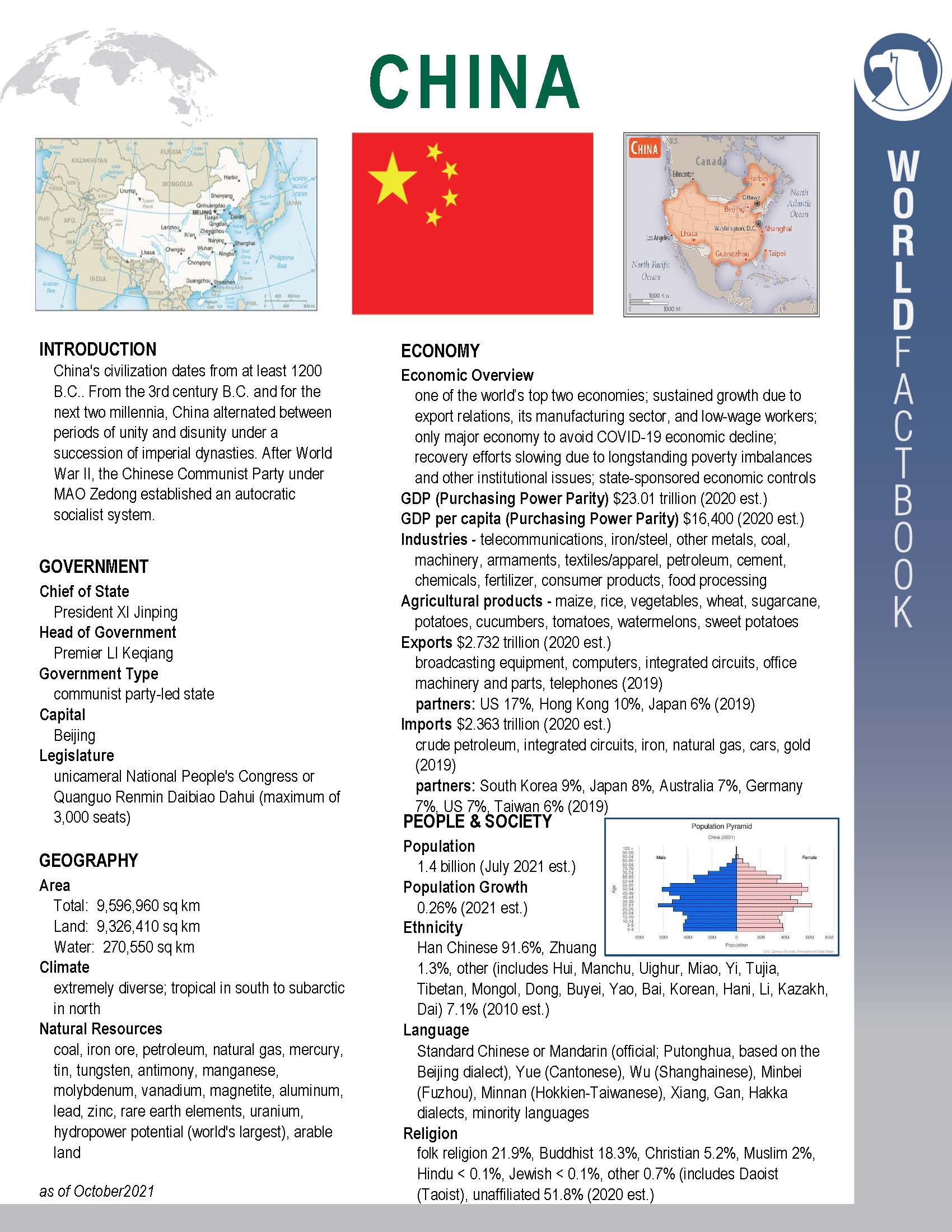
Americans need to start familiarizing themselves with China beyond knowing that they have a Great Wall, good food, and a high percentage of our consumer goods are made there!  Friction between China and America will increase, and each country needs to prepare for the possibility of severing relations due to armed conflict.  As the saying goes, “Know Your Enemy.”  Obviously, no one wants a war between the two countries, but it would be foolish to not be prepared.  Shown below is a basic primer about China.

China Fact sheet CIA Oct2021

Ciao,

Steve Miller, IAPWE – Certified & Member
Managing Editor
The Report on National Security Kinetics™
Seattle, WA. USA
vietvetsteve@millermgmtsys.com
Steve Miller © 2022 – All Rights Reserved
Standard
Foreign Policy Research & Analysis, Military Operations, History & Cyber Warfare, National Security, Weapon Systems

RNSK Vol 2, Edition 5

UPDATE: American Weaponry & Gear Sent to Ukraine

Published July 8, 2022

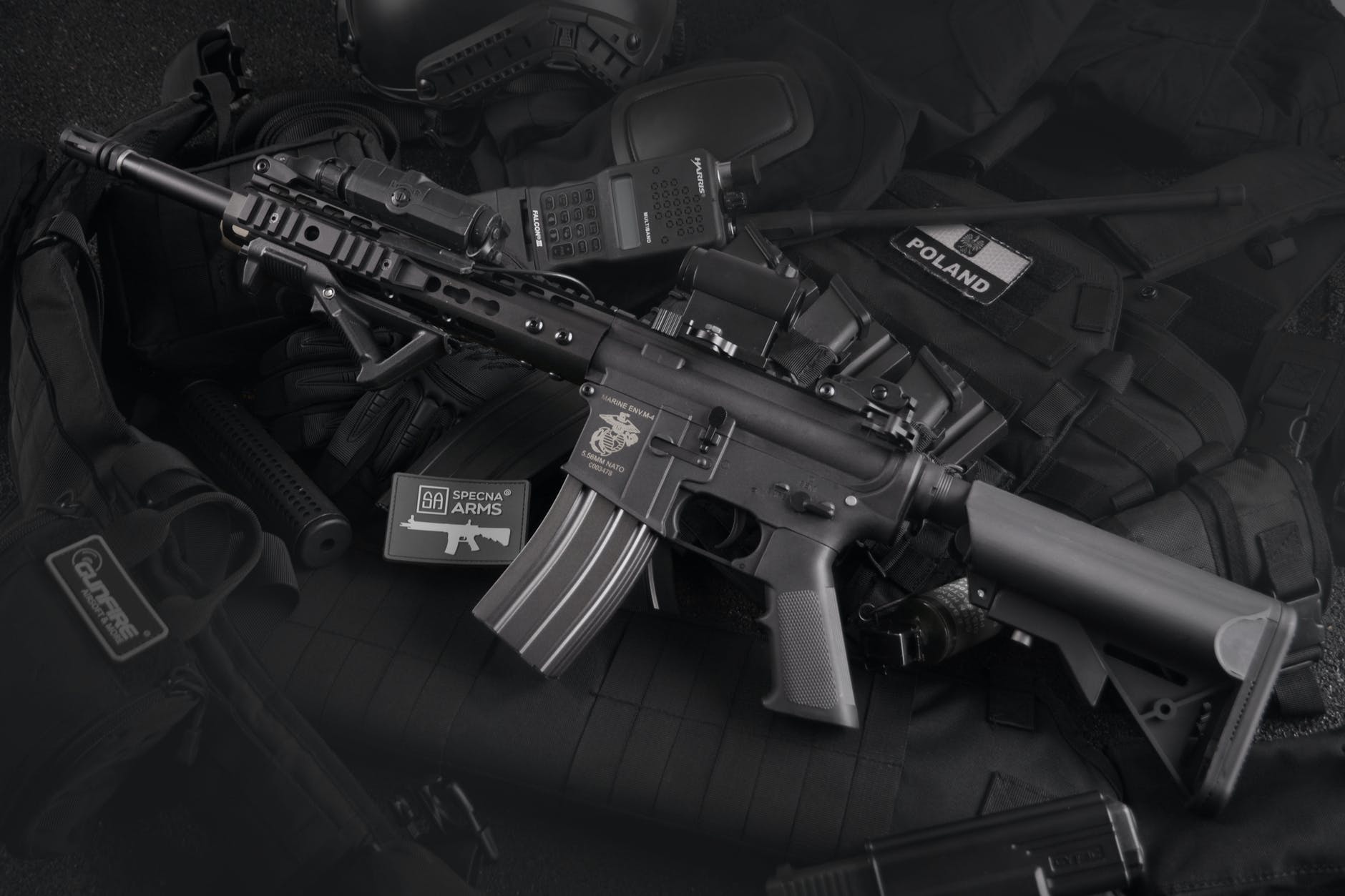
black rifle

In the 12 months preceding Russia’s unprovoked invasion of Ukraine on February 24th, the U.S. supplied approximately $700 million in military weaponry & gear. From the commencement of hostilities until July 1st, Ukraine has received $6.9 billion in military equipment, weaponry, and munitions from the U.S. The DoD announced on July 1st that an additional $820 million in military hardware was on its way to Ukraine.
For anyone familiar with the cost of military logistics, which encompasses the purchasing, transportation, storage, repair and inventorying of everything a military unit needs to function, it’s a massive, complex and costly endeavor. Numerous estimates have been reported on the annual cost of a soldier deployed to a war zone. It runs from $850,000-$1.4 mil. Granted, these are U.S. military costs, and Ukraine’s are likely half as much, if that. Regardless, you get the point that combat forces burn through an incredible amount of money to sustain the fight. By time U.S. and NATO equipment arrives in Ukraine, it’s quickly distributed. They don’t have the luxury of stockpiling.
Here’s a list of military gear that comprises the new $820 million package.
• 36,000 105mm artillery rounds;
• 126 Tactical Vehicles to tow 155mm Howitzers;
• 19 Tactical Vehicles to recover equipment;
• Eight High Mobility Artillery Rocket Systems and ammunition;
• Two National Advanced Surface-to-Air Missile Systems (NASAMS);
• 20 Mi-17 helicopters;
• 400+ Up-Armored Humvees;
• 200 M113 Armored Personnel Carriers;
• 10,000+ M203 grenade launchers, M4 Rifles and M9 Pistols;
• 59+ million rounds of small arms ammunition (including AK-47 ammo);
• 75,000 sets of body armor and helmets;
• 121 Phoenix Ghost Tactical Unmanned Aerial Systems;
• 1,000 AGR-20 70mm APKWS Laser-guided rocket systems;
• Puma Unmanned Aerial Systems;
• Six Unmanned Coastal Defense Vessels;
• 26 counter-artillery radars;
• Four counter-mortar radars;
• Four air surveillance radars;
• Two harpoon coastal defense systems;
• 18 coastal and riverine patrol boats;
• Explosive ordnance disposal protective gear;
• Medical supplies, including first-aid kits, and CBRNE protective gear;
• Electronic jamming equipment;
• Training, maintenance & sustainment

Ciao,

Steve Miller, IAPWE – Certified & Member
Managing Editor
The Report on National Security Kinetics™
Seattle, WA. USA
vietvetsteve@millermgmtsys.com
Steve Miller © 2022 – All Rights Reserved
Standard
Military Operations, History & Cyber Warfare, National Security

RNSK Vol 2, Edition 4

A Famous Writer’s Most Profound Utterance About World War I

Published July 4, 2022

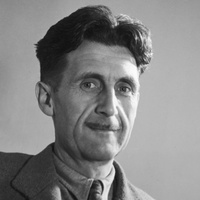
Orwell pix

In May 1946, the famous English essayist, novelist & satirist, George Orwell (1903–1950), published an article in the short-lived British magazine “Polemic,” in which he analyzed the political, socioeconomic, and nationalistic single-mindedness of the four dominant state participants of World War I: England, Russia, Germany, and France. They all thought it would be a quick war. The concept of World War I being thought of as a quick war, became easy prey for journalists & authors during the War, and for the following 30+ years. Throughout this entire period, George Orwell grew into one of the most revered writers of the 20th Century.

It is fitting that an Orwellian comment about the folly of a quick war has been preserved. Orwell’s 1946 sobering quote has proven its enduring accuracy for decades.

Orwell said: “The quickest way of ending a war is to lose it.”

Read on to understand why he felt the way he did.

All wars are terrible, but World War I occupies a unique, but tragic place in history: It started based on the hubris of the major political powers noted above. There were no tyrannical despots involved; no hegemonic land-gobbling; no dastardly sneak attacks; no irreconcilable political squabbles in the pre-war years. Undoubtedly, Europe’s highly developed countries were compressed into a small area, and they could, at times, behave like a burlap sack full of cats! Compounding the problem that led to such horrific loss of life & destruction was the flawed military strategy on both sides that combined 20th Century weaponry with 19th Century ground combat tactics. An example of the mind-boggling statistics is the British Army’s losses at the 1916 Battle of the Somme, where they lost 60,000 soldiers on just the first day of battle. That’s equivalent to 12 army divisions.

Until June 28, 1914, everything was business as usual. Then in Sarajevo (modern-day capital of Bosnia-Herzegovina), a Bosnian dissident assassinated the heir to the Austro-Hungarian throne, Archduke Franz Ferdinand. High-level political wrangling ensued over the next 30 days over Austria-Hungary’s intent to “punish somebody” for the assassination. Due to a mish-mash of treaty alliances between the various countries, the hubris kicked-in when one country declared, “if you attack so & so, then we will attack you.” Then a third country said, “well, if you attack my friend, then I will come to his defense.” Meantime, everyone mobilized for war, and by July 28th no one would back down, with war being declared against each other: England, France & Russia, versus Germany, Austria-Hungary & the Ottoman Empire.

Quite literally, each country saw themselves as the embodiment of the right cause to fight for, and kept it that way for more than four years; no one was willing to back down. So self-assured were the major powers, that each thought the opposing armies would collapse in just a couple of months; in essence, it would be a quick war. Each belligerent saw themselves as victors, ensuring everyone would be home for the Christmas 1914. Instead of a “quick,” planned war of four months, the combatants got four years of unscripted warfare. Everyone was a loser in W.W. I.

Ciao,

Steve Miller, IAPWE – Certified & Member
Managing Editor
The Report on National Security Kinetics™
Seattle, WA. USA
vietvetsteve@millermgmtsys.com
Steve Miller © 2022 – All Rights Reserved
Standard
Foreign Policy Research & Analysis, Miscellaneous Topics, National Security

RNSK Vol 2, Edition 3

How Knowledgeable Is The Average American About World Events & Trends?

Published July 3, 2022

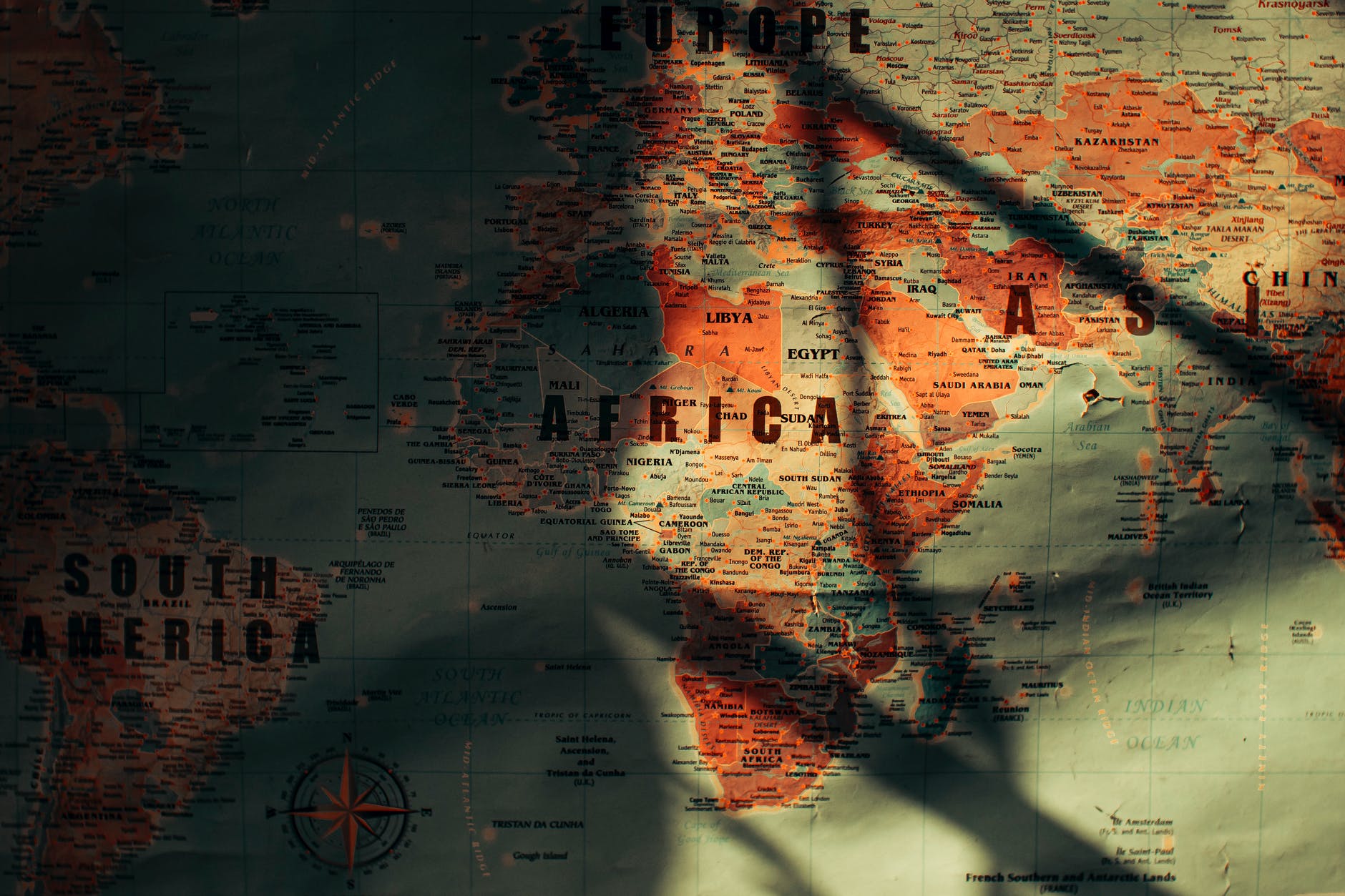
paper world map with continents and water

In a nutshell: Americans are not as knowledgeable as they could, or should be.

Most people are aware of the American phrase,“Land of the Free.” Many Americans translate this freedom into “doing-their-own-thing,” meaning: “I am free to know as little as possible about anything happening at home or abroad.”

An amusing example of this philosophy can be found numerous times on You Tube. One of America’s best known comedians, Jay Leno, hosted a late night talk show for two decades. Leno frequently recorded a shtick during the day for use on the show later that night. He called it “Jay Walking.” Leno would go outside with a microphone and cameraman, and talk to passersby on the streets of Hollywood. One of his favorite questions was showing someone a picture of President Bush, and asking, “Who is this?” A high percentage of people had no clue who Bush was!

Here are some examples of legitimate questions asked by major polling organizations, such as, Gallup, the New York Times, and others. The question results are pretty scary!

1. 28% of those surveyed thought the United States and the Soviet Union fought each other in World War II; 44% did not know they were allies.
2. Three previous nuclear weapons treaties had already been completed by time the fourth nuclear treaty, SALT II, was inked. Right after SALT II was signed, American adults were polled about the two participants; 77% of the respondents did not know the treaty was between the Soviets and Americans.
3. Only 10 years after the Vietnam War was over – a war that claimed 58,000 American lives – less than 60% of American adults knew the U.S. fought on the side of South Vietnam.

These are just a few examples that demonstrate the frustrating apathy that is ever-present in American society. I am proud to be an American; but, it does not make the foregoing any easier to rationalize.

Even though globalization is spreading like wildfire, a large segment of the American population still lives their life in isolation, much like they did 100 years ago. The biggest difference back then versus now is: In 1920 a hard-scrabble life was common among Americans, but they still strongly believed in a participative democracy where the individual was subordinated to the whole.

Today’s America is more about redefining the meaning of democracy to focus on individualism, and the subordination of the whole.

Ciao,

Steve Miller, IAPWE – Certified & Member
Managing Editor
The Report on National Security Kinetics™
Seattle, WA. USA
vietvetsteve@millermgmtsys.com

Steve Miller © 2022 – All Rights Reserved
Standard