
A Famous Writer’s Most Profound Utterance About World War I
Published July 4, 2022
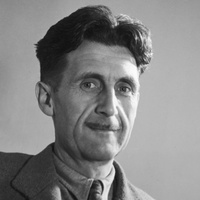
In May 1946, the famous English essayist, novelist & satirist, George Orwell (1903–1950), published an article in the short-lived British magazine “Polemic,” in which he analyzed the political, socioeconomic, and nationalistic single-mindedness of the four dominant state participants of World War I: England, Russia, Germany, and France. They all thought it would be a quick war. The concept of World War I being thought of as a quick war, became easy prey for journalists & authors during the War, and for the following 30+ years. Throughout this entire period, George Orwell grew into one of the most revered writers of the 20th Century.
It is fitting that an Orwellian comment about the folly of a quick war has been preserved. Orwell’s 1946 sobering quote has proven its enduring accuracy for decades.
Orwell said: “The quickest way of ending a war is to lose it.”
Read on to understand why he felt the way he did.
All wars are terrible, but World War I occupies a unique, but tragic place in history: It started based on the hubris of the major political powers noted above. There were no tyrannical despots involved; no hegemonic land-gobbling; no dastardly sneak attacks; no irreconcilable political squabbles in the pre-war years. Undoubtedly, Europe’s highly developed countries were compressed into a small area, and they could, at times, behave like a burlap sack full of cats! Compounding the problem that led to such horrific loss of life & destruction was the flawed military strategy on both sides that combined 20th Century weaponry with 19th Century ground combat tactics. An example of the mind-boggling statistics is the British Army’s losses at the 1916 Battle of the Somme, where they lost 60,000 soldiers on just the first day of battle. That’s equivalent to 12 army divisions.
Until June 28, 1914, everything was business as usual. Then in Sarajevo (modern-day capital of Bosnia-Herzegovina), a Bosnian dissident assassinated the heir to the Austro-Hungarian throne, Archduke Franz Ferdinand. High-level political wrangling ensued over the next 30 days over Austria-Hungary’s intent to “punish somebody” for the assassination. Due to a mish-mash of treaty alliances between the various countries, the hubris kicked-in when one country declared, “if you attack so & so, then we will attack you.” Then a third country said, “well, if you attack my friend, then I will come to his defense.” Meantime, everyone mobilized for war, and by July 28th no one would back down, with war being declared against each other: England, France & Russia, versus Germany, Austria-Hungary & the Ottoman Empire.
Quite literally, each country saw themselves as the embodiment of the right cause to fight for, and kept it that way for more than four years; no one was willing to back down. So self-assured were the major powers, that each thought the opposing armies would collapse in just a couple of months; in essence, it would be a quick war. Each belligerent saw themselves as victors, ensuring everyone would be home for the Christmas 1914. Instead of a “quick,” planned war of four months, the combatants got four years of unscripted warfare. Everyone was a loser in W.W. I.
Ciao,
Steve Miller, IAPWE – Certified & Member
Managing Editor
The Report on National Security Kinetics™
Seattle, WA. USA
vietvetsteve@millermgmtsys.com

 The REPORT on NATIONAL SECURITY KINETICS™