
Tag Archives: judiciary
RNSK Vol I, Edition 3
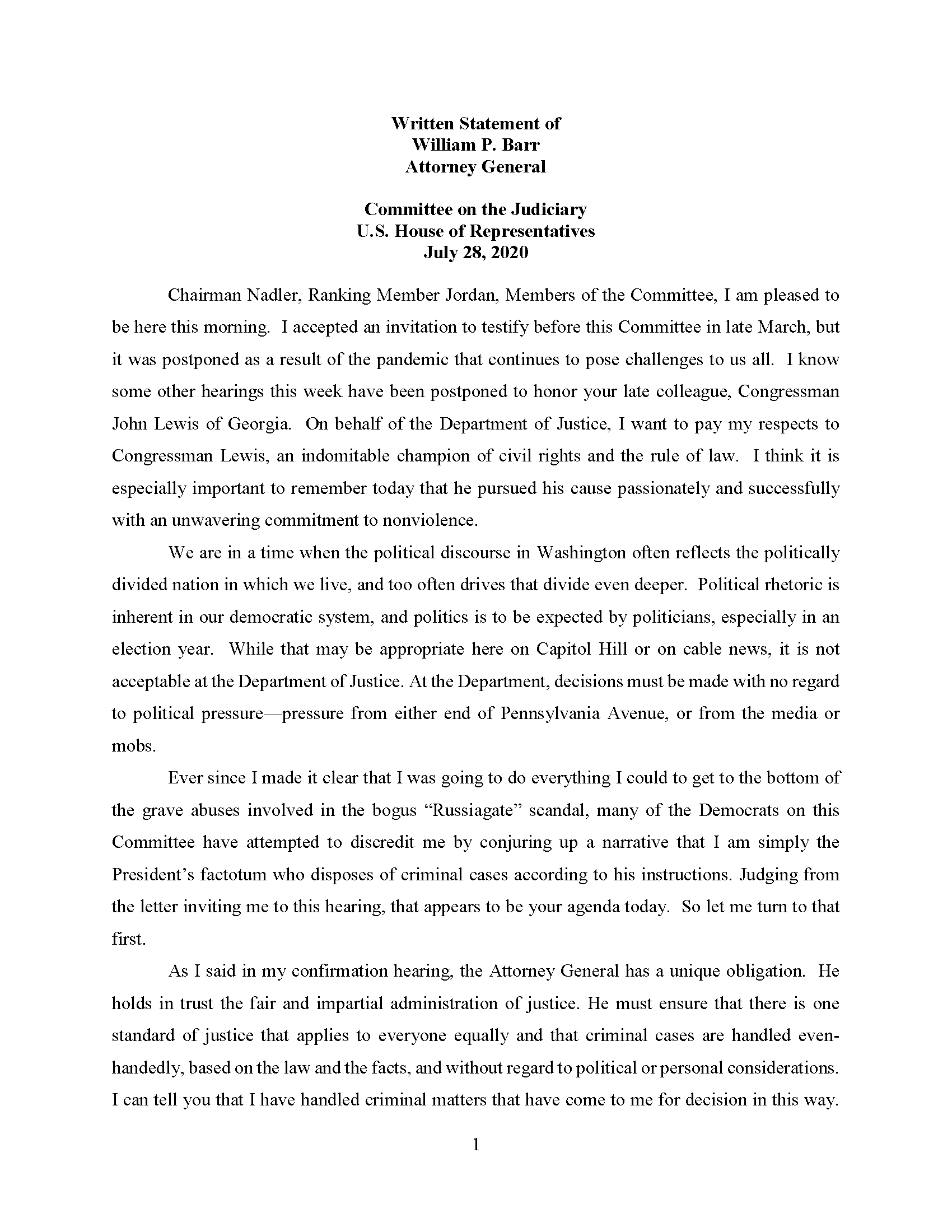
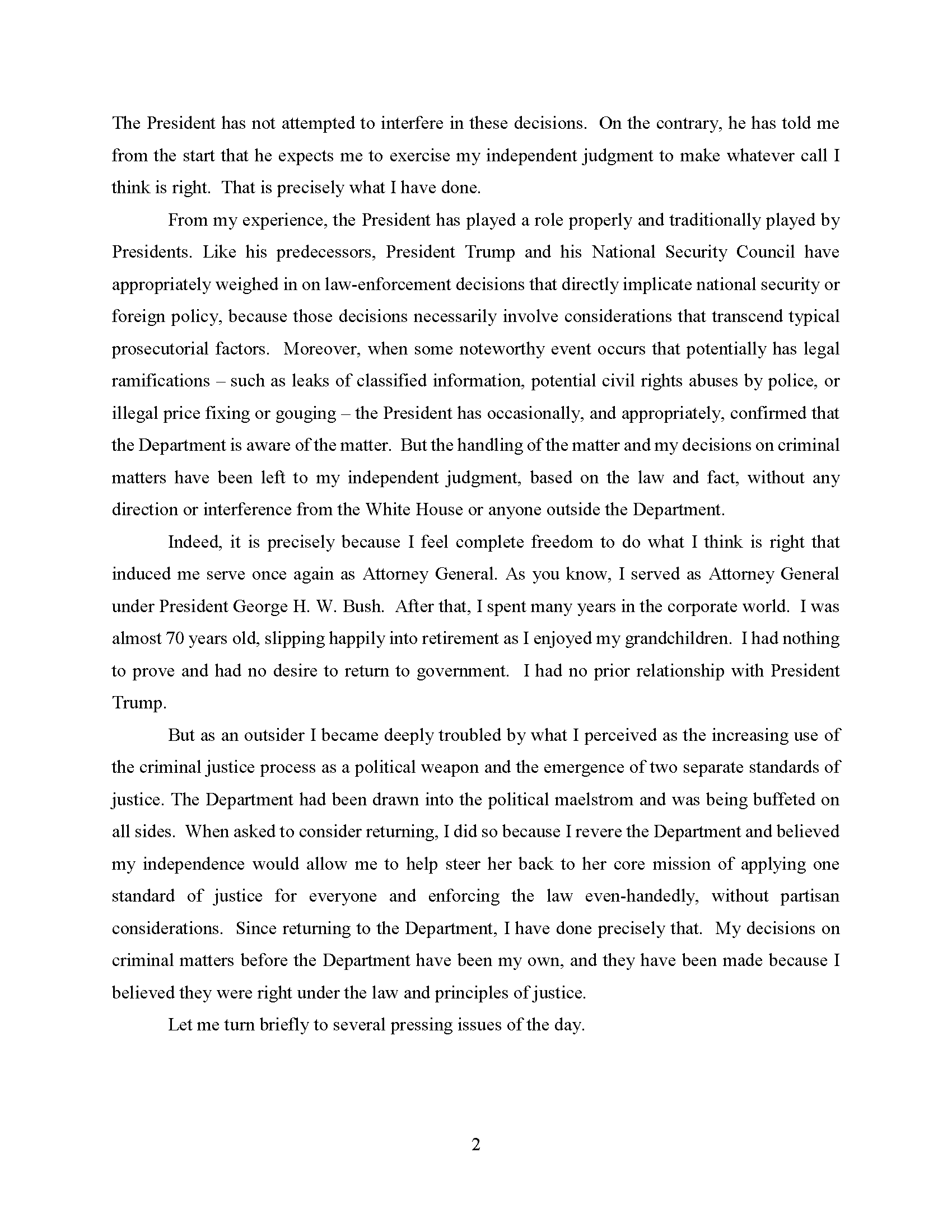
Written Statement of
William P. Barr
Attorney General
Committee on the Judiciary
U.S. House of Representatives
July 28, 2020

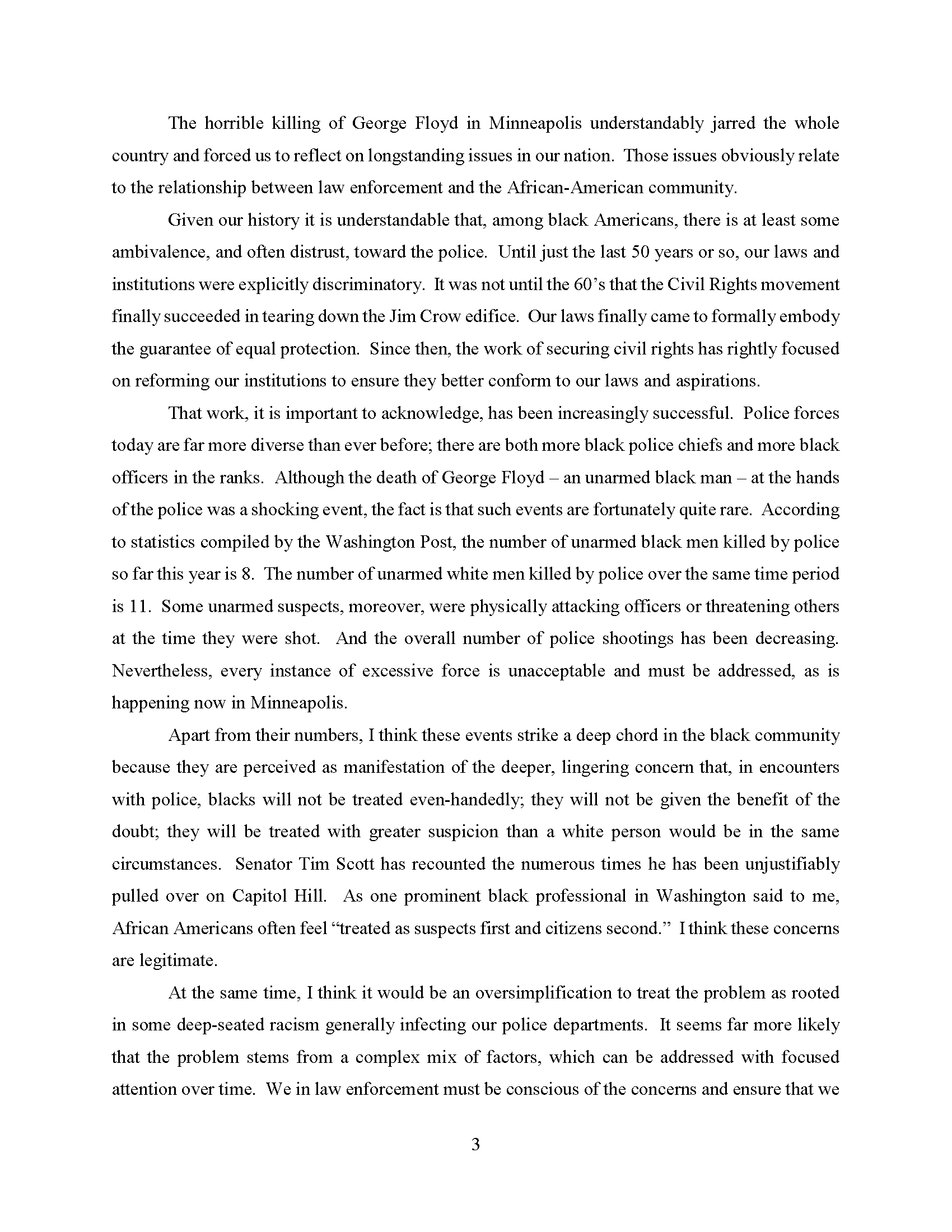
On July 28, 2020, United States Attorney General, William Barr, will testify in front of the Judiciary Committee of the U.S. House of Representatives. I want to call your attention to Attorney General Barr’s prepared statement released today, July 27th, and will be read into the Judiciary Committee’s proceedings by Barr. The unabridged content of AG Barr’s statement is shown below.
My purpose in bringing this statement to your attention is simply due to the near identical wording in his statement about the current spate of domestic violence issues, and the outcome of that violence, in comparison to my words cited in last weeks RNSK Volume I, Edition 2. It is important to me that my readers recognize that what I write is factual, and correctly analyzed. It is not a fanciful opinion of little value to the discerning public.
Here are some excerpts from Barr’s Statement:
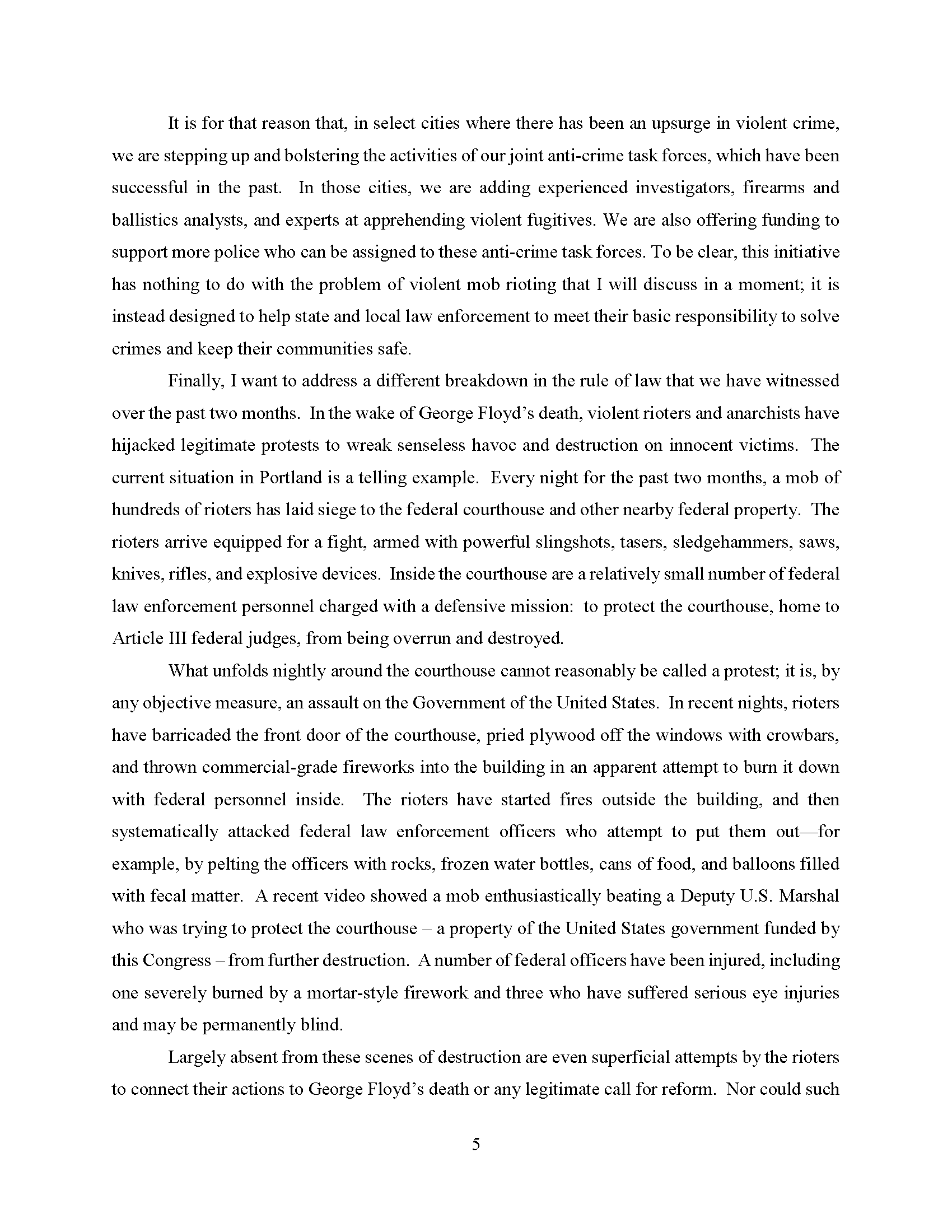
“I want to address a different breakdown in the rule of law that we have witnessed over the past two months. In the wake of George Floyd’s death, violent rioters and anarchists have hijacked legitimate protests to wreak senseless havoc and destruction on innocent victims. The current situation in Portland is a telling example. Every night for the past two months, a mob of hundreds of rioters has laid siege to the federal courthouse and other nearby federal property.
What unfolds nightly around the courthouse cannot reasonably be called a protest; it is, by any objective measure, an assault on the Government of the United States.
Largely absent from these scenes of destruction are even superficial attempts by the rioters to connect their actions to George Floyd’s death or any legitimate call for reform.
Nor could such brazen acts of lawlessness plausibly be justified by a concern that police officers in Minnesota or elsewhere defied the law.
Remarkably, the response from many in the media and local elected offices to this organized assault has been to blame the federal government. To state what should be obvious, peaceful protesters do not throw explosives into federal courthouses, tear down plywood with crowbars, or launch fecal matter at federal officers. Such acts are in fact federal crimes under statutes enacted by this Congress.”
I invite you to read the rest of AG Barr’s prepared statement, and watch his Congressional testimony on July 28th at 10am EDT. Most major television news outlets will carry the proceedings live.
Ciao,
Steve Miller
Editor
The Report on National Security Kinetics™
Seattle, WA. USA
vietvetsteve@millermgmtsys.com


What is the legal definition of “National Security” established by the US Courts?
To get the full treatment on the topic of National Security from the U.S. point of view, take a look at my series of general FAQs I wrote for Quora at the following link:
https://www.quora.com/topic/National-Security/faq
One of the FAQs provides the U.S. Government definition of National Security, as follows:
Within the context of how the United States defines National Security, it was developed and promulgated via Joint Publication #1 by the Department of Defense, Joint-Chiefs-of-Staff. The meaning is: A collective term encompassing both national defense and foreign relations of the United States with the purpose of gaining: a. A military or defense advantage over any foreign nation or group of nations; b. A favorable foreign relations position; or c. A defense posture capable of successfully resisting hostile or destructive action from within or without, overt or covert.
In terms of a “legal” definition of National Security either in the U.S. Code of Federal Regulations (CFRs), or anything based on a Federal District, Appeals or Supreme Court ruling that might create “case law,” you will not find anything. The reason why is the term, by its very nature, is too broad, and any level in the U.S. court system would be committing “judicial suicide” if they attempted to render a felony trial verdict based on an attempt to fully encapsulate a definition of National Security.
Not trying to be flippant, but, attempting to create a single, legally binding definition of National Security that could hold up to an ultimate determination by the U.S. Supreme Court, would be just as difficult as to pin down as legally defining the term “Chocolate Donut.”
Seriously, take a look at my National Security FAQs. Part of the problem with trying to pin down a legally binding definition of National Security is simply that it is a moving target that is constantly evolving. My FAQs denote some of the more recent developments that now pose a National Security threat that no one would have dreamed of 50–60 years ago. Here are a few examples of what I mean:
- Global Climate Change;
- Trans-National Crime;
- A Global Disease Pandemic;
- Cyber-based Infrastructure Threats;
- Space-borne Threats. And this is not just “Star Wars” stuff with killer satellites and lasers. The U.S. is the ONLY country in the World to track the tens of thousands of pieces of space junk, defunct satellites, micro-meteorites, et al, that could potentially enter the earth’s atmosphere, or possibly collide accidentally with an important spacecraft up there. A burned-out Russian satellite has already collided with an American in-use satellite that before the collision, there were just two objects, and now the debris has made thousands of objects.
If you go back to the 1930s, not only were the threats listed above either unknown, or considered non-threatening, but, no one had an inkling about a nuclear holocaust being a National Security threat either.
These are just some of the things we have added to the National Security threat list since World War II. I am sure there is more to come, and our understanding of what constitutes National Security will continue to evolve, too.
Do the courts create law in the United States?
When it comes to defining the law and what is, or is not legal, it first starts with the norms of behavior in a given society. A significant portion of the approximate 200 countries in the World trace their societal norms and many of their laws to the Ten Commandments written in the Bible’s Old Testament. Many religions believe the Ten Commandments are the “pinnacle-of-rules” promulgated by a Deity to His chosen oracle on Earth (i.e.; Moses). In reality, however, whether you believe Moses was a true prophet of God, or just a pretty wise fellow who wrote the Ten Commandments on his own, most learned people recognize that the Ten Commandments were/are a basic foundation of human behavior. Moses, with or without devine intervention, was extremely frustrated with the Jews under his charge after bringing them out of Egypt. In today’s parlance, the Jews following Moses often behaved like teenagers at a “rave party,” and recognized if they didn’t clean-up their act, the end result was not going to be good for anyone.
Most countries have many, many laws on the books nowadays that go far beyond the basic morality of the Ten Commandments. Many of these additional laws start first in a society where certain acts or behavior are seen as being in “poor taste,” or the now common phrase, “unethical.”
A country, such as the United States, is seen as one of the most sophisticated, highly evolved societies on the planet. We are fortunate to have had a group of “Founding Fathers,” such as the likes of John Adams and Thomas Jefferson. These men were cultured, very intelligent, pillars of their community, well educated, and had a good income. In my opinion, both the Declaration of Independence and the U.S. Constitution are documents I respect, and would have expected nothing less from a group of such highly regarded men. The Framers-of-the-Constitution had the foresight to realize that man and society were on a never ending continuum of life. What was well known and common practice in 1780’s America, was more evolved 100 years previous in 1680; and 100 years into the future in 1880 would be even further evolved than the colonial era. This concept of societal evolution led the Framers to build some methods of change into the Constitution; or, as I like to call it, the “what if” factor. The Constitution is a living document.
An important event occurred before the Constitution was written. It demonstrated that even a group of distinguished men do not always get something right on the first try. I am speaking of the “Articles of Confederation,” the pre-cursor document to the U.S. Constitution. An old college history professor I had, called the Articles of Confederation the “have-your-cake-and-it-too” version of the Constitution. He was referring to the heavy emphasis on state’s rights and a weak central government. In other words, the states saw the fundamental benefits of “safety-in-numbers” by banding together. But, at the same time, they wanted the states free to do what their citizens wanted without the central government or other states crying “foul!” Within a few years the leaders of the various states could see the Articles of Confederation were doomed to failure. So, back to the table they all went and wrote the Constitution.
The constitutional authors created a document with rules that would remain in-place indefinitely, unless the citizenship saw a need for change. Congress was charged with the responsibility to manage the process of constitutional change; that is, an amendment. The authors also realized from the failed Articles of Confederation that you can get some of the people to agree all of the time; and you can get all of the people to agree some of the time…but, you won’t get everyone to agree all of the time. If a particular section of the Constitution really became a thorn in everyone’s side, then an amendment could be drawn up. The authors, however, did not want the amendment process to be a simple thing to do; otherwise, the thing would undergo constant revisions.
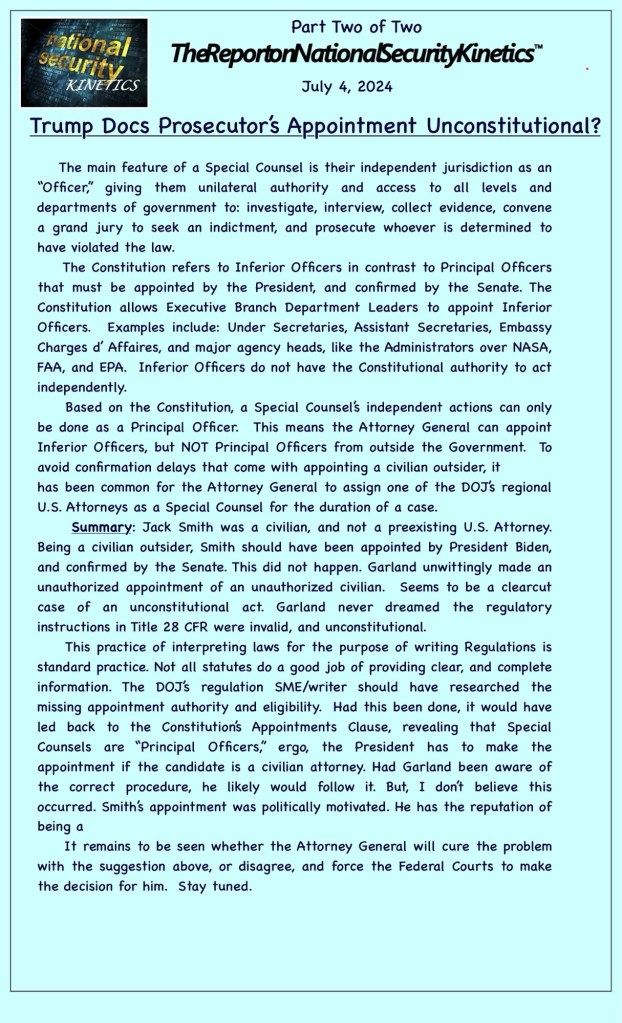
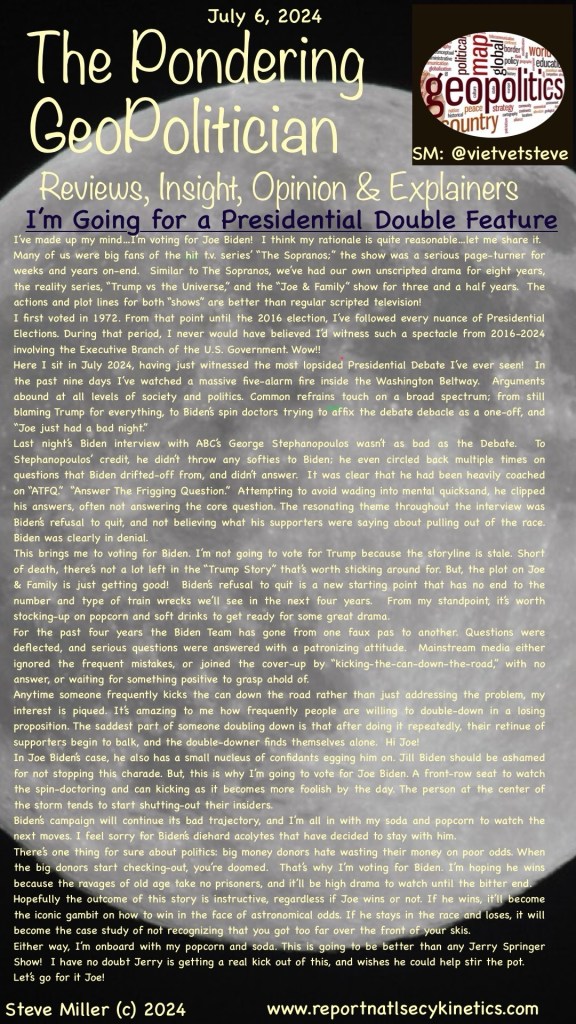
The Constitutional authors understood it would be the primary legal reference for all future Federal, State and Local laws. If any question arose about future laws & regulations at any level in terms of
Constitutionality, the matter could be brought to a State Supreme Court, or ultimately to the U.S. Supreme Court. If a case is sent to the U.S. Supreme Court, the Justices could read the filed briefs by opposing counsel and determine the issue at hand does not pose a big enough issue for the citizenry and decline to take the case. This means that whatever legal issue is in question, and however it is currently being applied, stays as is. If anyone wants to pursue further action, the only choice is to have the cognizant legislative body write new or revised legislation to change the status quo.
If the U.S. Supreme Court decides to hear a case, they will ultimately render a decision for or against the petitioning party in terms of whether the issue at hand meets the test of Constitutionality, or not. Keep in mind that most Supreme Court decisions are rarely black n’ white with all nine Justices in agreement. The Supreme Court does not write laws; but, their decisions will either affirm the Constitutional legality of a law(s), or determine a legal issue is unconstitutional, and therefore, illegal. From a lawyer’s standpoint, they are looking to the Supreme Court to make a decision that sets a precedence of legal interpretation. This is the essence of what is referred to as “case law.” Any law that is not very specific is subject to interpretation. If s/he wants a sitting judge to decide in her/his favor, then it’s important for the attorney to cite case law decided in other court rooms so the judge for the case-at-hand has something to refer to as a basis of the decision handed down.
At the end of the day, no matter what the Supreme Court decides in a case, if the citizenry does not like the decision, then the legislature-of-jurisdiction can write new laws that conform to the Supreme Court decision, revise laws to make them conform, or do nothing and allow the decision to be applied to any case coming through the court system. The Supreme Court is a kin to an umpire crew at a baseball game. The umpires did not write the league’s rules; but, their interpretation and decisions about the rules can and may determine which team wins the game.
 The REPORT on NATIONAL SECURITY KINETICS™