
Tag Archives: u.s. supreme court
RNSK Vol 2, Edition 2
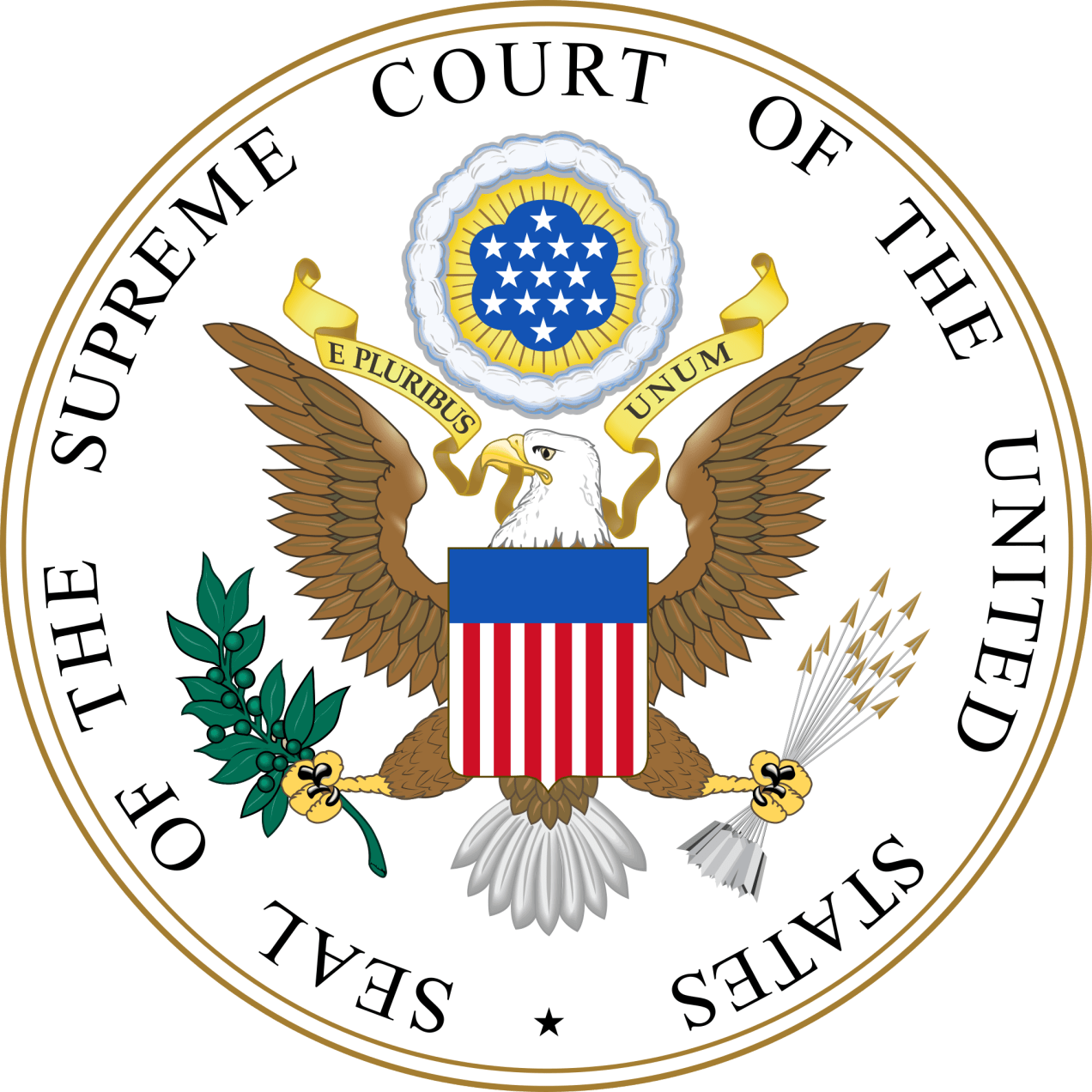
United States Supreme Court Decision: U.S. v Abu Zubaydah Published March 3, 2022
An Important Decision In Protecting Classified National Security Information
Introduction
The Zubaydah case has significant National Security implications, and the Court ruled in favor of the United States. For most people, court cases can be pretty boring, and even more so at the Supreme Court level; unless, of course, you are fascinated by legal proceedings like me.
In the Zubaydah case, a common court procedure, “discovery,” became a critical issue that could have had a major effect on national security. In criminal cases, it sometimes becomes important for the prosecution or defense to prove or disprove the physical presence of a person involved in the case in order to establish a defendant’s guilt or innocence. However, a person’s physical presence at a certain location, or their whereabouts, is not always material to the case; this includes the location of someone when evidentiary information was obtained from them. For example, if a murderer confesses to a murder while in the back of the patrol car heading to jail, the fact that it occurred in the car makes no difference to its admissibility than if the defendant confessed to it in a police station interrogation room. In Zubaydah’s case, one of the attorneys-of-record decided to file a motion for discovery to determine Zubaydah’s physical presence at a certain location where his testimony/confession had been disclosed. This discovery motion is what stirred up national security concerns.
Background of the Case
Zubaydah is currently a detainee at the Guantanamo Bay Detention Facility. Zubaydah was a senior Al Qaeda lieutenant who was sought in connection with the World Trade Center Attack in September 2001. He was ultimately caught in 2002 and remanded to U.S. custody. During Zubaydah‘s detention in 2010, he filed a lawsuit against the USG, alleging that in 2002-2003 he was held by the CIA at a “black site” in Poland. His lawsuit complained that he was unlawfully detained at the black site, citing the Supreme Court decision that enhanced interrogation techniques were illegal, as well as, unlawful detention, which prejudiced his criminal arrest warrant for conspiracy in the 9-11 attacks, and therefore any information which may have been obtained from Zubaydah was inadmissible; ergo his case ought to be dismissed.
Zubaydah had/has multiple criminal charges pending, with some relying on the confession/testimony he alleged came from his black site detention. Although Zubaydah’s black site claim might get the charges dropped that relied on information obtained at the black site, it would not affect other pending charges that did not rely on that information. Sometimes a key factor in a criminal case is proving/disproving the defendant was/was not physically present at the location(s) where events of the case may have occurred. In the case of Zubaydah, the information he revealed at the alleged Polish black site had been confirmed by the USG as valid, but that was not as important as the alleged location where information was obtained.
U.S. District Court Activities
When the district court considered the defense’s discovery motion, which requested the CIA disclose the location where the defendant’s confession/testimony was obtained, the prosecutors declined to confirm/deny anything about a Polish black site, citing that CIA methods & trade craft are classified information that may harm U.S. national security if revealed. Prosecutors stated that it was common practice by the USG that when the public requested information, or asked for corroboration of certain information already in the public domain, which may or may not have classified national security implications, the USG may choose to reply that they cannot confirm or deny what was being asked for. Prosecutors further stated that there was no statute or case law that compelled the USG to declassify and disclose classified national security information based on a formal or informal request, regardless if the requestor alleges the information is already public knowledge. The prosecution moved to dismiss the discovery motion. The District Court judge concurred with the CIA, dismissing Zubaydah’s discovery motion, as well as dismissing the defense’s lawsuit against the CIA. None of these proceedings had any immediate affect one way or the other on pending criminal charges against Zubaydah, and other defendants, that stemmed from the alleged Zubaydah black site interrogation.
U.S. Court of Appeals Activities
Zubaydah’s attorneys appealed the lower court decision to dismiss the discovery motion, and the lawsuit, to the 9th Circuit Court of Appeals. Zubaydah’s attorney’s submitted that once classified information is found in the public domain, which was alleged to be the case about the black site’s existence, it was no longer sensitive, national security-classified information. In layman’s terms, it was like “the-cat-was-already-out-of-the-bag,” so what’s the big deal? The Appeals Court agreed with the defendant, and reversed the District Court’s ruling, agreeing that once the information was in the public domain, it was moot to retain a national security classification. Reversing the lower court’s dismissal of the discovery motion, and lawsuit, meant the USG could be compelled to acknowledge the black site’s existence in Court, and any details about it. The case was remanded back to the District Court, where Zubaydah’s attorneys would compel the CIA to reveal the black site’s existence, and therefore move to dismiss criminal case(s) based on the Supreme Court’s prior ruling that black site detention locations and enhanced interrogation techniques were unconstitutional.
U.S. Supreme Court Activities
Before the District Court judge could rule on reversing the dismissal of the discovery motion, and lawsuit, based on Appeals Court guidance, CIA lawyers sought an injunction from the Supreme Court until they could rule on the merits of the motion-to-dismiss. The injunction was granted, allowing time for the case to be heard by The Supreme Court. After the prosecution and defense argued their cases in front of the Court, the Court issued a ruling in favor of the CIA. The Court opinion noted that it has been standard USG practice that if any sort of classified information has been disclosed to the public, the USG is not required to confirm or deny anything about the alleged classified information, since it was classified by the USG in the first place.
Basically, just because alleged classified information has been leaked to the public, the U.S. Government is not required to comment or corroborate the leaked information. This would be a kin to releasing photos to the public of a man standing on the sidewalk near a bank that was being robbed, with the photo clearly showing he was looking right at the robbers as they exited the bank to leave in their getaway car. Speculation was rampant on social media that the man in the photo was a well-known baseball player, but the picture was grainy, and no one was 100% positive it was him. If a discovery motion was filed by the prosecution to compel the baseball player to admit it was him in the picture, and thereby subpoena him to testify against the robbers, but the player is not being charged or investigated for wrongdoing, there’s no statute or case law that says he is required to confirm his identity.
The concept here that applies to national security information is that if it is leaked to the public, the USG cannot be compelled to publicly acknowledge the veracity of the information, nor whether it carries a national security classification, if any. Had the Supreme Court allowed that any alleged USG privileged information that was compromised to the public, could compel the USG to confirm or deny it, if so requested, could cause unintended harm to others. This would mean that such information as might appear on Wikileaks, for example, anyone could submit a formal request to USG compelling them to disclose the veracity of the information.
Aftermath of the Supreme Court Ruling
In the Zubaydah case, the defense attorneys were quite shrewd. By filing a discovery motion seeking to compel the USG to confirm or deny the site, whatever the outcome, the cases stemming from the information obtained at the black site would end up being dismissed. If the CIA confirmed the black site’s existence and the information obtained there, those cases would be dismissed, BUT more importantly, it would have damaged the Polish government in the court of public opinion for allowing the black site operation, as well as, destroy any trust between the two governments. Alternatively, if the CIA denied the black site’s existence, they would be committing perjury, which has no statute of limitations. Poland’s reputation would remain intact, and Zubaydah would likely have been convicted of the crimes stemming from the black site-obtained information. The third option, which was allowed by the Supreme Court, gave the CIA the ability to use the standard reply in these situations – that the information could not be confirmed or denied. This kept Poland’s reputation intact, and did not require the USG to corroborate classified information in the public domain. Unfortunately, the third option meant the District Court’s dismissal of the defense’s discovery motion might create doubt as to the validity of the information if it were utilized in a jury trial. The defense would show the jury that the prosecution could not testify as to where or how the incriminating information was obtained, thereby casting suspicion on the veracity of it. The jury would learn the USG was hiding something, and be unlikely to convict someone using evidence that may have been obtained illegally. So, rather than chase down that rabbit hole, the prosecution had no choice but to concur with the judge’s ruling to dismiss the case(s) using the black site information. Zubaydah still had many other charges pending based on other evidence, but the defense attorney’s very shrewdly got rid of a sizable chunk of the court cases against Zubaydah. Other defendants implicated in Zubaydah’s black site testimony also had some charges dropped.
The moral to this story is that a democratic form of government has a lot more plusses than minuses. In order to have the benefit of all of the favorable aspects of living in the United States, there are going to be times that you have no choice but to accept the bad. No one really doubted Zubaydah’s guilt; he would be convicted on other charges stemming from different information sources. But to get a conviction (a good outcome of democracy) on Zubaydah’s black site confession, it would have required representatives of the U.S. Government to lie under oath (a bad choice), which is not how a democracy works. Zubaydah and his attorneys relied on the fact America’s democratic-based legal system would get him off-the-hook.
Ciao,
Steve Miller, IAPWE – Certified & Member
Managing Editor
The Report on National Security Kinetics™
Seattle, WA. USA
vietvetsteve@millermgmtsys.com
Do the courts create law in the United States?
When it comes to defining the law and what is, or is not legal, it first starts with the norms of behavior in a given society. A significant portion of the approximate 200 countries in the World trace their societal norms and many of their laws to the Ten Commandments written in the Bible’s Old Testament. Many religions believe the Ten Commandments are the “pinnacle-of-rules” promulgated by a Deity to His chosen oracle on Earth (i.e.; Moses). In reality, however, whether you believe Moses was a true prophet of God, or just a pretty wise fellow who wrote the Ten Commandments on his own, most learned people recognize that the Ten Commandments were/are a basic foundation of human behavior. Moses, with or without devine intervention, was extremely frustrated with the Jews under his charge after bringing them out of Egypt. In today’s parlance, the Jews following Moses often behaved like teenagers at a “rave party,” and recognized if they didn’t clean-up their act, the end result was not going to be good for anyone.
Most countries have many, many laws on the books nowadays that go far beyond the basic morality of the Ten Commandments. Many of these additional laws start first in a society where certain acts or behavior are seen as being in “poor taste,” or the now common phrase, “unethical.”
A country, such as the United States, is seen as one of the most sophisticated, highly evolved societies on the planet. We are fortunate to have had a group of “Founding Fathers,” such as the likes of John Adams and Thomas Jefferson. These men were cultured, very intelligent, pillars of their community, well educated, and had a good income. In my opinion, both the Declaration of Independence and the U.S. Constitution are documents I respect, and would have expected nothing less from a group of such highly regarded men. The Framers-of-the-Constitution had the foresight to realize that man and society were on a never ending continuum of life. What was well known and common practice in 1780’s America, was more evolved 100 years previous in 1680; and 100 years into the future in 1880 would be even further evolved than the colonial era. This concept of societal evolution led the Framers to build some methods of change into the Constitution; or, as I like to call it, the “what if” factor. The Constitution is a living document.
An important event occurred before the Constitution was written. It demonstrated that even a group of distinguished men do not always get something right on the first try. I am speaking of the “Articles of Confederation,” the pre-cursor document to the U.S. Constitution. An old college history professor I had, called the Articles of Confederation the “have-your-cake-and-it-too” version of the Constitution. He was referring to the heavy emphasis on state’s rights and a weak central government. In other words, the states saw the fundamental benefits of “safety-in-numbers” by banding together. But, at the same time, they wanted the states free to do what their citizens wanted without the central government or other states crying “foul!” Within a few years the leaders of the various states could see the Articles of Confederation were doomed to failure. So, back to the table they all went and wrote the Constitution.
The constitutional authors created a document with rules that would remain in-place indefinitely, unless the citizenship saw a need for change. Congress was charged with the responsibility to manage the process of constitutional change; that is, an amendment. The authors also realized from the failed Articles of Confederation that you can get some of the people to agree all of the time; and you can get all of the people to agree some of the time…but, you won’t get everyone to agree all of the time. If a particular section of the Constitution really became a thorn in everyone’s side, then an amendment could be drawn up. The authors, however, did not want the amendment process to be a simple thing to do; otherwise, the thing would undergo constant revisions.
The Constitutional authors understood it would be the primary legal reference for all future Federal, State and Local laws. If any question arose about future laws & regulations at any level in terms of
Constitutionality, the matter could be brought to a State Supreme Court, or ultimately to the U.S. Supreme Court. If a case is sent to the U.S. Supreme Court, the Justices could read the filed briefs by opposing counsel and determine the issue at hand does not pose a big enough issue for the citizenry and decline to take the case. This means that whatever legal issue is in question, and however it is currently being applied, stays as is. If anyone wants to pursue further action, the only choice is to have the cognizant legislative body write new or revised legislation to change the status quo.
If the U.S. Supreme Court decides to hear a case, they will ultimately render a decision for or against the petitioning party in terms of whether the issue at hand meets the test of Constitutionality, or not. Keep in mind that most Supreme Court decisions are rarely black n’ white with all nine Justices in agreement. The Supreme Court does not write laws; but, their decisions will either affirm the Constitutional legality of a law(s), or determine a legal issue is unconstitutional, and therefore, illegal. From a lawyer’s standpoint, they are looking to the Supreme Court to make a decision that sets a precedence of legal interpretation. This is the essence of what is referred to as “case law.” Any law that is not very specific is subject to interpretation. If s/he wants a sitting judge to decide in her/his favor, then it’s important for the attorney to cite case law decided in other court rooms so the judge for the case-at-hand has something to refer to as a basis of the decision handed down.
At the end of the day, no matter what the Supreme Court decides in a case, if the citizenry does not like the decision, then the legislature-of-jurisdiction can write new laws that conform to the Supreme Court decision, revise laws to make them conform, or do nothing and allow the decision to be applied to any case coming through the court system. The Supreme Court is a kin to an umpire crew at a baseball game. The umpires did not write the league’s rules; but, their interpretation and decisions about the rules can and may determine which team wins the game.
Do Courts Create Laws in the United States?

When it comes to defining the law and what is or is not legal, it first starts with the norms of behavior in a given society. A significant portion of the approximate 200 countries in the World trace their societal norms and many of their laws to the Ten Commandments written in the Bible’s Old Testament. Many religions believe the Ten Commandments are the “pinnacle-of-rules” promulgated by a Deity to His chosen oracle on Earth (i.e.; Moses). In reality, however, whether you believe Moses was a true prophet of God, or just a pretty wise fellow who wrote the Ten Commandments on his own, most learned people recognize that the Ten Commandments were/are a basic foundation of human behavior. Moses, with or without divine intervention, was extremely frustrated with the Jews under his charge after bringing them out of Egypt. In today’s parlance, the Jews following Moses often behaved like teenagers at a “rave party,” and recognized if they didn’t clean-up their act, the end result was not going to be good for anyone.
Most countries have numerous laws nowadays that go far beyond the basic morality of the Ten Commandments. Many of these additional laws start first in a society where certain acts or behavior are seen as being in “poor taste,” or the now common phrase, “unethical.” Of course, there are many segments of the law directly related to modern technology that even innovators like Benjamin Franklin and Thomas Jefferson could not possibly fathom how far the World, in general, and the United States, in particular, would advance on all fronts at the American Centennial, let alone at her Bicentennial. Cyber Crime, for instance, is something that even a science fiction futurist like Jules Verne would not have seen coming.
A country, such as the United States, is seen as one of the more sophisticated, highly evolved societies on the planet. We are fortunate to have had a group of “Founding Fathers,” such as, John Adams and Thomas Jefferson. These men were cultured, very intelligent, pillars of their community, well educated, and had a good income. In my opinion, both the Declaration of Independence and the U.S. Constitution are documents I respect, and would have expected nothing less from a group of such highly regarded men. The Framers-of-the-Constitution had the foresight to realize that man and society were on a never ending continuum of life. What was well known and common practice in 1780’s America, was more evolved than 100 years previous in 1680; and 100 years into the future in 1880 would be even further evolved than the colonial era. This concept of societal evolution led the Framers to build some methods of change into the Constitution; or, as I like to call it, the “what if” factor. The Constitution is clearly a living document.
An important event occurred before the Constitution was written. It demonstrated that even a group of distinguished men do not always get something right on the first try. I am speaking of the “Articles of Confederation,” the pre-cursor document to the U.S. Constitution. An old college history professor I had, called the Articles of Confederation the “have-your-cake-and-it-too” version of the Constitution. He was referring to the heavy emphasis on state’s rights and a weak central government. In other words, the states saw the fundamental benefits of “safety-in-numbers” by banding together. But, at the same time, they wanted each state to be free to do whatever their citizens wanted without the central government or other states crying “foul!” Within a few years the leaders of the various states could see the Articles of Confederation were doomed to failure. So, back to the table they all went and wrote the Constitution.
The Constitutional authors created a document with rules that would remain in-place indefinitely, unless the citizenship saw a need for change. Congress was charged with the responsibility to manage the process of Constitutional change; that is, an amendment. The authors also realized from the failed Articles of Confederation that you can get some of the people to agree all of the time; and you can get all of the people to agree some of the time…but, you won’t get everyone to agree all of the time. If a particular section of the Constitution really became a thorn in everyone’s side, then an amendment could be drawn up. The authors, however, did not want the amendment process to be a simple thing to do; otherwise, the Constitution would undergo constant revisions.
The members of the Constitutional Convention understood that once they completed their work, and the Constitution was ratified by the states, it would become the primary legal reference for all future Federal, State and Local laws. If any question arose about future laws & regulations at any level in terms of Constitutionality, the matter could be brought to a State Supreme Court, or ultimately to the U.S. Supreme Court. If a case was sent to the U.S. Supreme Court, the Justices could read the filed briefs by opposing counsel and determine the case does not rise to the level of importance for the whole country, ergo, they will not accept the case for placement on the Court’s docket. This means that whatever legal issue is in question, and however it is currently being applied, stays as is. If anyone wants to pursue further action, the only choice is to have the cognizant legislative body write new or revised legislation to change the status quo. The Court could also decide a case should have been filed in a different court first, meaning, at that point the Supreme Court did not have jurisdiction. Keep in mind, however, any case where the U.S. Government is one of the opposing parties, and the case slowly snakes its way through the lower Federal & Appeals Courts, and it finally arrives at the Supreme Court, the justices do not have the option of declining to hear the case like they can for cases involving private parties.
If the U.S. Supreme Court decides to hear a case, they will ultimately render a decision for or against the petitioning party in terms of whether the issue at hand meets the test of Constitutionality, or not. Keep in mind that most Supreme Court decisions are rarely black n’ white with all nine Justices in agreement. The Supreme Court does not write laws; but, their decisions will either affirm the Constitutional legality of a law(s), or determine a legal issue is unconstitutional, and therefore, illegal. From a lawyer’s standpoint, they are looking to the Supreme Court to make a decision that sets a precedence of legal interpretation. This is the essence of what is referred to as “case law.” Any law that is not very specific is subject to interpretation. If s/he wants a sitting judge to decide in her/his favor, then it’s important for the attorney to cite case law decided in other court rooms so the judge for the case-at-hand has something to refer to (i.e.; precedence) as a basis for the decision handed down.
At the end of the day, no matter what the Supreme Court decides in a case, if the citizenry does not like the decision, then the legislature-of-jurisdiction can write new laws that conform to the Supreme Court decision, revise laws to make them conform, or do nothing and allow the decision to be applied to any case coming through the court system. The Supreme Court is a kin to an umpire crew at a baseball game. The umpires did not write the league’s rules; but, their interpretation and decisions about the rules can and may determine which team wins the game.
 The REPORT on NATIONAL SECURITY KINETICS™