United States Supreme Court Decision: U.S. v Abu Zubaydah Published March 3, 2022
An Important Decision In Protecting Classified National Security Information
Introduction
The Zubaydah case has significant National Security implications, and the Court ruled in favor of the United States. For most people, court cases can be pretty boring, and even more so at the Supreme Court level; unless, of course, you are fascinated by legal proceedings like me.
In the Zubaydah case, a common court procedure, “discovery,” became a critical issue that could have had a major effect on national security. In criminal cases, it sometimes becomes important for the prosecution or defense to prove or disprove the physical presence of a person involved in the case in order to establish a defendant’s guilt or innocence. However, a person’s physical presence at a certain location, or their whereabouts, is not always material to the case; this includes the location of someone when evidentiary information was obtained from them. For example, if a murderer confesses to a murder while in the back of the patrol car heading to jail, the fact that it occurred in the car makes no difference to its admissibility than if the defendant confessed to it in a police station interrogation room. In Zubaydah’s case, one of the attorneys-of-record decided to file a motion for discovery to determine Zubaydah’s physical presence at a certain location where his testimony/confession had been disclosed. This discovery motion is what stirred up national security concerns.
Background of the Case
Zubaydah is currently a detainee at the Guantanamo Bay Detention Facility. Zubaydah was a senior Al Qaeda lieutenant who was sought in connection with the World Trade Center Attack in September 2001. He was ultimately caught in 2002 and remanded to U.S. custody. During Zubaydah‘s detention in 2010, he filed a lawsuit against the USG, alleging that in 2002-2003 he was held by the CIA at a “black site” in Poland. His lawsuit complained that he was unlawfully detained at the black site, citing the Supreme Court decision that enhanced interrogation techniques were illegal, as well as, unlawful detention, which prejudiced his criminal arrest warrant for conspiracy in the 9-11 attacks, and therefore any information which may have been obtained from Zubaydah was inadmissible; ergo his case ought to be dismissed.
Zubaydah had/has multiple criminal charges pending, with some relying on the confession/testimony he alleged came from his black site detention. Although Zubaydah’s black site claim might get the charges dropped that relied on information obtained at the black site, it would not affect other pending charges that did not rely on that information. Sometimes a key factor in a criminal case is proving/disproving the defendant was/was not physically present at the location(s) where events of the case may have occurred. In the case of Zubaydah, the information he revealed at the alleged Polish black site had been confirmed by the USG as valid, but that was not as important as the alleged location where information was obtained.
U.S. District Court Activities
When the district court considered the defense’s discovery motion, which requested the CIA disclose the location where the defendant’s confession/testimony was obtained, the prosecutors declined to confirm/deny anything about a Polish black site, citing that CIA methods & trade craft are classified information that may harm U.S. national security if revealed. Prosecutors stated that it was common practice by the USG that when the public requested information, or asked for corroboration of certain information already in the public domain, which may or may not have classified national security implications, the USG may choose to reply that they cannot confirm or deny what was being asked for. Prosecutors further stated that there was no statute or case law that compelled the USG to declassify and disclose classified national security information based on a formal or informal request, regardless if the requestor alleges the information is already public knowledge. The prosecution moved to dismiss the discovery motion. The District Court judge concurred with the CIA, dismissing Zubaydah’s discovery motion, as well as dismissing the defense’s lawsuit against the CIA. None of these proceedings had any immediate affect one way or the other on pending criminal charges against Zubaydah, and other defendants, that stemmed from the alleged Zubaydah black site interrogation.
U.S. Court of Appeals Activities
Zubaydah’s attorneys appealed the lower court decision to dismiss the discovery motion, and the lawsuit, to the 9th Circuit Court of Appeals. Zubaydah’s attorney’s submitted that once classified information is found in the public domain, which was alleged to be the case about the black site’s existence, it was no longer sensitive, national security-classified information. In layman’s terms, it was like “the-cat-was-already-out-of-the-bag,” so what’s the big deal? The Appeals Court agreed with the defendant, and reversed the District Court’s ruling, agreeing that once the information was in the public domain, it was moot to retain a national security classification. Reversing the lower court’s dismissal of the discovery motion, and lawsuit, meant the USG could be compelled to acknowledge the black site’s existence in Court, and any details about it. The case was remanded back to the District Court, where Zubaydah’s attorneys would compel the CIA to reveal the black site’s existence, and therefore move to dismiss criminal case(s) based on the Supreme Court’s prior ruling that black site detention locations and enhanced interrogation techniques were unconstitutional.
U.S. Supreme Court Activities
Before the District Court judge could rule on reversing the dismissal of the discovery motion, and lawsuit, based on Appeals Court guidance, CIA lawyers sought an injunction from the Supreme Court until they could rule on the merits of the motion-to-dismiss. The injunction was granted, allowing time for the case to be heard by The Supreme Court. After the prosecution and defense argued their cases in front of the Court, the Court issued a ruling in favor of the CIA. The Court opinion noted that it has been standard USG practice that if any sort of classified information has been disclosed to the public, the USG is not required to confirm or deny anything about the alleged classified information, since it was classified by the USG in the first place.
Basically, just because alleged classified information has been leaked to the public, the U.S. Government is not required to comment or corroborate the leaked information. This would be a kin to releasing photos to the public of a man standing on the sidewalk near a bank that was being robbed, with the photo clearly showing he was looking right at the robbers as they exited the bank to leave in their getaway car. Speculation was rampant on social media that the man in the photo was a well-known baseball player, but the picture was grainy, and no one was 100% positive it was him. If a discovery motion was filed by the prosecution to compel the baseball player to admit it was him in the picture, and thereby subpoena him to testify against the robbers, but the player is not being charged or investigated for wrongdoing, there’s no statute or case law that says he is required to confirm his identity.
The concept here that applies to national security information is that if it is leaked to the public, the USG cannot be compelled to publicly acknowledge the veracity of the information, nor whether it carries a national security classification, if any. Had the Supreme Court allowed that any alleged USG privileged information that was compromised to the public, could compel the USG to confirm or deny it, if so requested, could cause unintended harm to others. This would mean that such information as might appear on Wikileaks, for example, anyone could submit a formal request to USG compelling them to disclose the veracity of the information.
Aftermath of the Supreme Court Ruling
In the Zubaydah case, the defense attorneys were quite shrewd. By filing a discovery motion seeking to compel the USG to confirm or deny the site, whatever the outcome, the cases stemming from the information obtained at the black site would end up being dismissed. If the CIA confirmed the black site’s existence and the information obtained there, those cases would be dismissed, BUT more importantly, it would have damaged the Polish government in the court of public opinion for allowing the black site operation, as well as, destroy any trust between the two governments. Alternatively, if the CIA denied the black site’s existence, they would be committing perjury, which has no statute of limitations. Poland’s reputation would remain intact, and Zubaydah would likely have been convicted of the crimes stemming from the black site-obtained information. The third option, which was allowed by the Supreme Court, gave the CIA the ability to use the standard reply in these situations – that the information could not be confirmed or denied. This kept Poland’s reputation intact, and did not require the USG to corroborate classified information in the public domain. Unfortunately, the third option meant the District Court’s dismissal of the defense’s discovery motion might create doubt as to the validity of the information if it were utilized in a jury trial. The defense would show the jury that the prosecution could not testify as to where or how the incriminating information was obtained, thereby casting suspicion on the veracity of it. The jury would learn the USG was hiding something, and be unlikely to convict someone using evidence that may have been obtained illegally. So, rather than chase down that rabbit hole, the prosecution had no choice but to concur with the judge’s ruling to dismiss the case(s) using the black site information. Zubaydah still had many other charges pending based on other evidence, but the defense attorney’s very shrewdly got rid of a sizable chunk of the court cases against Zubaydah. Other defendants implicated in Zubaydah’s black site testimony also had some charges dropped.
The moral to this story is that a democratic form of government has a lot more plusses than minuses. In order to have the benefit of all of the favorable aspects of living in the United States, there are going to be times that you have no choice but to accept the bad. No one really doubted Zubaydah’s guilt; he would be convicted on other charges stemming from different information sources. But to get a conviction (a good outcome of democracy) on Zubaydah’s black site confession, it would have required representatives of the U.S. Government to lie under oath (a bad choice), which is not how a democracy works. Zubaydah and his attorneys relied on the fact America’s democratic-based legal system would get him off-the-hook.
Ciao,
Steve Miller, IAPWE – Certified & Member Managing Editor The Report on National Security Kinetics™ Seattle, WA. USA vietvetsteve@millermgmtsys.com
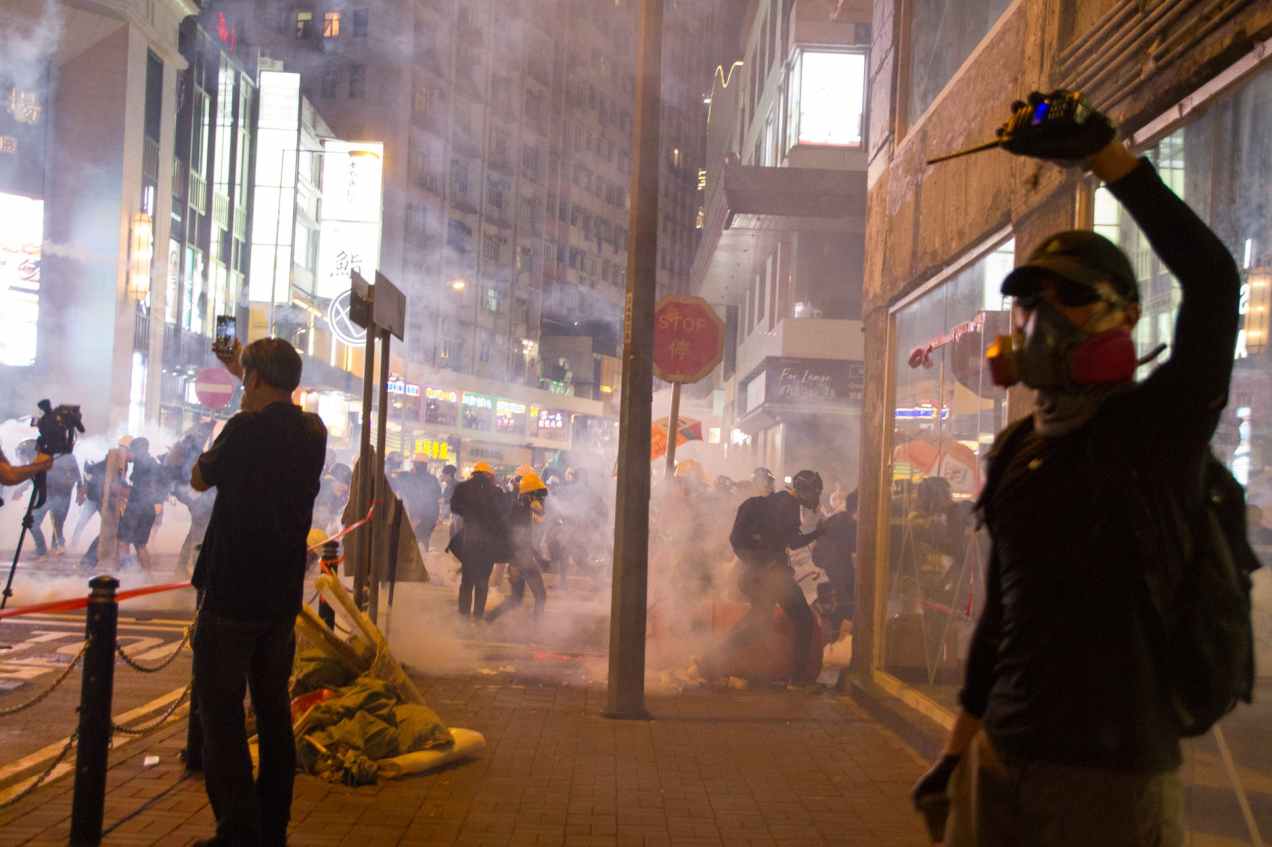
It has been a wild ride in America since March 2020 when the COVID-19 pandemic hit. No one I’ve spoken to can recall a time when there was so much unrest in society. Even all the unrest in the 1960s related to civil rights, the Cold War, and the Vietnam War, pale in comparison to 2020. In 2020-2021, we’ve had police brutality, rioting, extensive destruction of government & personal property, multiple crime waves, subversion, racism, inner-city murders on an unprecedented scale, assault & battery in broad daylight, and hate crimes of every type. In fact, who would have thought that one of the most security-conscious environments, passenger airliners, would see so many on-board fights & unruly passengers? It was a chaotic year that surprised and disturbed most of us. I saw things that I never dreamed I would see in my lifetime.
Back in 1970 I was a junior in high school. I had always been interested in the behind-the-scenes stuff that it took to make movies & T.V. shows. So, I took an elective that year in school called “Technical Theater.” We learned all about building sets, lighting, filming, script supervision, etc. The Technical Theater class served as the production crew for any school plays or concerts.
One day we were gathered in the school’s theater waiting for a beginner’s acting class to finish before we could start some set construction. The beginners were doing improvised, satirical skits, so we casually watched the last two.
In the first skit the teens all lined-up facing the audience. When the teacher called, “action,” the students all started acting like little kids who were standing in a line. They fidgeted, whispered to each other, and jabbed elbows into their neighbor. Typical little kids with ants-in-their-pants. One kid took a step forward and said, “the first grade class of Mary Louise Phillips Elementary School will now say the Pledge of Allegiance to the Flag.” The kid got back in line and told the others, “right hand over your heart, ready…begin…”
As they started to say the pledge, some elbowing got out of hand and two boys shoved each other. Finally, one of them was knocked to the ground, and the other kid kicked him. At this point the Pledge stopped, and all of the kids in the line ran up to the kid on the ground. Rather than helping him up, they jumped-in with the bully who started it, and pretended to give this kid a class “A” beat-down! When they were done, they got back in line. The kid on the ground was now “dead.” After the kids were lined-up again, they cleared their throats and said “…with liberty and justice for all.”
It was supposed to be satirical and we all chuckled mildly. At the time I thought, “well, that was pretty far-fetched…ha!…like that would ever happen in real life.”
The second skit had the students laying on the stage as if they were relaxing under some trees in the park. One kid declared, “it’s a nice day.” Another said rather laconically, “yep, it’s a nice day.” A third kid apparently thought the second kid was being mockingly sarcastic, so he ran over to the second one and loudly yelled in his face, IT’S A NICE DAY!!!” The rest of the kids started chanting, “it’s a nice day…it’s a nice day…it’s a nice day,” as they closed-in on the second kid. The second kid tried to leave, but the group shoved him to the ground and beat the living daylights out of him! Once the second kid acted like he was knocked-out, the others laid down to relax on the grass again. The very first kid who made the nice day comment piped-up and said, “you know, it REALLY is a nice day.”
Hmmm…So, what is the tale of the two skits? In a Vietnam Era, American high school, I saw two skits with ridiculously weird outcomes. There’s no way that either scenario could occur in real life, right? A group of ordinary people could never be so unbalanced that they would assault another person for no apparent reason. I held this belief over the past 50 years; there was NO tale to tell about the two skits…they were just part of a scriptwriter’s imagination.
Then 2020 came around and changed how I felt about the Tale of the Two Skits. The screwy circumstances in the skits were no longer implausible. We are in an era of contempt by many toward our national symbols…The Pledge of Allegiance, The National Anthem, and the U.S. Flag. And the contempt for these symbols has now transcended the average citizen to public institutions and elected officials. What used to be symbols of unity, are now lightning rods of divisiveness.
What about the kids in the first skit symbolizing what is normally a benign gathering…saying the Pledge of Allegiance? Kids and adults will both act out sometimes, and the level of behavior used to be more commensurate to the situation. We were taught that if you need to argue, do it behind closed doors, or take it outside if it is really heated. Nowadays people seem determined that whatever might occur between two people is not taken off-line; it is going down right where they stand in the grocery line, in the bleachers at a ball game, or a local park while kids play on the nearby jungle gym. What used to be two people discussing differing viewpoints, is now an open disagreement. An open disagreement is now a serious argument. A serious argument is now a shoving match. A shoving match is now physical assault. Physical assault is now battery with the intent to do serious physical harm. The intent to do serious physical harm has now escalated into the use of weapons for defensive self-protection. And finally, defensively brandishing a weapon to break-free from a fight is now using a weapon to permanently stop an altercation with someone, by killing them.
In the second skit, the teenager who took exception to what the second kid said, did so by simply reacting and immediately passing judgment. No wisdom or discernment was applied…just react and judge. American society is experiencing an unprecedented wave of public reaction & judgment. Wisdom, discernment and cooler heads prevailing, seems lacking in 2020 America.
In today’s world, the Tale of Two Skits from 50 years ago would still be considered satirical. But, do the two scenarios, or something similar, still seem like an absurd piece of fiction in 2021? The underlying human behavior (not actual school kids or teens in a park) and the outcomes seem quite plausible to me. If the American Dream could be compared to a sunny day, I would say the sun is still there…it just does not rise as high as it used to.
I feel certain that someday American society will exceed the fiction of The Tale of Two Skits…sigh…
Ciao,
Steve Miller, IAPWE – Certified & Member Managing Editor The Report on National Security Kinetics™ Seattle, WA. USA vietvetsteve@millermgmtsys.com
During the recent COVID-19 Pandemic, there was much discussion about the materials, products and equipment contained in the Strategic National Stockpile (SNS). People wondered what was in the SNS, who decided what to put into it, how much is stored in it, where the SNS is located, the policies & procedures for replenishing it, and the logistics for accessing the stockpile for use. It seems appropriate at this time to educate everyone about America’s strategic reserves. The fact is: there is more than one type of reserve stockpile, with different governing statutes for each one of them. These four reserves are in chronological order, with the longest tenured reserve listed first:
The National Defense Stockpile (DNS)
The Strategic Petroleum Reserve (SPR)
The Strategic National Stockpile (SNS)
The National Veterinary Stockpile (NVS)
The Strategic National Stockpile is the program that has been so heavily covered by the news media throughout the COVID-19 Pandemic. For purposes of our discussion here, the National Defense Stockpile will be discussed first. The NDS came into existence 35 years before the Strategic Petroleum Reserve; much of the institutional learning, best practices, and the do’s & don’ts of managing such a huge undertaking, became the blueprint for the three follow-on programs. The DNS will be discussed first to set the table. Subsequent editions of the RNSK will cover each stockpile type separately.
The National Defense Stockpile (NDS)
The NDS first came into being in 1939 when the U.S. Congress passed the Strategic and Critical Materials Stock Piling Act. President Franklin D. Roosevelt pressed for the law, but, it was no easy feat. Starting in 1934, and continuing through 1939, Congress passed a series of increasingly stringent neutrality laws. The laws were intended to minimize the chance of America getting dragged into another foreign war, such as World War I. The possibility of another large scale conflict was a legitimate concern throughout the 1930s. When the first neutrality law was passed in 1934, Hitler and the Nazis had been in power over a year, and Japan had invaded and occupied the northern region of China, known as Manchuria, in 1931. When President Roosevelt championed the Stock Piling Act, many members of Congress thought it was just another indication of the country heading to war. Fortunately, there were enough Senators and Representatives who recognized the need to stockpile critical resources, regardless of any future war, and got the stockpile law passed.
The NDS statutes are contained in Title 50, Chapter 98, United States Code, and have been amended from time-to-time. The law provides for the acquisition and retention of certain strategic and critical materials to reduce and mitigate U.S. dependence on foreign sources or single points of failure in the strategic materials supply chain in times of national emergency. These materials are purchased and stored, forming what is known as the National Defense Stockpile.
The NDS Manager is the Secretary of Defense, however, he does not manage the stockpile directly. The NDS falls under the Assistant Secretary of Defense for Sustainment. The actual managing organization is the Defense Logistics Agency, led by a three-star Admiral or General, in Ft. Belvoir, VA. A civil service manager runs the Strategic Materials Directorate, also at Ft. Belvoir. In addition to the noted Defense Department organization just discussed, Title 50, Chapter 98, USC, also assigns certain limited duties to the Interior Department and the Agriculture Department. Although the Defense Department manages the actual stockpile operations, and is charged with acquiring the designated strategic materials listed in the statutes, the other two executive departments have NDS duties related to the research, development and contingency plans of domestic sources of supply. For example, the Interior Department’s U.S. Geological Survey is responsible for strategic preparedness in a national emergency for various NDS metals and minerals that can be exploited domestically. Similarly, the Agriculture Department utilizes its Agricultural Research Service and U.S. Forest Service to conduct R&D and contingency plans to capitalize on agricultural products that could be diverted for alternative uses to supplement possible NDS shortfalls in a national emergency.
The List of NDS Strategic Materials
The NDS statutes currently list 64 strategic materials in four major categories: Compounds, Metals, Non-Metals, and Rare Earth Elements. As a point of clarification, Rare Earth Elements are often mistaken for precious metals, such as gold, silver and platinum, assuming a high value metal is synonymous with the term “Rare.” In actuality, “Rare Earth” refers to the fact that these elements are “rarely” found in nature in their pure form; they are mixed-in with other kinds of ore, making the mining and pure element extraction process difficult and expensive. The list of materials below are managed directly by the NDS at their several depot locations.
Aluminum (Al/13)
Graphite/Carbon (C/6)
Quartz Crystal
Antimony (Sb/51)
Hafnium (Hf/72)
Rhenium (Re/75)
Arsenic (As/33)
Holmium (Ho/67)
Samarium (Sm/62)
Barium Sulfate (BaSO4)
Indium (In/49)
Scandium (Sc/21)
Beryllium (Be/4)
Iridium (Ir/77)
Selenium (Se/34)
Bismuth (Bi/83)
Lanthanum (La/57)
Silicon (Si/14)
Boron (B/5)
Lead (Pb/82)
Strontium (Sr/38)
Cadmium (Cd/48)
Lithium (Li/3)
Tantalum (Ta/73)
Calcium Fluoride (CaF2)
Lutetium (Lu/71)
Tellurium (Te/52)
Cerium (Ce/58)
Magnesium (Mg/12)
Terbium (Tb/65)
Chromium (Cr/24)
Manganese (Mn/25)
Thulium (Tm/69)
Cobalt (Co/27)
Mercury (Hg/80)
Tin (Sn/50)
Copper (Cu/29)
Molybdenum (Mo/42)
Titanium (Ti/22)
Dysprosium (Dy/66)
Neodymium (Nd/60)
Tungsten (W/74)
Erbium (Er/68)
Nickel (Ni/28)
Vanadium (V/23)
Europium (Eu/63)
Niobium (Nb/41)
Ytterbium (Yb/70)
Gadolinium (Gd/64)
Palladium (Pd/46)
Yttrium (Y/39)
Gallium (Ga/31)
Platinum (Pt/78)
Zinc (Zn/30)
Germanium (Ge/32)
Praseodymium (Pr/59)
Zirconium (Zr/40)
The following seven materials are managed directly by the Interior Department on behalf of the NDS.
Cesium (Cs/55)
Helium (He/2)
Natural Rubber
Potash (potassium compounds)
Rubidium (Rb/37)
Silver (Ag/47)
Uranium (U/92)
The NDS Management Process & Locations
NDS materials are stored at 6 locations throughout the U.S. and have a current market value of approximately $1.1 billion. These material depots are located on U.S. Government property managed by the Defense Logistics Agency, and are used for many other DoD programs, including equipment repair & storage, weapons & munitions magazines, surplus equipment disposal, and others. Although the NDS does not publicly disclose how much material they have on-hand, or what is stored in each location, there is no need to make their whereabouts classified information. The NDS depots are already located on heavily guarded military installations, and even if a major theft were to occur, the items in storage are industrial grade materials that would be extremely difficult to sell on the black market without getting caught. All six depots are extremely large, multi-building installations that are located well inside the country’s international boundaries. An enemy attack by air or ground forces would be a high risk, one-way mission by those involved. Since individual NDS materials are each stored at multiple locations, it would be nearly impossible to launch six massive raids in a coordinated, simultaneous attack. About the only way an adversary could deliver a knockout blow to the NDS would be by nuclear weapons at all six depots at once. It would be no easy task.
Locations
Hammond, IN
Hawthorne, NV
Lordstown, OH
Pt. Pleasant, WV
Scotia, NY
Wenden, AZ
Historical Perspective of the National Defense Stockpile
The average person, American or otherwise, has only a cursory understanding of the depths and implications of a worldwide war, such as World War I from 1914-1918, and World War II from 1939-1945. Wars conducted since 1945 have all been regionalized, and primarily affected just the engaged belligerent nations. In terms of economic impact, human sacrifice and other privations of war, the most seriously affected are the nations where the heaviest combat operations occurred. For belligerents in a regional conflict who had no actual combat operations on their own soil, such as the United States during the Vietnam War, daily life at home was virtually unaffected for 95% of the population.
Global warfare, however, is much different. It is not just a clash of opposing military forces, but, creates hardships and sacrifice in all walks of life. As the name implies, global warfare has few geographic, economic, or human boundaries…all aspects of global life are “fair game.”
In most wars, global or regional, they begin with a clash of military forces from opposing sides. Naval warships are attacked and possibly sunk; military aircraft bomb adversary forces and installations; adversaries shoot down each other’s planes, and adversary armies engage each other. These force-on-force confrontations, known as tactical warfare, are what the average person thinks of in terms of what war is.
But, when wars spread into other countries, become protracted, and consume ever greater amounts of manpower and materials, tactical warfare becomes less able to bring victory to one adversary versus another. At this point both sides continue to engage in tactical warfare to essentially keep the pressure on, but, now strategic warfare enters the picture. The essence of strategic warfare is to disable an adversary’s means and will to wage war. This can take many forms, including: information warfare, espionage, sabotage, clandestine intelligence operations, infrastructure destruction, and commerce or trade warfare. The NDS’s primary role is to deter or mitigate an adversary’s efforts to disrupt commerce by denying the U.S.’s ability to obtain the raw materials necessary to wage war.
In both world wars, after the opening rounds of force-on-force combat engagements on the sea, in the air, and on the ground, the major combatants began commerce warfare. This was most evident in the Atlantic Ocean where submarines of the German Kreigsmarine waged unrestricted warfare on all Allied merchant shipping. Submarines of the American Navy waged unrestricted submarine warfare in the Pacific Ocean on all Japanese merchant shipping. By the end of the war, American submarines had destroyed or sunk 75% of all Japanese merchant vessels. This choked-off Japan’s ability to obtain oil, rubber, and many critical metals needed to produce aircraft, ships and weapons. The NDS program is designed to counter the effects of strategic commerce warfare stemming from a major military conflict, or an embargo imposed by an unfriendly nation. The United States uses embargoes and sanctions against certain countries quite effectively. This is especially true when a country does not have a robust strategic national stockpile program that covers multiple categories of raw material, oil, equipment, medical supplies, etc.
Implications of Commerce Warfare, Embargoes and Sanctions in 2020
In today’s terms, the United Nations Conference on Trade and Development (UNCTAD) estimates that roughly 80 percent of all global trade – by rail, truck, ship and plane – is transported by sea. Of the total global trade volume by all means, 34% of it passes through the South China Sea by ship!
Country
% Share of World GDP
Trade Value through South China Sea (USD billions)
South China Sea Trade As % of All Trade in Goods
United States
24.5
208
5.72
China
14.8
1470
39.5
The United States and China represent the two largest shares of the world’s total Gross Domestic Product (GDP). Of the top 10 countries with goods transiting the South China Sea, nearly 40% of Chinese goods transported by all means moves by ship through the South China Sea. By comparison, India and Brazil at 30% & 23%, respectively, are the next highest behind China. Of the other top 10 South China Sea users, The United States is ninth, and Canada is tenth at less than 3%. The vast majority of ocean trade bound for the United States heads directly into the Pacific Ocean bound for Seattle/Tacoma, San Francisco Bay or Los Angeles/Long Beach.
It is quite clear that the South China Sea is a critical trade route for China. Most traffic takes the shortest route through the Malacca Straight between Indonesia and Malaysia. Alternative routes are not only more expensive and time consuming, but, also pose a greater security risk for China. This is why China has spent the past 15+ years claiming islands and building military bases in the South China Sea. These moves have been heavily disputed in international court by Vietnam, The Philippines and Taiwan. Thus far, court cases have ruled against China, but, they refuse to recognize these decisions. The United States’ strategic partnering with The Philippines and Vietnam has taken on greater importance in the past decade. The U.S. Navy continues to sail its ships through the South China Sea based on freedom of navigation under international maritime law. China heavily disputes America’s presence. Strategic military analysts have stated for nearly 20 years that if a large scale war was to break out somewhere, it would likely be in the South China Sea. This situation has led to China’s massive shipbuilding program, putting its Navy on a par with the U.S. Navy in terms of the number of vessels.
Analyzing the Most Critical NDS Materials
Whereas, China’s greatest strategic concern is the risk of moving materials through the South China Sea, America’s risks are more diverse. Some of the risk stems from large coastlines on three major oceans, and many critical NDS materials are not easily sourced in the U.S. The NDS sources a number of critical materials from countries such as China, and some of the less stable third-world countries in Asia and Africa. Any of these states could experience a supply chain disruption due to political instability, military actions, or disagreements over trade. In most cases the NDS has sourcing alternatives in-place for the more risky material acquisitions. The following list of materials are some of the most challenging in terms of acquiring sufficient quantities for emergency stockpile use.
Barium Sulfate (BaSO4) More than 90% of this compound sold in the US is used as a weighting agent in fluids used in the drilling of oil and natural gas wells. Substitute materials have thus far not been commercially viable. Although Barium Sulfate resources exist in the U.S., they have never been commercially developed. The greatest risk with this material is that everything is imported from four major sources, with China being number one at 58%, and then India, 17%; Morocco, 12%; Mexico, 11%.
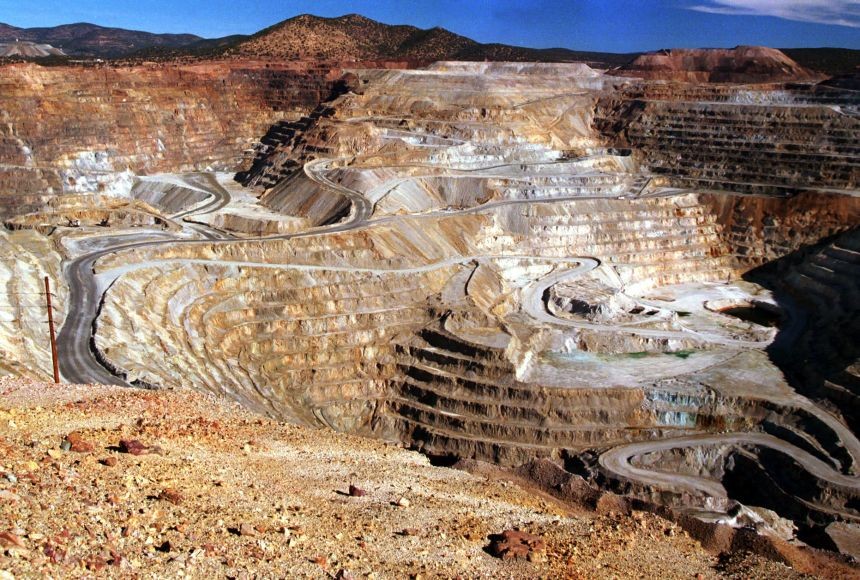
Cadmium (Cd/48) Cadmium is generally recovered from zinc ores, and most of the world’s primary cadmium metal is produced in Asia, and leading global producers are China, the Republic of Korea, and Japan. The U.S. has negligible Cadmium resources and imports come from: China, 25%; Australia, 22%; Canada, 21%; Peru, 10%; and other, 22%.
Cesium (Cs/55) The metal ignites spontaneously in the presence of air and reacts explosively in water. Because of this reactivity, cesium is classed as a hazardous material and must be stored and transported in isolation from possible reactants. The U.S. only uses a 6,000-7,000 lbs of cesium per year. There are no domestic sources of cesium, so everything is imported. The NDS does not publish cesium import statistics, but, Canada is believed to be the primary supplier. Cesium is an uncommon element that can be mined in only a few places in the world. Canada accounts for more than two-thirds of world reserves.
Gallium (Ga/31) Gallium is used primarily in integrated circuits (cell phones, especially smart phones, wireless internet); optoelectronic devices (laser diodes, LEDs, photo-detectors, and solar cells). Gallium-based ICs are used in many defense-related electronics, and no effective substitutes exist for Gallium in these applications. It is not produced in the U.S., and demand is satisfied solely by imports from China, 50%; United Kingdom, 18%; Germany, 10%; Ukraine, 9%; and several lesser sources. China’s Gallium resources, and the U.S.’s lack of resources, poses a national security risk to the United States.
Tungsten (W/74) Tungsten is a heavy, hard metal that is stronger than any other known element. It is very expensive, and due to its mechanical properties it is used in wear-resistant alloys, in nickel super-alloys for high-temperature sections of jet engines, armor penetrating projectiles, aircraft weights and counterweights, and small arms ammunition. China ranks first in the world in terms of tungsten resources and reserves and has some of the largest deposits. Canada, Kazakhstan, Russia, and the U.S. also have significant tungsten resources. The U.S., however, has not had an operating tungsten mine since 2015. All tungsten is imported from the following countries: China, 31%; Bolivia, 10%; Germany, 9%; Spain, 6%; and all others, 44%.
Arsenic (As/33) When the average person hears the word “arsenic,” their first thought is, “oh, that’s a poison.” It is a fact that arsenic is used in pesticides and herbicides. In terms of being a critical NDS material, however, arsenic has a very important usage in the production of Gallium-Arsenide (GaAs) semiconductors for solar cells, space research, and telecommunications. It is also used for specialty optical products, and in electronic components for short-wave infrared technology. Many defense-related electronic products would be hard pressed to meet their performance specifications without GaAs components. Arsenic is rarely found as a pure element, and is often found in copper, gold and lead deposits. When these metals are refined into their purest form, the by-product is set aside for further extraction of any remaining elements, like arsenic, if economically feasible. The easiest ore to recover arsenic from is arsenic trioxide, but, it has only been found in China and Morocco. Morocco does not have the ability to refine the material, so, they sell it for export. Several other countries have arsenic refining capability. China, on the other hand, has an extensive arsenic trioxide refining capacity, and accounts for 93% of refined arsenic sold worldwide. This poses a national security threat to the U.S. because the other countries that can refine arsenic have only a small fraction of China’s processing capacity. The US is 100% import reliant for its arsenic needs.
Germanium (Ge/32) Germanium is mainly a byproduct of zinc ore processing. Germanium is a semiconductor, with electrical properties between those of a metal and an insulator. Other than electronic components, germanium is used in telecommunication fiber optics, lenses for infrared (IR) devices in military applications, and solar cells. Fiber-optic cable manufacturing accounts for about one-third of global germanium consumption. Although China remains the leading global producer of germanium, the U.S. has substantial reserves of recoverable germanium contained in zinc deposits in Alaska and Tennessee. The U.S. imports refined germanium from the following countries: China, 59%; Belgium, 22%; Germany, 9%; Russia, 7%; and others, 3%.
Rare earth elements – Cerium (Ce/58), Dysprosium (Dy/66), Erbium (Er/68), Europium (Eu/63), Gadolinium (Gd/64), Holmium (Ho/67), Lanthanum (La/57), Lutetium (Lu/71), Neodymium (Nd/60), Praseodymium (Pr/59), Scandium (Sc/21), Terbium (Tb/65), Thulium (Tm/69), Ytterbium (Yb/70), and Yttrium (Y/39). Rare earths are relatively abundant in the Earth’s crust, but minable concentrations are less common than for most other ores. Nearly all countries have rare earth elements, but, because extraction and processing costs are high, most countries do not invest their time or money to develop the industry. China accounts for 80% rare earth materials mined and sold worldwide. Other producers include: Estonia, Japan, Malaysia, Brazil, Australia, and India. The U.S. has not made much effort to mine and produce rare earth materials on its own; they are 100% reliant on imports. The estimated distribution of rare earths by end use are as follows: catalysts, 75%; metallurgical applications and alloys, 5%; ceramics and glass, 5%; polishing, 5%; and others, 10%.
Wrapping It Up
The Congress of the United States has authorized the NDS to sell commodities that are excess to Department of Defense needs. Sales of excess NDS materials produce revenue for the Treasury General Fund and a variety of defense programs such as the Foreign Military Sales program, military personnel benefits, and the buy-back of broadband frequencies for military use. The sales revenue also funds NDS operations to make it a self-sustaining organization. Because of the broad portfolio of materials held by the NDS, there is no private sector company in the world that sells this wide range of commodities and materials.
Approximately 35% of the 64 types of material held by the NDS are traded on the open commodities markets. Examples include copper traded on the London Metals Exchange, platinum traded on the New York Mercantile Exchange, and rubber on the Tokyo Commodities Exchange. Because the NDS purchases these traded commodities in such high volume, they buy them directly from the exchanges, and not from individual private sector companies or sellers. This means NDS staff members involved in these transactions have to hold commodities broker licenses.
Since the NDS is a U.S. Government agency, everything they buy and sell is done via announced solicitations. This allows qualified contractors to submit sealed bids for the purchase of commodities from the NDS. In October 2019, for example, the NDS announced that at various dates to be determined in FY2020, there may be potential sales of the following materials from NDS inventory: Beryllium, Chromium, Germanium Scrap, Manganese, Nickel Alloys, Platinum, Iridium, Tantalum Carbide Powder, Titanium Based Alloys, Tungsten Metal Powder, and Zinc. The October 2019 announcement also indicated the maximum amount the NDS planned to sell of each material.
The NDS also announces every October their potential fiscal year material purchases and the maximum amount they might buy. The FY2020 potential purchases included: Antimony, Boron, Carbon Fiber, Cerium, Cadmium Zinc Tellurium (CZT), Electrolytic Manganese, Lanthanum, various explosives, Silicon Carbide Fibers, Tantalum, Tin, and Tungsten-Rhenium Alloy.
Aside from the buying, selling and storage of strategic and critical materials, NDS staff members also hold top secret security clearances for the work they do. Part of their job is to analyze open source intelligence, as well as, clandestinely collected intelligence, so, they can stay ahead of any developing issues that could constrain American access to materials contained in the NDS. For example, Indonesia is the largest seller of rubber to the United States. If there was a movement afoot to nationalize the rubber industry by the Indonesian government, this could disrupt the supply chain and impact DoD requirements for rubber. The NDS may determine the situation in Indonesia requires implementing a contingency plan to protect America’s supply chain of rubber.
Ciao,
Steve Miller, IAPWE – Certified & Member Managing Editor The Report on National Security Kinetics™ Seattle, WA. USA vietvetsteve@millermgmtsys.com




 The REPORT on NATIONAL SECURITY KINETICS™