
First, let me say this, I lived and worked in Iran as a young man from 1976 to 1979. My 23 co-workers and I did not leave the country until after the Shah had been gone about one month. I had many close friends in Iran, and I was very saddened over the next 10 years or so when I’d receive word when different ones of them were killed during or soon after the Revolution, or in the Iran-Iraq War. I enjoyed the people, the country and the culture, and have always wanted to go back.
I encourage you to read my recent articles here concerning Iran. One is quite long because it contains a strategic report I wrote about Iran in 1977 as part of my job while I was there. Also, take a look at my Dec 28th article on Quora.com about the sanctions against Iran. I updated the full picture, and also touched on the ballistic missile launch in the news. I noted previously that the general public keeps focusing mostly on American sanctions against Iran; little is said about the numerous UN Security Council resolutions which imposed sanctions on Iran, too. I watched the tape of a Dec 15th UN Security Council meeting where the ballistic missile launch was discussed as being a direct violation of one of the UN resolutions. Read my Dec 28th article on Quora.com for more information.
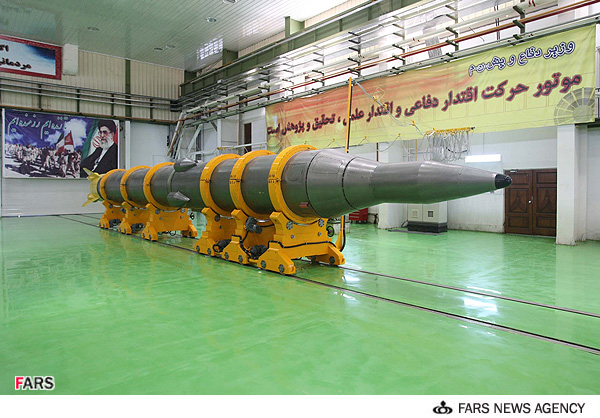
As of this writing, the general public is aware of six launch vehicles (rockets/missiles) the Iranian’s have engineering documentation for. Five of the six ballistic missiles are capable of being manufactured by Iran for operational use in nuclear weapons delivery. To date, four of the five operational models are medium range ballistic missiles (MRBM), and one is short range. All of the countries with operational nuclear weapons also have the ability to produce, and put satellites into orbit.
Part of the puzzle in tracking a country’s ability to deliver a nuclear weapon is that many missiles often serve in multiple roles of launching satellites, nuclear warheads, conventional high explosives, and biological/chemical weapons. Although the Iranian missiles listed below are incapable of striking the Continental United States, a range of 1,500 miles would allow Iran to attack locations as far away as: Budapest, Hungary; Minsk, Belarus; Moscow, Russia; all of India (except its eastern & southernmost provinces), Afghanistan, and Pakistan; lastly, anywhere in the Middle East & the Red Sea, including Israel and Saudi Arabia. This is why Iranian nuclear weapons capability is unacceptable by most United Nations members. Exacerbating the overall situation, Iran and North Korea have been partnered on nuclear weapons and launch vehicle development for quite some time.
| Model Name | Type | Range | Warhead (lbs) | Comments |
|---|---|---|---|---|
| Fajr-3 | MRBM | 1,500 miles | 1,760 | In sevice (2006) |
| Shahab-2 | SRBM | 1,200 miles | 2,640 | In sevice (1998) |
| Shahab-3 | MRBM | 1,260 miles | 2,178 | In sevice (2003) |
| Shahab-4 | MRBM | 1,200 miles | 1,760 | Design on hold |
| Sejil-1 | MRBM | 1,150 miles | Unavailable | In sevice (2014) |
| Sejil-2 | MRBM | 1,200 miles | Unavailable | In sevice (2014) |
 The REPORT on NATIONAL SECURITY KINETICS™