

September 29, 2020
America’s Strategic Reserves-Part I
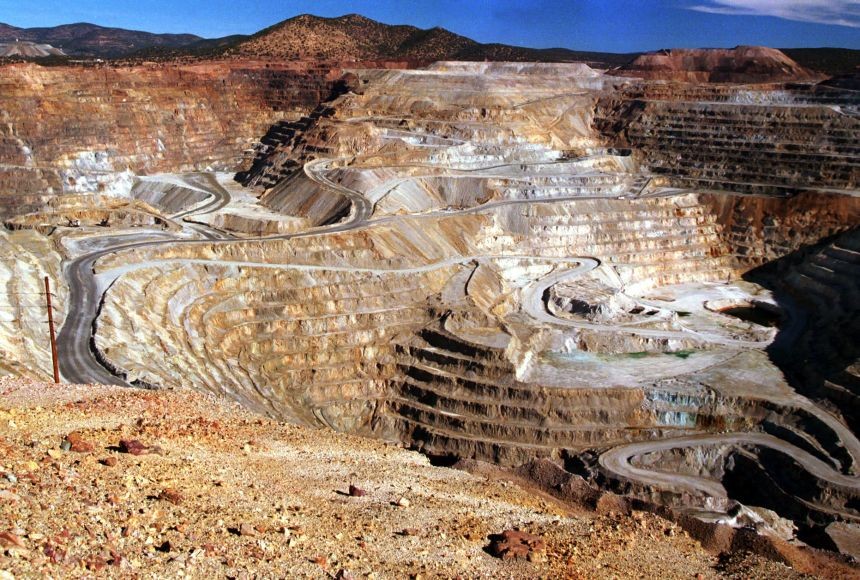 photo courtesy of the Defense Logistics Agency
Introduction
During the recent COVID-19 Pandemic, there was much discussion about the materials, products and equipment contained in the Strategic National Stockpile (SNS). People wondered what was in the SNS, who decided what to put into it, how much is stored in it, where the SNS is located, the policies & procedures for replenishing it, and the logistics for accessing the stockpile for use. It seems appropriate at this time to educate everyone about America’s strategic reserves. The fact is: there is more than one type of reserve stockpile, with different governing statutes for each one of them. These four reserves are in chronological order, with the longest tenured reserve listed first:
- The National Defense Stockpile (DNS)
- The Strategic Petroleum Reserve (SPR)
- The Strategic National Stockpile (SNS)
- The National Veterinary Stockpile (NVS)
The Strategic National Stockpile is the program that has been so heavily covered by the news media throughout the COVID-19 Pandemic. For purposes of our discussion here, the National Defense Stockpile will be discussed first. The NDS came into existence 35 years before the Strategic Petroleum Reserve; much of the institutional learning, best practices, and the do’s & don’ts of managing such a huge undertaking, became the blueprint for the three follow-on programs. The DNS will be discussed first to set the table. Subsequent editions of the RNSK will cover each stockpile type separately.
The National Defense Stockpile (NDS)
The NDS first came into being in 1939 when the U.S. Congress passed the Strategic and Critical Materials Stock Piling Act. President Franklin D. Roosevelt pressed for the law, but, it was no easy feat. Starting in 1934, and continuing through 1939, Congress passed a series of increasingly stringent neutrality laws. The laws were intended to minimize the chance of America getting dragged into another foreign war, such as World War I. The possibility of another large scale conflict was a legitimate concern throughout the 1930s. When the first neutrality law was passed in 1934, Hitler and the Nazis had been in power over a year, and Japan had invaded and occupied the northern region of China, known as Manchuria, in 1931. When President Roosevelt championed the Stock Piling Act, many members of Congress thought it was just another indication of the country heading to war. Fortunately, there were enough Senators and Representatives who recognized the need to stockpile critical resources, regardless of any future war, and got the stockpile law passed.
The NDS statutes are contained in Title 50, Chapter 98, United States Code, and have been amended from time-to-time. The law provides for the acquisition and retention of certain strategic and critical materials to reduce and mitigate U.S. dependence on foreign sources or single points of failure in the strategic materials supply chain in times of national emergency. These materials are purchased and stored, forming what is known as the National Defense Stockpile.
The NDS Manager is the Secretary of Defense, however, he does not manage the stockpile directly. The NDS falls under the Assistant Secretary of Defense for Sustainment. The actual managing organization is the Defense Logistics Agency, led by a three-star Admiral or General, in Ft. Belvoir, VA. A civil service manager runs the Strategic Materials Directorate, also at Ft. Belvoir. In addition to the noted Defense Department organization just discussed, Title 50, Chapter 98, USC, also assigns certain limited duties to the Interior Department and the Agriculture Department. Although the Defense Department manages the actual stockpile operations, and is charged with acquiring the designated strategic materials listed in the statutes, the other two executive departments have NDS duties related to the research, development and contingency plans of domestic sources of supply. For example, the Interior Department’s U.S. Geological Survey is responsible for strategic preparedness in a national emergency for various NDS metals and minerals that can be exploited domestically. Similarly, the Agriculture Department utilizes its Agricultural Research Service and U.S. Forest Service to conduct R&D and contingency plans to capitalize on agricultural products that could be diverted for alternative uses to supplement possible NDS shortfalls in a national emergency.
The List of NDS Strategic Materials
The NDS statutes currently list 64 strategic materials in four major categories: Compounds, Metals, Non-Metals, and Rare Earth Elements. As a point of clarification, Rare Earth Elements are often mistaken for precious metals, such as gold, silver and platinum, assuming a high value metal is synonymous with the term “Rare.” In actuality, “Rare Earth” refers to the fact that these elements are “rarely” found in nature in their pure form; they are mixed-in with other kinds of ore, making the mining and pure element extraction process difficult and expensive. The list of materials below are managed directly by the NDS at their several depot locations.
| Aluminum (Al/13) | Graphite/Carbon (C/6) | Quartz Crystal |
| Antimony (Sb/51) | Hafnium (Hf/72) | Rhenium (Re/75) |
| Arsenic (As/33) | Holmium (Ho/67) | Samarium (Sm/62) |
| Barium Sulfate (BaSO4) | Indium (In/49) | Scandium (Sc/21) |
| Beryllium (Be/4) | Iridium (Ir/77) | Selenium (Se/34) |
| Bismuth (Bi/83) | Lanthanum (La/57) | Silicon (Si/14) |
| Boron (B/5) | Lead (Pb/82) | Strontium (Sr/38) |
| Cadmium (Cd/48) | Lithium (Li/3) | Tantalum (Ta/73) |
| Calcium Fluoride (CaF2) | Lutetium (Lu/71) | Tellurium (Te/52) |
| Cerium (Ce/58) | Magnesium (Mg/12) | Terbium (Tb/65) |
| Chromium (Cr/24) | Manganese (Mn/25) | Thulium (Tm/69) |
| Cobalt (Co/27) | Mercury (Hg/80) | Tin (Sn/50) |
| Copper (Cu/29) | Molybdenum (Mo/42) | Titanium (Ti/22) |
| Dysprosium (Dy/66) | Neodymium (Nd/60) | Tungsten (W/74) |
| Erbium (Er/68) | Nickel (Ni/28) | Vanadium (V/23) |
| Europium (Eu/63) | Niobium (Nb/41) | Ytterbium (Yb/70) |
| Gadolinium (Gd/64) | Palladium (Pd/46) | Yttrium (Y/39) |
| Gallium (Ga/31) | Platinum (Pt/78) | Zinc (Zn/30) |
| Germanium (Ge/32) | Praseodymium (Pr/59) | Zirconium (Zr/40) |
The following seven materials are managed directly by the Interior Department on behalf of the NDS.
| Cesium (Cs/55) |
| Helium (He/2) |
| Natural Rubber |
| Potash (potassium compounds) |
| Rubidium (Rb/37) |
| Silver (Ag/47) |
| Uranium (U/92) |
The NDS Management Process & Locations
NDS materials are stored at 6 locations throughout the U.S. and have a current market value of approximately $1.1 billion. These material depots are located on U.S. Government property managed by the Defense Logistics Agency, and are used for many other DoD programs, including equipment repair & storage, weapons & munitions magazines, surplus equipment disposal, and others. Although the NDS does not publicly disclose how much material they have on-hand, or what is stored in each location, there is no need to make their whereabouts classified information. The NDS depots are already located on heavily guarded military installations, and even if a major theft were to occur, the items in storage are industrial grade materials that would be extremely difficult to sell on the black market without getting caught. All six depots are extremely large, multi-building installations that are located well inside the country’s international boundaries. An enemy attack by air or ground forces would be a high risk, one-way mission by those involved. Since individual NDS materials are each stored at multiple locations, it would be nearly impossible to launch six massive raids in a coordinated, simultaneous attack. About the only way an adversary could deliver a knockout blow to the NDS would be by nuclear weapons at all six depots at once. It would be no easy task.
Locations
- Hammond, IN
- Hawthorne, NV
- Lordstown, OH
- Pt. Pleasant, WV
- Scotia, NY
- Wenden, AZ
Historical Perspective of the National Defense Stockpile
The average person, American or otherwise, has only a cursory understanding of the depths and implications of a worldwide war, such as World War I from 1914-1918, and World War II from 1939-1945. Wars conducted since 1945 have all been regionalized, and primarily affected just the engaged belligerent nations. In terms of economic impact, human sacrifice and other privations of war, the most seriously affected are the nations where the heaviest combat operations occurred. For belligerents in a regional conflict who had no actual combat operations on their own soil, such as the United States during the Vietnam War, daily life at home was virtually unaffected for 95% of the population.
Global warfare, however, is much different. It is not just a clash of opposing military forces, but, creates hardships and sacrifice in all walks of life. As the name implies, global warfare has few geographic, economic, or human boundaries…all aspects of global life are “fair game.”
In most wars, global or regional, they begin with a clash of military forces from opposing sides. Naval warships are attacked and possibly sunk; military aircraft bomb adversary forces and installations; adversaries shoot down each other’s planes, and adversary armies engage each other. These force-on-force confrontations, known as tactical warfare, are what the average person thinks of in terms of what war is.
But, when wars spread into other countries, become protracted, and consume ever greater amounts of manpower and materials, tactical warfare becomes less able to bring victory to one adversary versus another. At this point both sides continue to engage in tactical warfare to essentially keep the pressure on, but, now strategic warfare enters the picture. The essence of strategic warfare is to disable an adversary’s means and will to wage war. This can take many forms, including: information warfare, espionage, sabotage, clandestine intelligence operations, infrastructure destruction, and commerce or trade warfare. The NDS’s primary role is to deter or mitigate an adversary’s efforts to disrupt commerce by denying the U.S.’s ability to obtain the raw materials necessary to wage war.
In both world wars, after the opening rounds of force-on-force combat engagements on the sea, in the air, and on the ground, the major combatants began commerce warfare. This was most evident in the Atlantic Ocean where submarines of the German Kreigsmarine waged unrestricted warfare on all Allied merchant shipping. Submarines of the American Navy waged unrestricted submarine warfare in the Pacific Ocean on all Japanese merchant shipping. By the end of the war, American submarines had destroyed or sunk 75% of all Japanese merchant vessels. This choked-off Japan’s ability to obtain oil, rubber, and many critical metals needed to produce aircraft, ships and weapons. The NDS program is designed to counter the effects of strategic commerce warfare stemming from a major military conflict, or an embargo imposed by an unfriendly nation. The United States uses embargoes and sanctions against certain countries quite effectively. This is especially true when a country does not have a robust strategic national stockpile program that covers multiple categories of raw material, oil, equipment, medical supplies, etc.
Implications of Commerce Warfare, Embargoes and Sanctions in 2020
In today’s terms, the United Nations Conference on Trade and Development (UNCTAD) estimates that roughly 80 percent of all global trade – by rail, truck, ship and plane – is transported by sea. Of the total global trade volume by all means, 34% of it passes through the South China Sea by ship!

| Country | % Share of World GDP | Trade Value through South China Sea (USD billions) | South China Sea Trade As % of All Trade in Goods |
| United States | 24.5 | 208 | 5.72 |
| China | 14.8 | 1470 | 39.5 |
The United States and China represent the two largest shares of the world’s total Gross Domestic Product (GDP). Of the top 10 countries with goods transiting the South China Sea, nearly 40% of Chinese goods transported by all means moves by ship through the South China Sea. By comparison, India and Brazil at 30% & 23%, respectively, are the next highest behind China. Of the other top 10 South China Sea users, The United States is ninth, and Canada is tenth at less than 3%. The vast majority of ocean trade bound for the United States heads directly into the Pacific Ocean bound for Seattle/Tacoma, San Francisco Bay or Los Angeles/Long Beach.
It is quite clear that the South China Sea is a critical trade route for China. Most traffic takes the shortest route through the Malacca Straight between Indonesia and Malaysia. Alternative routes are not only more expensive and time consuming, but, also pose a greater security risk for China. This is why China has spent the past 15+ years claiming islands and building military bases in the South China Sea. These moves have been heavily disputed in international court by Vietnam, The Philippines and Taiwan. Thus far, court cases have ruled against China, but, they refuse to recognize these decisions. The United States’ strategic partnering with The Philippines and Vietnam has taken on greater importance in the past decade. The U.S. Navy continues to sail its ships through the South China Sea based on freedom of navigation under international maritime law. China heavily disputes America’s presence. Strategic military analysts have stated for nearly 20 years that if a large scale war was to break out somewhere, it would likely be in the South China Sea. This situation has led to China’s massive shipbuilding program, putting its Navy on a par with the U.S. Navy in terms of the number of vessels.
Analyzing the Most Critical NDS Materials
Whereas, China’s greatest strategic concern is the risk of moving materials through the South China Sea, America’s risks are more diverse. Some of the risk stems from large coastlines on three major oceans, and many critical NDS materials are not easily sourced in the U.S. The NDS sources a number of critical materials from countries such as China, and some of the less stable third-world countries in Asia and Africa. Any of these states could experience a supply chain disruption due to political instability, military actions, or disagreements over trade. In most cases the NDS has sourcing alternatives in-place for the more risky material acquisitions. The following list of materials are some of the most challenging in terms of acquiring sufficient quantities for emergency stockpile use.
- Barium Sulfate (BaSO4) More than 90% of this compound sold in the US is used as a weighting agent in fluids used in the drilling of oil and natural gas wells. Substitute materials have thus far not been commercially viable. Although Barium Sulfate resources exist in the U.S., they have never been commercially developed. The greatest risk with this material is that everything is imported from four major sources, with China being number one at 58%, and then India, 17%; Morocco, 12%; Mexico, 11%.
-
Cadmium (Cd/48) Cadmium is generally recovered from zinc ores, and most of the world’s primary cadmium metal is produced in Asia, and leading global producers are China, the Republic of Korea, and Japan. The U.S. has negligible Cadmium resources and imports come from: China, 25%; Australia, 22%; Canada, 21%; Peru, 10%; and other, 22%.
-
Cesium (Cs/55) The metal ignites spontaneously in the presence of air and reacts explosively in water. Because of this reactivity, cesium is classed as a hazardous material and must be stored and transported in isolation from possible reactants. The U.S. only uses a 6,000-7,000 lbs of cesium per year. There are no domestic sources of cesium, so everything is imported. The NDS does not publish cesium import statistics, but, Canada is believed to be the primary supplier. Cesium is an uncommon element that can be mined in only a few places in the world. Canada accounts for more than two-thirds of world reserves.
-
Gallium (Ga/31) Gallium is used primarily in integrated circuits (cell phones, especially smart phones, wireless internet); optoelectronic devices (laser diodes, LEDs, photo-detectors, and solar cells). Gallium-based ICs are used in many defense-related electronics, and no effective substitutes exist for Gallium in these applications. It is not produced in the U.S., and demand is satisfied solely by imports from China, 50%; United Kingdom, 18%; Germany, 10%; Ukraine, 9%; and several lesser sources. China’s Gallium resources, and the U.S.’s lack of resources, poses a national security risk to the United States.
-
Tungsten (W/74) Tungsten is a heavy, hard metal that is stronger than any other known element. It is very expensive, and due to its mechanical properties it is used in wear-resistant alloys, in nickel super-alloys for high-temperature sections of jet engines, armor penetrating projectiles, aircraft weights and counterweights, and small arms ammunition. China ranks first in the world in terms of tungsten resources and reserves and has some of the largest deposits. Canada, Kazakhstan, Russia, and the U.S. also have significant tungsten resources. The U.S., however, has not had an operating tungsten mine since 2015. All tungsten is imported from the following countries: China, 31%; Bolivia, 10%; Germany, 9%; Spain, 6%; and all others, 44%.
-
Arsenic (As/33) When the average person hears the word “arsenic,” their first thought is, “oh, that’s a poison.” It is a fact that arsenic is used in pesticides and herbicides. In terms of being a critical NDS material, however, arsenic has a very important usage in the production of Gallium-Arsenide (GaAs) semiconductors for solar cells, space research, and telecommunications. It is also used for specialty optical products, and in electronic components for short-wave infrared technology. Many defense-related electronic products would be hard pressed to meet their performance specifications without GaAs components. Arsenic is rarely found as a pure element, and is often found in copper, gold and lead deposits. When these metals are refined into their purest form, the by-product is set aside for further extraction of any remaining elements, like arsenic, if economically feasible. The easiest ore to recover arsenic from is arsenic trioxide, but, it has only been found in China and Morocco. Morocco does not have the ability to refine the material, so, they sell it for export. Several other countries have arsenic refining capability. China, on the other hand, has an extensive arsenic trioxide refining capacity, and accounts for 93% of refined arsenic sold worldwide. This poses a national security threat to the U.S. because the other countries that can refine arsenic have only a small fraction of China’s processing capacity. The US is 100% import reliant for its arsenic needs.
-
Germanium (Ge/32) Germanium is mainly a byproduct of zinc ore processing. Germanium is a semiconductor, with electrical properties between those of a metal and an insulator. Other than electronic components, germanium is used in telecommunication fiber optics, lenses for infrared (IR) devices in military applications, and solar cells. Fiber-optic cable manufacturing accounts for about one-third of global germanium consumption. Although China remains the leading global producer of germanium, the U.S. has substantial reserves of recoverable germanium contained in zinc deposits in Alaska and Tennessee. The U.S. imports refined germanium from the following countries: China, 59%; Belgium, 22%; Germany, 9%; Russia, 7%; and others, 3%.
-
Rare earth elements – Cerium (Ce/58), Dysprosium (Dy/66), Erbium (Er/68), Europium (Eu/63), Gadolinium (Gd/64), Holmium (Ho/67), Lanthanum (La/57), Lutetium (Lu/71), Neodymium (Nd/60), Praseodymium (Pr/59), Scandium (Sc/21), Terbium (Tb/65), Thulium (Tm/69), Ytterbium (Yb/70), and Yttrium (Y/39). Rare earths are relatively abundant in the Earth’s crust, but minable concentrations are less common than for most other ores. Nearly all countries have rare earth elements, but, because extraction and processing costs are high, most countries do not invest their time or money to develop the industry. China accounts for 80% rare earth materials mined and sold worldwide. Other producers include: Estonia, Japan, Malaysia, Brazil, Australia, and India. The U.S. has not made much effort to mine and produce rare earth materials on its own; they are 100% reliant on imports. The estimated distribution of rare earths by end use are as follows: catalysts, 75%; metallurgical applications and alloys, 5%; ceramics and glass, 5%; polishing, 5%; and others, 10%.
Wrapping It Up
The Congress of the United States has authorized the NDS to sell commodities that are excess to Department of Defense needs. Sales of excess NDS materials produce revenue for the Treasury General Fund and a variety of defense programs such as the Foreign Military Sales program, military personnel benefits, and the buy-back of broadband frequencies for military use. The sales revenue also funds NDS operations to make it a self-sustaining organization. Because of the broad portfolio of materials held by the NDS, there is no private sector company in the world that sells this wide range of commodities and materials.
Approximately 35% of the 64 types of material held by the NDS are traded on the open commodities markets. Examples include copper traded on the London Metals Exchange, platinum traded on the New York Mercantile Exchange, and rubber on the Tokyo Commodities Exchange. Because the NDS purchases these traded commodities in such high volume, they buy them directly from the exchanges, and not from individual private sector companies or sellers. This means NDS staff members involved in these transactions have to hold commodities broker licenses.
Since the NDS is a U.S. Government agency, everything they buy and sell is done via announced solicitations. This allows qualified contractors to submit sealed bids for the purchase of commodities from the NDS. In October 2019, for example, the NDS announced that at various dates to be determined in FY2020, there may be potential sales of the following materials from NDS inventory: Beryllium, Chromium, Germanium Scrap, Manganese, Nickel Alloys, Platinum, Iridium, Tantalum Carbide Powder, Titanium Based Alloys, Tungsten Metal Powder, and Zinc. The October 2019 announcement also indicated the maximum amount the NDS planned to sell of each material.
The NDS also announces every October their potential fiscal year material purchases and the maximum amount they might buy. The FY2020 potential purchases included: Antimony, Boron, Carbon Fiber, Cerium, Cadmium Zinc Tellurium (CZT), Electrolytic Manganese, Lanthanum, various explosives, Silicon Carbide Fibers, Tantalum, Tin, and Tungsten-Rhenium Alloy.
Aside from the buying, selling and storage of strategic and critical materials, NDS staff members also hold top secret security clearances for the work they do. Part of their job is to analyze open source intelligence, as well as, clandestinely collected intelligence, so, they can stay ahead of any developing issues that could constrain American access to materials contained in the NDS. For example, Indonesia is the largest seller of rubber to the United States. If there was a movement afoot to nationalize the rubber industry by the Indonesian government, this could disrupt the supply chain and impact DoD requirements for rubber. The NDS may determine the situation in Indonesia requires implementing a contingency plan to protect America’s supply chain of rubber.
Ciao,
Steve Miller, IAPWE – Certified & Member
Managing Editor
The Report on National Security Kinetics™
Seattle, WA. USA
vietvetsteve@millermgmtsys.com


 The REPORT on NATIONAL SECURITY KINETICS™