
Defending the U.S. Against Foreign & Domestic Enemies
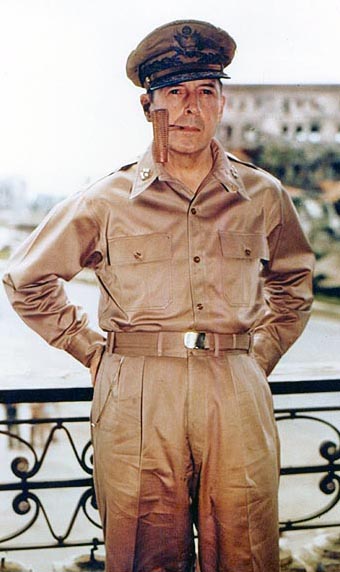
“I am concerned for the security of our great Nation; not so much because of any treat from without, but because of the insidious forces working from within.”
―
There is a reason why our Founding Fathers were concerned about defending the Constitution against enemies foreign and domestic, though this specific language did not expressly come to pass until the enactment of Title 5, Code of Federal Regulations in 1966.
When did our Founding Fathers become aware of the concern over domestic enemies? For a decade or more prior to 1776, there were violent and divisive elements at work in the 13 colonies, intent upon keeping the oppressive yoke of the British Crown over everyone. This concern was memorialized and enumerated in the list of grievances noted in the Declaration of Independence. This was the first document of lasting importance to denounce the practice of fomenting domestic enemies, to wit in reference to King George: “He has excited domestic insurrections amongst us…” America’s first leaders had no reason to believe that by simply declaring their independence, enemies bent on fomenting domestic insurrection would stop such actions.
The concern over these issues was aptly expressed later on in the Constitutional Convention by John Adams:
“We have no government armed with power capable of contending with human passions unbridled by morality and religion. Avarice, ambition, revenge, or gallantry, would break the strongest cords of our Constitution as a whale goes through a net. Ours is made only for moral and religious people. It is wholly inadequate to the government of any other.”
Considering all of the social strife and upheaval in 2020 America, this article will focus on domestic enemies and disruptive, homegrown violence.
When America declared its independence, the whole world was a potential foreign enemy. It took two years of fighting on its own before France became the first sovereign nation to sign a treaty backing the United States of America. Domestic enemies were a concern because there were people living in the original 13 colonies at the time of the Revolution who did not support American independence. The signers of the Declaration of Independence pledged their lives and all they had for an independent America. Had any of them ever been caught by the British, they would have been tried and executed for treason against the British Crown. Supporters of the Revolution did not even know if they could trust their neighbors or members of their own family.
The Founding Fathers were similarly concerned about future domestic enemies, because from a national security perspective, it is natural to watch for external enemies, but not domestically. Why be concerned about domestic enemies? In simplest terms, our Founding Fathers recognized they were creating a nation with more citizen freedoms than any country on Earth. Prior to the American Revolution, there had never been a constitutional democracy operated solely of the people, by the people, and for the people. All previous efforts to create this sort of nation-state failed, largely due to internal upheaval. The Founding Fathers recognized the democratic freedoms they hoped to create could be abused & breed internal subversion and violent insurrection.
The need for addressing issues related to domestic enemies, insurrection and subversion first came under the watchful eye of General George Washington when he became commander of the Continental Army. Dr. Matthew Spalding of The Heritage Foundation stated in a constitutional essay, “In England, subjects were required to swear loyalty to the reigning monarch; many early American documents included oaths of allegiance to the British king. During the American Revolution, General George Washington required all officers and men to subscribe to an oath renouncing any allegiance to King George III and pledging their fidelity to the United States. Most of the new state constitutions included elaborate oaths that tied allegiance to and provided a summary of the basic constitutional principles animating American constitutionalism.”
Washington’s actions became the first practical steps taken to make specific individuals accountable for avoiding the fomentation of insurrection and subversion in the United States. Washington made good on his promise to enforce the oath when several officers and soldiers banded together with the intent of overthrowing the Continental Congress as a means of addressing their grievances. When the plot was uncovered, Washington had the men arrested, tried under a summary courts martial, and ultimately convicted for insubordination and treason. All of the men were punished, and the two most central figures were executed by hanging.
In the 1780s after the Revolutionary War ended in an American victory, the Congress convened a Constitutional Convention. The Convention delegates from the 13 colonies elected George Washington to preside over the proceedings. The Constitutional Framers clearly wanted to establish a three-part governmental structure comprising a legislature, an executive and a judiciary. Article I of the Constitution covers the legislature and spells out numerous specific duties the U.S. Congress is empowered to handle. Article III covering the judiciary is concise and specific in narrowly defining the duties of this branch. Once these two branches were constitutionally defined, Article II set about the duties of the executive branch. It is important to note the generally recognized legal principal that once a law defines certain details of what must or must not be done, and no provision is made for any issue that falls outside the scope of the defined details, it means that such issues are not specifically forbidden, and therefore not against the law. Until the law is revised to more narrowly define an issue outside the current scope, it is essentially lawful.
In order to avoid leaving too many loopholes in the Constitution when it came to defining the duties of each branch of the National Government, the Framers specified the executives duties in Article II to be everything else not assigned to the legislature or the judiciary. To cement the executive’s all encompassing duties, the Framers added a word-for-word, specific oath of office in Article II, Section 1, Clause 8 of the Constitution:
Before he enter on the Execution of his Office, he shall take the following Oath or Affirmation: — “I do solemnly swear (or affirm) that I will faithfully execute the Office of President of the United States, and will to the best of my Ability, preserve, protect and defend the Constitution of the United States.”
Vasan Kesavan, in his Heritage Foundation article on the Presidential Oath of Office said, “The Framers…plainly believed that a special oath for the president was indispensable. At the Constitutional Convention…George Mason and James Madison moved to add the ‘preserve, protect and defend’ language.” Kesavan went on to say, “The prospect of George Washington’s becoming president cannot be discounted. The Framers perhaps desired an oath that would replicate the public values of the man who was presiding over the Convention. More significantly, because the presidency was unitary, there were no available internal checks, as there were in the other branches with their multiple members. A specially phrased internal check was therefore necessary, one that tied the president’s duty to “preserve, protect and defend” to his obligations to God, which is how the Founders understood what was meant by an oath or affirmation.”
The first time the Constitutional Framers actually memorialized their concern over foreign or domestic enemies was in Article IV, Section 4, which has become known as the Guarantee Clause, to wit:
“The United States shall guarantee to every State in this Union a Republican Form of Government, and shall protect each of them against Invasion; and on Application of the Legislature, or of the Executive (when the Legislature cannot be convened), against domestic Violence.”
Robert G. Natelson, a Senior Fellow in Constitutional Jurisprudence at Independence Institute, stated “the federal government will assure the states ‘a republican form of government.’ This assurance did not appear in the Articles of Confederation. The guarantee of protection from domestic violence can also be seen as part of the republican guarantee.” Natelson made a key point in understanding how domestic violence, or the more modern term, “domestic enemies,” related to a republican form of government and protection from invasion. He stated, in part, “Founding-era dictionaries defined a ‘republic’ as a ‘commonwealth,’ a ‘free state,’ and ‘a state or government in which the supreme power is lodged in more than one.’ In other words, a republic was a state governed by those citizens who enjoyed the franchise rather than by a monarch or autocrat. Accordingly, founding-era dictionaries often defined ‘republican’ as ‘placing the government in the people.”
Natelson went on to point out that the Constitutional Framers generally identified “three criteria of republicanism, the lack of any of which would render a government un-republican.” Natelson listed the following criteria:
- Popular rule. The Founders believed that for government to be republican, political decisions had to be made by a majority (or in some cases, a plurality) of voting citizens. The citizenry might act either directly or through elected representatives. Either way, republican government was government accountable to the citizenry.
- There could be no monarch. The participants in the constitutional debates believed that monarchy, even constitutional monarchy, was inconsistent with republican government. When Alexander Hamilton proposed a president with lifetime tenure, the delegates disagreed so strongly that they did not even take the time to respond.
- A republic was the rule of law, a concept deemed fundamental to a free state. The Framers believed that ex post facto laws—most kinds of retroactive legislation, for example—were inconsistent with the rule of law, and therefore un-republican. Simply put, you could not make something against the law, and then rewind the clock to go punish someone who committed or omitted an act not previously defined under the rule of law.
The primary purpose of the Guarantee Clause was to protect against any kind of monarchy. Natelson noted, “based on precedents in ancient Greece, the drafters feared that kings in one or more of the states would attempt to expand their power in ways that would destabilize the entire federation. They believed that having a republican government in each state was necessary to protect republican government throughout the United States.” Relating all of this back to domestic violence or domestic enemies, recall one of the primary grievances the Founding Fathers enumerated in the Declaration of Independence in reference to King George: “He has excited domestic insurrections amongst us…” Framers of the Constitution did not want any of the states to adopt even a constitutional monarchy, for fear that it could lead to suppression of the rights enumerated in the Preamble, thereby fomenting insurrection, meaning, domestic violence or enabling domestic enemies. The Preamble states:
“We the People of the United States, in Order to form a more perfect Union, establish Justice, insure domestic Tranquility, provide for the common defense, promote the general Welfare, and secure the Blessings of Liberty to ourselves and our Posterity, do ordain and establish this Constitution for the United States of America.”
After addressing the president’s oath to preserve, protect and defend the Constitution at a macro level, and the governing structure and relationship between the National & State governments, the Framers understood that the president had to rely on others at the national and state levels to support and defend the Constitution on a micro level. This was covered in the Oaths Clause in Article VI:
The Senators and Representatives before mentioned, and the Members of the several State Legislatures, and all executive and judicial Officers, both of the United States and of the several States, shall be bound by Oath or Affirmation, to support this Constitution….
The Constitution only stipulated exact wording of the presidential oath, but, not for other government officials. Part of the problem found with the Constitution’s predecessor, the Articles of Confederation, was it so heavily favored state’s right that it rendered the National Government impotent in creating any cohesion between the former 13 colonies. This became a major reason for convening the Constitutional Convention. Matthew Spalding noted in his constitutional essay that, “Edmund Randolph proposed, as part of the Virginia Plan, ‘that the Legislative, Executive & Judiciary powers within the several States ought to be bound by oath to support the articles of Union.’ When it was objected that this would unnecessarily intrude on state jurisdiction, Randolph responded that he considered it as necessary to prevent that competition between the National Constitution & laws, and those of the particular States, which had already been felt. The officers of the States are already under oath to the States. To preserve a due impartiality they ought to be equally bound to the National Government. The National authority needs every support we can give it.” The convention delegates agreed with Randolph, but, rightly opined that the Oaths Clause should be revised to include national officials, and so it was.
The very first law passed by the first session of the House of Representatives was “An Act to regulate the Time and Manner of administering certain Oaths.” By statute, the oath was simply worded: “I, [name], do solemnly swear (or affirm) that I will support the Constitution of the United States.” Fred Warner noted in a May 2019 article for the New Right Network, entitled, Domestic Enemy Defined: Jaw-Dropping Realizations, that based on the Constitution and Title 5, Code of Federal Regulations, the following individuals are required to take this oath of office:
- U.S. Senators and Representatives, both current & past;
- Members of the Presidential & Vice Presidential Electoral College;
- Civilian employees of the U.S. Government;
- Uniformed members of the U.S. military and Coast Guard;
- Members of state legislatures;
- Executive or judicial officers of any state.
The simple 1789 oath promulgated by Congress remained unchanged until the Civil War, when they significantly amended the oath’s statute to require civilian employees and military members to not only swear allegiance to the United States, but, also to affirm they had not engaged in any previous disloyal conduct. Congress repealed the latter condition in 1884, leaving wording that is nearly identical to the current oath promulgated in Title 5 in 1966. Under current law, the parties listed above are required to take the following oath, which is the first time the oath contained the specific language of “…against all enemies, foreign and domestic:”
“I, [name], do solemnly swear (or affirm) that I will support and defend the Constitution of the United States against all enemies, foreign and domestic; that I will bear true faith and allegiance to the same; that I take this obligation freely, without any mental reservation or purpose of evasion; and that I will well and faithfully discharge the duties of the office on which I am about to enter.”
The Constitutional Convention dragged on throughout the sweltering Philadelphia summer of 1787. The final version of the Constitution was a delicate compromise between a national government with enough clout to act on the world stage and bind the states together for the benefit of all, versus allowing individual states to retain a semblance of rights to govern as suited them locally. States rights advocates were also concerned about a powerful national government trampling an individual citizen’s rights and freedoms. Many of the states had addressed an individual’s rights in their state constitutions. Proponents of a strong central government argued that the Constitution enumerated the powers and limits of the national government, which by implication constrained it from infringing upon an individual’s rights, leaving that in the hands of each state government. The Constitutional language stood, as written, and 39 of the 53 delegates signed-off, which exceeded the agreed upon two-thirds super majority needed to submit it to the state legislatures for comment and ratification.
Not unexpected, James Madison of Virginia, pressed to make an individual citizen’s rights more universally explicit in the national Constitution, rather than the implication that each state could take-up the subject as they pleased at their level. Ultimately, the Constitution was ratified, as is, and national elections were held in the autumn of 1788 for the President, Vice President, Senators and Representatives. As soon as the First Congress was convened in 1789, they immediately set about creating the Bill of Rights, the first 10 Constitutional Amendments. At the time of creation, no one considered there was anything contained in the amendments that particularly related to the individual state’s responsibility for subduing or preventing insurrection, subversion, domestic violence or the rise of domestic enemies. Neither did anyone make the connection of this responsibility based on republican government content in Article IV, Section 4, or the simple wording enacted by the First Congress to fulfill the Oaths Clause, which was: “I, [name], do solemnly swear (or affirm) that I will support the Constitution of the United States.” Seventy years later the Civil War would change everything.
Of the 10 Amendments included in the Bill of Rights that would later have significance in a state’s responsibility for subduing or preventing insurrection, subversion, domestic violence or the rise of domestic enemies, it was the 10th Amendment. Charles Cooper, Chairman of Cooper & Kirk, PLLC, a renowned constitutional law firm, wrote: “The Tenth Amendment expresses the principle that undergirds the entire plan of the original Constitution: the national government possesses only those powers delegated to it, and ‘leaves to the several States a residuary and inviolable sovereignty over all other objects.’ In The Federalist No. 39, The Framers of the Tenth Amendment had two purposes in mind when they drafted it. The first was a necessary rule of construction. The second was to reaffirm the nature of the federal system.” The 10th Amendment reads as follows:
“The powers not delegated to the United States by the Constitution, nor prohibited by it to the States, are reserved to the States respectively, or to the people.”
As envisioned, the entire purpose of the 10th Amendment was to be a footnote of the previous nine, that just because the Bill of Rights was being made universal throughout the entirety of the United States, it did NOT imply that the national government’s reach of responsibility extended into any other areas of governance, except as originally delineated in the Constitution. Proponents of the 10th Amendment were essentially hearkening back to one of John Heywood’s Proverbs of 1546, “Give him an inch, and he will take a mile.” The basic concept of the Bill of Rights was, it was a one-time, “package deal,” with no intent to confer any other rights or duties on the national government. In very simple terms, state’s rights advocates were asserting to the strong central government proponents, “stay out of our business; we will call you when we need you.” What comes to mind are two old proverbs, “be careful what you wish for, as you just might get it,” and, “live by the sword, die by the sword.” The southern states would learn this the hard way 70 years later.
When the Civil War broke out in 1860, the United States Government underpinned their opposition to the seceding states using all of the foregoing Constitutional information. The national and state leaders of the seceding states had taken an oath of office to support the Constitution, which included the republican form of government, and because the 10th Amendment ensured that each state had all the authority to operate its government under the Constitution as it saw fit, and the Constitution gave no policing powers to the national government, ergo, it fell on the state governments to ensure the Preamble’s promise of domestic tranquility, and as Article IV noted, prevent domestic violence. The United States Government saw that the elected officials of the seceding states had failed in their essential purpose, and thereby violated the Constitution. Based on the tenets of Article IV, Section 4, “The United States shall guarantee to every State in this Union a Republican Form of Government, and shall protect each of them against…domestic Violence.” President Lincoln and by Congressional Resolution, invoked this clause to stop the insurrection, subversion and domestic violence being fomented by people who were deemed domestic enemies of the state. This same interpretation exists today in 2020 in reference to fomenting of domestic violence by domestic enemies of the state.
After the Civil War was over, President Abraham Lincoln’s assassination created a major shift in the plans and actions of Reconstruction in the former Confederate states. Lincoln decided before his 1864 re-election bid to replace his Vice President, Hannibal Hamlin, on the ticket with Andrew Johnson, his Military Governor of Tennessee. Johnson was an accomplished politician with more than 20 years of experience that included 10 years in the House of Representatives and six years in the Senate. Had Lincoln not been assassinated, there is no doubt his steadying hand would have made good use of Johnson’s experience with southern politicians, and Reconstruction likely would have been less contentious. Instead, Johnson found himself pinned between northern politicians bent on punishing the southern states, and southern politicians trying to avoid the severe treatment, and get their states back into play in Washington, D.C.
Numerous bills came across Johnson’s desk that he vetoed as being overly punitive. One of the most sweeping pieces of legislation was what became the 14th Amendment to the Constitution. Johnson was eager to get Reconstruction over with, which included some controversial presidential pardons of prominent southerners. The Congress was determined to not allow former Confederate leaders to simply get re-elected and act like the rebellious Civil War never happened, and they played no part in it. To that end, the 14th Amendment, Section 3, was ratified and became law in June 1868. Here is the language of Section 3:
“No person shall be a Senator or Representative in Congress, or elector of President and Vice-President, or hold any office, civil or military, under the United States, or under any State, who, having previously taken an oath, as a member of Congress, or as an officer of the United States, or as a member of any State legislature, or as an executive or judicial officer of any State, to support the Constitution of the United States, shall have engaged in insurrection or rebellion against the same, or given aid or comfort to the enemies thereof. But Congress may by a vote of two-thirds of each House, remove such disability.”
Paul Mereno, the William and Berniece Grewcock Chair in Constitutional History at Hillsdale College, said this about the new Section 3, “The disqualification of former rebels for federal and state office was the most controversial section of the Fourteenth Amendment. Some called it vindictive. On the other hand, those who had taken a solemn oath to support the United States and had reneged on the oath could, it was argued, justifiably be prevented from simply re-assuming positions of authority in the government. Moreover, many former U.S. officials who had joined the Confederacy led the resistance to the passage of Reconstruction legislation and had supported the imposition of the onerous Black Codes on the freedmen. Other objections to the Disqualification Clause asserted that it intruded on the president’s pardon power, but obviously a constitutional amendment could modify that previously unlimited power. In any event, Congress might well have thought it prudent to limit President Andrew Johnson’s pro-Southern actions.” Eventually, Congress removed all disqualifications for previous disloyal conduct in 1898. The remainder of Section 3 is still in effect when it comes to government officers who may participate in insurrection or rebellion, including terrorist activities.” In modern practice, the most important aspect of this section is that elected or appointed government officials can be held accountable by commission or omission for insurrection, subversion, domestic violence and/or failure to take action in foiling the acts of domestic enemies. They themselves could be labeled a domestic enemy for failure to act in the face of insurrection, subversion or domestic violence.
But, even if we hold government officers accountable as noted above, it still does not answer the question: who are the insurgents, subversives and domestic enemies that are committing acts of domestic violence to take down local, state or the Federal Government? In September 2013, then commander of Thule Air Base, Greenland, Colonel Joseph L. Prue, cited in an Air Force article, “Identifying the domestic enemy,” that “Insurgents are difficult to identify as they typically blend into the population and naturally thrive in a failed state environment.” Then Connor Boyack of the Libertas Institute said, “the enemy is comprised of one’s neighbors, friends, business associates, fellow church-goers, or amiable, well known individuals.” In short, a domestic enemy can literally be anyone.
In May 2016, David Alpher, an adjunct professor from the School for Conflict Analysis and Resolution at George Mason University, wrote an article for The Conversation blog site entitled, “In America, Domestic Extremists Are a Bigger Risk than Foreign Terrorism.” Alpher’s blog post started with a header line of, “Take America back from those who have stolen it. Protect America from those who want to destroy it. Restore the principles that these usurpers betrayed.” Alpher went on to say, “I have spent nearly 15 years studying how the risk of violence grows within societies around the world, and running programs designed to stem the tide. I have [seen] rhetoric like this, used to mobilize violence in countries like Iraq and Kenya. This same dynamic is taking shape within American society now. Fear and anger make for strong motivation.”
Alpher continued his colloquy, “every violent group in history describes its own violence as the legitimate response to a threat that was forced on them. Groups survive in the long term when that description makes sense to enough of the population to buy them tolerance and safe space to operate, plan and grow; that’s true of terrorism and violent extremism. Their reasoning usually orbits around the belief that they are defending the Constitution, or stopping the theft of the political process, and resisting the takeover by hostile powers.”
In 2020, just about every American can read the foregoing and shake their head up & down vigorously, and say Alpher’s words are about homegrown Islamic extremists, or Antifa, or the socialist movement fueled by Bernie Sanders & Alexandria Ocasio-Cortez, or the Deep State (whoever that is), or gun-toting right wing radicals, or racial injustice extremists, or the Cancel Culture, or the COVID-19 social backlash, or supporters of Donald Trump.
Here is the conundrum with Alpher’s commentary: In 2016, all of his words were solely focused on Donald Trump and his supporters. Supposedly, no one else was to blame. The reality of how insurgents, subversives and domestic enemies work is: they do not care about the socio-political platform of any of these groups. Their goal is to create anarchy, mob rule, breakdown of the social structure, overtax the politicians and government agencies, and create an environment of chaos with all of the aforementioned groups pointing fingers at each other. The domestic enemies win.
I understand the injustice to all minorities, but, the BLM and other groups seeking social justice are getting their movements hijacked by subversives who are exploiting our country’s strife. For all the people who’ve unjustly lost their lives, such as George Floyd and Breonna Taylor, I believe they’re looking down on us & can see the difference between peaceful protest vs subversive actors fomenting riots, destroying property, killing cops and innocents, and the cancel culture. At this time in our country, we are destroying ourselves from within.
Regardless who is right or wrong, there is only one thing that matters right now, and that is reasserting our republican form of government and the rule of law. We are reminded of these duties stated earlier in Article IV, Section 4, of the Constitution, known as the Guarantee Clause:
“The United States shall guarantee to every State in this Union a Republican Form of Government, and shall protect each of them against Invasion; and on Application of the Legislature, or of the Executive (when the Legislature cannot be convened), against domestic Violence.”
Based on this article in the Constitution, state and local governments have the first line of responsibility to preserve law and order, and restore domestic tranquility. Allowing mob rule and rioting to go unchecked with the attitude that people will get tired and go home, is weak leadership, and emboldens further violence. As it is noted in the Guarantee Clause, if the states decline to restore domestic tranquility, then the United States Government is obligated to take action. And state & local officials who refuse to take action, are abetting domestic enemies and can be held accountable as is noted in the 14th Amendment, Section 3.
It is also important to keep in mind, that state & local law enforcement are being caught in the middle between domestic enemies and government leaders who fail to act properly. When it comes to foiling domestic enemies, or a first strike by a foreign enemy, it’s not the U.S. military who will protect our national security…it will be local law enforcement. When the World Trade Center was attacked, it was local law enforcement and firefighters who ran TOWARD the danger & lost their lives. We need critical thinking & pondering by everyone to defeat social injustice & subversion.
Americans need to educate themselves on the rights and responsibilities all citizens and government leaders have to preserve, protect and defend the Constitution of the United States of America.
In June 1858 at the state capitol in Springfield, Illinois, Abraham Lincoln delivered his acceptance speech as the Republican nominee for the U.S. Senate. What is likely one of the best known phrases uttered in a political campaign speech, came from Lincoln that day: “A house divided against itself, cannot stand.” It is my belief that these words in 2020 could never be more true.
I humbly pray that the Lord will grant us wisdom in determining who are America’s real domestic enemies, and hold our leaders and each other accountable to solve this terrible problem. Amen.
Steve Miller
Editor
The Report on National Security Kinetics™
Seattle, WA. USA
vietvetsteve@reportnatlsecykinetics.com
 The REPORT on NATIONAL SECURITY KINETICS™