
― Nicholas Sparks, At First Sight
“Every couple has ups and downs, every couple argues, and that’s the thing—you’re a couple, and couples can’t function without trust.”
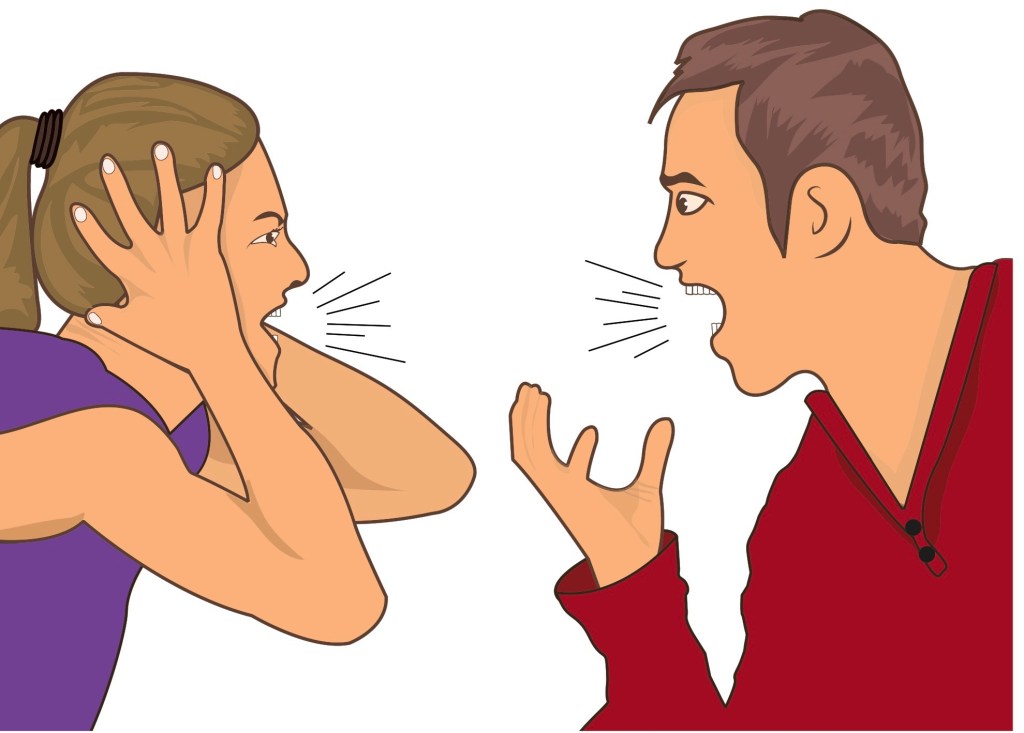
Over 50 years ago I learned the art of Pondering from a church leader. Pondering has been of immeasurable value to me in many ways.
Sometimes my pondering will result in an epiphany. I had one about relationships 15 years ago. Unfortunately, my relationships epiphany was very real…I was part of it.
I’ve been married twice; divorced once and a widower in the second one. Both of my wives grew up in families with three siblings, and constant contention between the parents. In both cases the bickering was as if it was a world class, Olympic Event. As for my parents, they’re in their 90s and to this day I’ve never seen them argue. I was woefully unprepared for my two stints as a hubby. My epiphany on relationships was the byproduct of 40+ years of fighting back, losing, and my many mental shrugs when the issue du jour went unresolved, or I adjusted my actions to bridge the gap. Here’s my relationships epiphany…
A 50-50 Relationship
Some relationships are truly 50-50; most are not.
For most people, 50-50 means meeting your partner halfway. The problem with this concept is: there’s no universal definition of what halfway (i.e; 50-50) means; it’s subjective, and will vary from person-to-person, and from topic-to-topic.
With such variability in defining what 50-50 actually is, let’s suppose for a particular topic that you define, in your mind, what is meeting your partner haltway, or 50%. By your yardstick, you look at your partner’s contribution, and it looks like theirs is about 40%. But, by their yardstick, it looks to them like they are meeting you halfway, and it’s you who’s coming up short!
In many cases your effort to recalibrate their yardstick will fall on deaf ears. So, for that particular topic, if one of you does not make the effort to fill the gap, its left as an open wound. Soon enough, a 50-50 gap appears in another topic & both sides won’t budge. Eventually the relationship appears like Swiss cheese with holes (triggers) everywhere and is doomed to fail.
How do you avoid a failed relationship? Open dialogue is a good start (not arguing); try meeting your partner beyond your halfway point on that topic, and see if it encourages them to do the same on a different topic. After all that either of you are willing to do, you have to decide if it’s enough, keep trying, or end the relationship. If you end it, however, it doesn’t matter if you think the other person is the problem; you will still share some of the blame. This situation is one of those where setting boundaries that you have defined, or your partner has defined, but not mutually defined, dooms the relationship. There’s a big difference between healthy and unhealthy boundaries. Learn when to, or not to, set boundaries.
vietvetsteve@reportnatlsecykinetics.com
Seattle, Washington
USA
Subscribe and Save This Website with an app on your iPhone/iPad or Android phone: While on this website, click on the appropriate button in the upper right hand corner as if you were going to Share the site with someone else. Click on ADD TO HOME SCREEN, and you’re done. On a PC, do the following: Click More Tools > Create Shortcut, and then check “Open as window.”
 The REPORT on NATIONAL SECURITY KINETICS™